
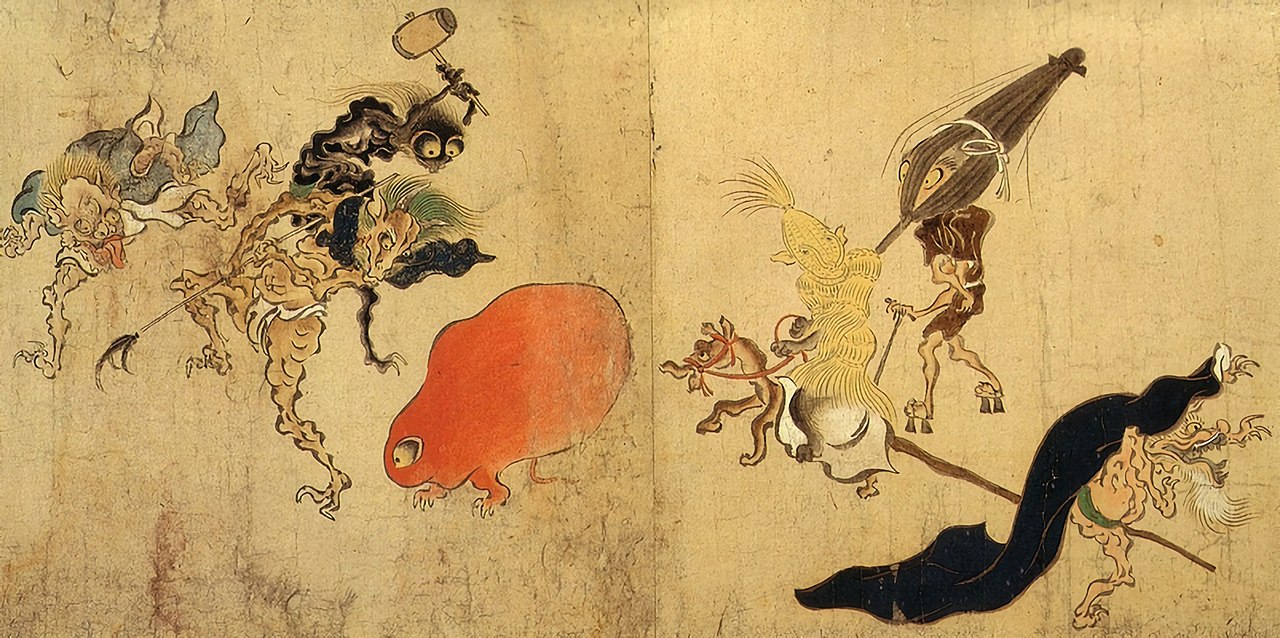
The Hyakki Yagyo Scroll: Witnessing the Night Parade of One Hundred Demons
In the shadowed streets of ancient Kyoto, long before electricity banished the darkness, the night belonged to the supernatural. Whispers traveled through the paper walls of wooden homes, warning children and travelers alike to stay indoors on certain nights. If they didn’t, they risked encountering the Hyakki Yagyo—the Night Parade of One Hundred Demons.
While the folklore is terrifying, the visual representation of this event, known as the Hyakki Yagyo Emaki (Night Parade of One Hundred Demons Scroll), remains one of the most significant and fascinating artifacts in Japanese art history. As a travel and culture enthusiast, understanding this scroll is key to unlocking the playful, eerie, and profound world of Japanese yokai (spirits/monsters).
Origins of the Scroll
The most famous depiction of this supernatural procession is the Hyakki Yagyo Emaki, traditionally attributed to Tosa Mitsunobu, a renowned painter of the Tosa school in the Muromachi period (14th–16th centuries). Currently housed in the Shinju-an sub-temple of Daitoku-ji in Kyoto, this scroll is a masterpiece of dynamic storytelling.
Unlike Western depictions of demons which are often purely malevolent, the entities in the scroll are a chaotic mix of the frightening and the comical. The scroll visualizes a specific type of folklore known as Tsukumogami. According to ancient belief, everyday tools and household objects—umbrellas, biwa lutes, sandals, and pots—acquire a spirit and come to life after serving their owners for one hundred years. Feeling discarded or neglected, they transform into yokai and march through the streets in a riotous parade.
The artistic style of the scroll is distinct. It lacks background scenery, focusing entirely on the procession of creatures. The colors are vivid, and the movement flows from right to left, evolving from a disorganized rabble into a structured, albeit bizarre, parade, before ending abruptly with the rising sun, which sends the spirits scurrying back to the shadows.
The Legend of the Night Parade
The legend behind the scroll is deeply rooted in the Heian period nobility’s superstitions. It was believed that on specific nights based on the zodiac calendar, the barrier between the human world and the spirit world thinned. During these hours, the Hyakki Yagyo would march through the main thoroughfares of the capital.
Witnessing the parade was considered fatal. Legend states that any human unfortunate enough to gaze upon the procession would die instantly or be spirited away, never to be seen again. To protect themselves, aristocrats and commoners would recite specific sutras or stay hidden indoors with their shutters tightly closed.
However, the scroll also serves as a satire of the Buddhist hierarchy and the nobility of the time. Many of the yokai are depicted wearing priestly robes or carrying religious implements, mocking the perceived corruption or hypocrisy of the era’s religious institutions. It turned fear into entertainment, a tradition that continues in Japanese culture today.
Influence on Modern Culture
The imagery found in the Hyakki Yagyo Emaki is the grandfather of modern Japanese pop culture’s obsession with monsters. If you are a fan of anime or manga, you have likely seen direct references to this scroll.
- Studio Ghibli: Isao Takahata’s Pom Poko features a massive scene where tanuki (raccoon dogs) stage a Hyakki Yagyo to scare humans, recreating imagery directly from the scrolls.
- Pokémon: Many Pokémon designs are based on the Tsukumogami concept found in the scrolls (e.g., Klefki the key ring or Polteageist the tea pot).
- Demon Slayer & Jujutsu Kaisen: The modern shonen genre owes its foundational lore of curses and demons to the taxonomies established in these medieval picture scrolls.
The scroll transformed terror into character design, allowing yokai to become lovable mascots rather than just nightmares.
Traveler’s Tips: Finding Yokai in Japan
For travelers hoping to catch a glimpse of the Hyakki Yagyo without the risk of being cursed, modern Kyoto offers several fantastic experiences.
1. Yokai Street (Ichijo-dori)
Located in the Taishogun district of Kyoto, Ichijo-dori is said to be the historical path of the original Night Parade. Today, the local shopkeepers have embraced this legend. Known as “Yokai Street,” the shops display homemade monster statues outside their storefronts. It is a quirky, photogenic, and off-the-beaten-path destination.
2. Kodai-ji Temple Night Exhibitions
During the summer (the traditional season for ghost stories in Japan), Kodai-ji Temple in Kyoto often displays hanging scrolls of ghosts and demons. It is an atmospheric way to view traditional yokai art in a historic setting.
3. The International Research Center for Japanese Studies
For the academic traveler, this center often holds digital archives and exhibitions related to yokai culture and the original scrolls.
Sources & Further Reading
To understand the spiritual foundation of these legends, one must look to Japan’s oldest historical texts.
- Nihon Shoki (Chronicles of Japan): While it focuses on Shinto gods (Kami), it establishes the animistic worldview that allows for the existence of Tsukumogami and nature spirits.
- Konjaku Monogatarishu: A collection of tales from the late Heian period that contains some of the earliest written accounts of the Night Parade.
- Shugaisho: A medieval encyclopedia that detailed the specific days the parade would occur, serving as a survival guide for the superstitious.
The Hyakki Yagyo Scroll is more than just a painting; it is a window into the Japanese imagination, where the mundane becomes magical, and the night comes alive.