
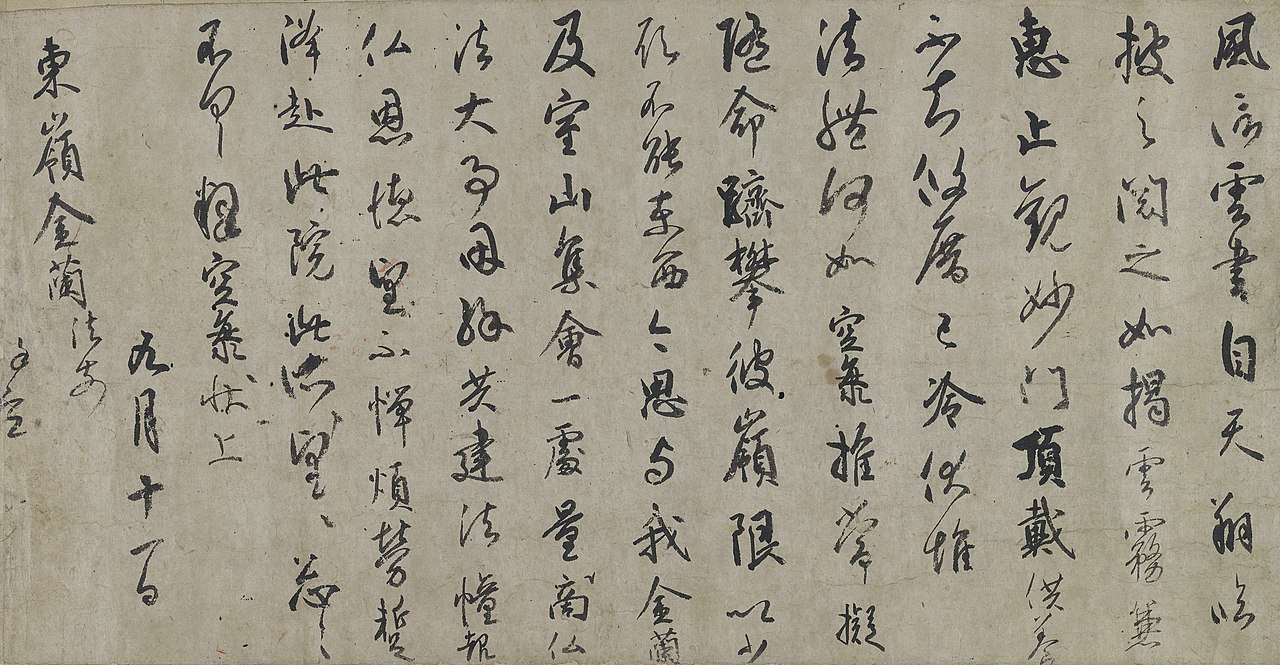
Shodo: The Soul of Japanese Ink and Brush
In the quiet confines of a tatami room, the scent of pine soot and musk fills the air. A brush is dipped into black ink, suspended for a breath, and then strikes the washi paper with deliberate fluidity. This is Shodo (書道), literally translating to “the way of writing.” Far more than simple penmanship, Shodo is one of the oldest and most profound traditional art forms in Japan, bridging the gap between literature and visual abstraction.
For travelers and culture enthusiasts, understanding Shodo offers a window into the Japanese mindset—where discipline meets expression, and the process is just as vital as the result.
Origins: From China to the Japanese Spirit
The roots of Shodo date back to China, reaching Japan around the 6th century alongside the introduction of Buddhism. Initially, calligraphy was a practical tool used by monks and aristocrats to copy sutras and conduct state affairs. The earliest forms utilized strictly Chinese characters, known as Kanji.
However, the art form underwent a dramatic transformation during the Heian Period (794–1185). As a distinct Japanese identity began to flourish, so did the writing system. The development of Kana (Hiragana and Katakana)—a phonetic script unique to Japan—allowed for a softer, more flowing style of calligraphy known as Wayō (Japanese style). This era gave rise to the “Three Brushes” (Sanpitsu), three famous calligraphers who set the standard for elegance and control, marking the point where writing evolved into high art.
The Legend of the Brush
No discussion of Shodo is complete without the legend of Kobo Daishi (Kukai), the founder of Shingon Buddhism and one of the most revered figures in Japanese history. Often called the father of Japanese calligraphy, legends suggest he invented the Kana syllabary to make literacy accessible to the masses, though historians debate the timeline.
A popular Japanese proverb states, “Kobo fude wo erabazu” (Kobo does not choose his brush). This implies that a true master can create a masterpiece regardless of the tool’s quality. Yet, folklore delights in stories of his supernatural skill. One legend claims that while repairing a plaque at a temple gate in Kyoto, Kukai realized he had missed a dot on a character after descending the ladder. Rather than climbing back up, he threw his brush from the ground; it hit the board perfectly, adding the dot and sticking there, cementing his reputation as a semi-divine artist.
Beyond Kukai, Shodo is deeply intertwined with Zen Buddhism. The practice of Hitsuzendo (the way of the brush and Zen) uses calligraphy as a form of moving meditation. The most famous symbol of this is the Enso—a circle drawn in one or two uninhibited strokes to express a moment when the mind is free to let the body create.
Modern Culture and Performance
In modern Japan, Shodo remains a vital part of the cultural fabric. It is a mandatory subject in elementary education, where children learn the importance of posture, stroke order, and balance.
One of the most enduring traditions is Kakizome (First Writing), which takes place on January 2nd. People of all ages gather to write auspicious words or poetry to set their intentions for the New Year. The ink is traditionally rubbed with water drawn from the first well-draw of the year, adding a spiritual layer to the resolution.
Recently, Shodo has found new life through Performance Calligraphy. High school and university clubs compete in high-energy events where members dance and write on massive sheets of paper (sometimes 4×6 meters) in sync with pop music. This modernization has revitalized interest among the youth, proving that the ancient art form can evolve while respecting tradition.
Traveler’s Tips: Experiencing Shodo
For the traveler, Shodo is an accessible and highly rewarding experience. Here is how you can engage with the “Way of Writing”:
1. Take a Workshop
Kyoto and Tokyo are filled with cultural centers offering introductory classes. You don’t need to know Japanese to participate; the focus is often on the stroke mechanics and the meditative aspect. You will likely write characters like “Peace,” “Dream,” or “Love.”
2. Visit Nara for Supplies
Nara is the birthplace of Japanese ink (sumi). Visit a traditional ink-making workshop to see how soot and glue are kneaded and dried into ink sticks. High-quality fude (brushes) and ink sticks make for sophisticated, lightweight souvenirs.
3. Temple Goshuin
When visiting temples and shrines, bring a Goshuin-cho (stamp book). Monks will hand-write beautiful calligraphy alongside red stamps as proof of your pilgrimage. Watching a monk execute these characters with speed and grace is a mini-performance in itself.
Sources & Further Reading
- Nihon Shoki (The Chronicles of Japan): For historical context regarding the importation of Chinese writing systems and Buddhism in the 6th century.
- The Writings of Kobo Daishi: Various translations of Kukai’s works offer insight into the philosophical connection between Buddhism and the written word.
- The Tale of Genji: Provides a glimpse into the Heian period court life where handwriting was considered a mirror of one’s soul.