
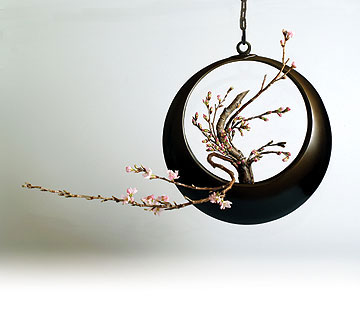
Ikebana: The Ancient Japanese Art of Arranging Flowers
In the hustle of modern travel, few experiences ground the soul quite like the silent observation of a Japanese garden or the contemplation of a single flower vase. While Western flower arranging often focuses on the quantity and color of blooms to create a full, symmetrical mass, Japan offers a striking counter-philosophy: Ikebana (生け花).
Also known as Kado (the Way of Flowers), Ikebana is much more than decoration. It is a disciplined art form that brings humanity and nature together. For the cultural traveler, understanding Ikebana unlocks a deeper appreciation of Japanese aesthetics, revealing how empty space—ma—is just as vital as the flowers themselves.
The Origins: From Altar to Art
The roots of Ikebana date back over a thousand years, inextricably linked to the arrival of Buddhism in Japan during the 6th century. Initially, floral offerings were placed on altars to honor the Buddha and the spirits of the ancestors. These early arrangements, known as kuge, were relatively simple, consisting of three stems representing heaven, earth, and humanity.
By the Muromachi period (1336–1573), Japan underwent a cultural renaissance. Architecture shifted, and the tokonoma (alcove) became a central feature in traditional homes. It was here that Ikebana transitioned from a strictly religious offering to an art form meant for appreciation. The first systematized style, Rikka (standing flowers), emerged, depicting majestic landscapes using branches and flowers to symbolize the beauty of paradise.
The Legend of Ikenobo
To understand the soul of Ikebana, one must look to the legend of the Rokkaku-do Temple in Kyoto. According to tradition, Prince Shotoku founded the temple in the late 6th century. He sent an emissary, Ono no Imoko, to China to study statecraft and culture.
Upon his return, Ono no Imoko was weary of the political strife he had witnessed. He retired from public life to become the head priest of Rokkaku-do. He lived in a small hut (known as a bo) by a pond (known as ike). Consequently, he became known as the priest of the lake hut, or Ikenobo.
It is said that Ikenobo spent his days arranging flowers for the Buddhist altar, praying for universal peace. His arrangements were so exquisite that priests from across the land came to learn from him. This established the Ikenobo school, the oldest and largest school of Ikebana, which continues to be led by the head priest of the Rokkaku-do temple to this day.
Modern Culture and Schools of Thought
While the ancient Ikenobo school remains the guardian of tradition, Ikebana has evolved into a dynamic modern art form. Today, there are thousands of schools, but three dominate the cultural landscape:
- Ikenobo: The oldest school, focusing on harmony and classic styles like Rikka and Shoka. It emphasizes the natural beauty of the plant’s life cycle.
- Ohara: Founded in the late 19th century, this school introduced the Moribana style (piled-up flowers). It uses shallow containers and metal frogs (kenzan) to hold flowers, allowing for arrangements that mimic landscape scenery.
- Sogetsu: A distinctively modern school founded in 1927. It promotes the idea that Ikebana can be done by anyone, anywhere, with any material—including plastic, steel, and plaster. It is often sculptural and avant-garde.
In modern Japan, Ikebana is not just a hobby for the elite; it is practiced by CEOs to sharpen focus and by grandmothers to welcome the seasons. You will find arrangements in the lobbies of corporate skyscrapers, in the entranceways of ryokans, and in subway stations.
Traveler’s Tips: Experiencing the Way of Flowers
If you are planning a trip to Japan, here is how you can immerse yourself in this delicate art:
- Visit the Birthplace: The Rokkaku-do Temple in Kyoto is a must-visit. It is an oasis of calm in the city center, and you can often see magnificent arrangements on display.
- Department Store Exhibitions: Major department stores (like Takashimaya or Daimaru) often host massive Ikebana exhibitions on their top floors, usually free or for a nominal fee. These are spectacular showcases of hundreds of works.
- Take a Workshop: Don’t just watch—participate. Many hotels and cultural centers in Kyoto and Tokyo offer beginner workshops in English. Look for “Airbnb Experiences” or local culture centers offering Kado trials.
- Etiquette: When viewing an arrangement, view it from the front (usually facing the tokonoma or entrance). Do not touch the flowers, as the balance is often precarious and precise.
Sources & Further Reading
For those wishing to delve deeper into the historical context of nature worship and aesthetics in Japan, the following texts provide essential background:
- The Nihon Shoki (Chronicles of Japan): While primarily a historical record, it establishes the ancient Shinto reverence for nature (kami) that creates the spiritual foundation for Ikebana.
- The Kojiki (Records of Ancient Matters): Similar to the Nihon Shoki, providing the mythological context of Japan’s relationship with the natural world.
- Kadensho (The Book of Flowers): Written by Sofu Teshigahara (founder of Sogetsu), though historical texts like the Sendensho represent the oldest teachings on the art.
Ikebana teaches us that beauty is not just in the bloom, but in the bud that is about to open and the leaf that is fading. It is a journey of seeing the world through a quieter, more focused lens.