
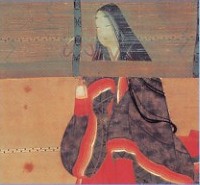
Sei Shonagon: The Witty Voice of Heian Era Kyoto
When we think of history, we often imagine dry dates, wars, and solemn figures. However, stepping into the world of Sei Shonagon feels less like a history lesson and more like reading a witty blog from a millennium ago. A court lady, poet, and sharp-tongued observer, Sei Shonagon is one of the pillars of classical Japanese literature. Her masterpiece, The Pillow Book (Makura no Soshi), provides an intimate, often hilarious, glimpse into the aristocratic life of Heian-period Kyoto.
For cultural travelers visiting Japan, understanding Sei Shonagon transforms the ancient capital from a collection of temples into a living, breathing stage of courtly drama and poetic beauty.
Origins: A Life in the Imperial Court
Born around 966 AD, Sei Shonagon came from a lineage of literary greatness. She was the daughter of Kiyohara no Motosuke, a renowned scholar and poet. This pedigree granted her a deep knowledge of Chinese classics and waka poetry—skills that were essential for survival and social climbing in the imperial court.
In her late twenties, she entered the service of Empress Teishi (Sadako), a consort to Emperor Ichijo. This was the golden age of the Heian period (794–1185), an era defined by aesthetic refinement, where a well-placed poetic allusion could make or break a reputation. Unlike the subservient image of women often portrayed in later samurai eras, Heian court ladies like Shonagon wielded significant cultural influence. She was known for her intelligence and quick wit, traits that endeared her to the Empress but occasionally intimidated her peers.
Legend: The Rivalry and The Pillow Book
Sei Shonagon is best defined by her literary legacy, which functions as a legend of her personality. The Pillow Book is a collection of lists, essays, and gossip. She famously cataloged things that gave her joy (“Things that make the heart beat faster”) and things that annoyed her (“Hateful things”).
One famous anecdote highlights her brilliance. On a snowy day, Empress Teishi asked, “How is the snow on Xianglu Peak?” referring to a famous Chinese poem. While others hesitated, Shonagon immediately raised the bamboo blinds to reveal the snowy garden, physically enacting the line from the poem: “The snow on Xianglu Peak is viewed by raising the blinds.” The court applauded her quick thinking.
Her “legend” is also defined by her rivalry with Murasaki Shikibu, the author of The Tale of Genji. While Shonagon was witty and extroverted, Murasaki was introspective and critical. In her diary, Murasaki famously wrote that Shonagon was conceited and that her Chinese writings were full of mistakes—a literary feud that scholars and fans still debate today.
Modern Culture: An Eternal Influencer
It is astonishing how modern Sei Shonagon feels. If she were alive today, she would undoubtedly be a Twitter (X) superstar or a viral TikTok creator. Her complaints about people who talk too loudly or guests who overstay their welcome resonate just as strongly in the 21st century as they did in the 10th.
In modern Japanese culture, she appears frequently in manga, anime, and games. The anime Utakoi portrays her as a stylish, confident woman navigating romance and court politics. She also appears as a character in the mobile game Fate/Grand Order, depicted as a flashy, modern-styled archer/poet. Her concept of okashi (delightful, charming, or amusing) remains a foundational aesthetic in Japanese culture, distinct from the mono no aware (sadness of things) associated with her rival Murasaki.
Traveler’s Tips: Tracing Shonagon in Kyoto
If you are visiting Kyoto, you can walk in the footsteps of this literary giant. Here are key locations to include in your itinerary:
- Kyoto Imperial Palace (Kyoto Gosho): While the current buildings are reconstructions from the Edo period, the location and layout give you a sense of the Dairi (Inner Palace) where Shonagon served Empress Teishi. Walk the gravel paths and imagine the rustle of twelve-layered kimono silk.
- Sennyu-ji Temple: Located in the Higashiyama mountains, this temple is the site of the imperial tomb of Empress Teishi. Nearby, there is a stone monument dedicated to Sei Shonagon, reputed to be the site of her grave, though historians debate the exact location.
- Rozan-ji Temple: While famous as Murasaki Shikibu’s residence, visiting here provides context to the Heian court lifestyle that both women shared.
- Seasonal Timing: To truly channel Shonagon, visit in the seasons she loved. As she famously wrote: “In spring, it is the dawn… In summer, the nights… In autumn, the evenings… In winter, the early mornings.”
Sources & Further Reading
For those wishing to dive deeper into the world of Sei Shonagon and the Heian court, the following texts are essential:
- The Pillow Book (Makura no Soshi): The primary source of her life and thoughts. The Meredith McKinney translation is highly recommended for modern readers.
- The Diary of Lady Murasaki: Provides a contemporary, albeit critical, view of Shonagon.
- Ogura Hyakunin Isshu: A classical anthology of 100 poems by 100 poets, which includes work by Sei Shonagon (Poem 62).
- Nihon Shoki & Kojiki: While these ancient texts predate Shonagon, they established the mythological and imperial lineage that formed the foundation of the court society she lived in.