
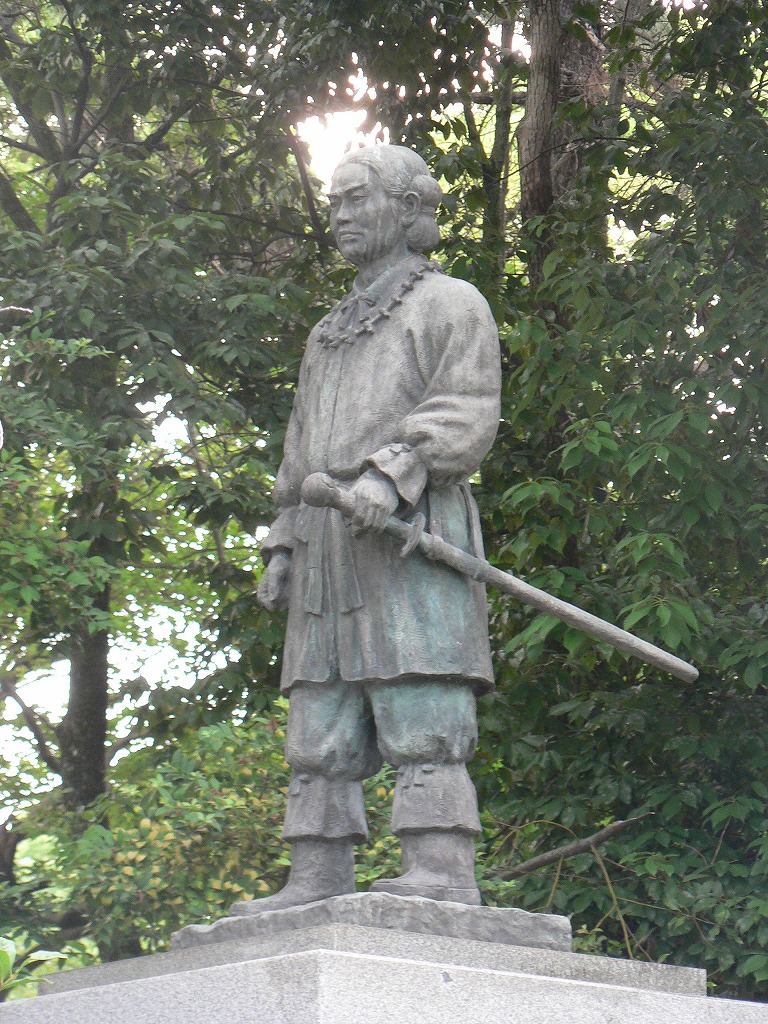
Yamato Takeru: The Legendary Warrior Prince of Japan
Japan’s history is a rich tapestry woven with threads of fact and folklore, often blurring the lines between the two. Among the most enduring figures in this mythical landscape is Yamato Takeru (日本武尊), a legendary prince of the Yamato dynasty. Often compared to Western heroes like Hercules or King Arthur, Yamato Takeru is celebrated not just for his superhuman strength and military prowess, but also for the tragedy that followed his short life.
For travelers and culture enthusiasts, understanding the story of Yamato Takeru unlocks a deeper appreciation of Japanese Shinto shrines, imperial history, and the performing arts. Join us as we explore the life, legend, and legacy of Japan’s first great hero.
Origins: The Violent Prince
Yamato Takeru was not born with that name. According to ancient chronicles, he was born Prince Ousu, the son of the legendary 12th Emperor, Keikō. His story begins with a shocking display of brutality. When his father asked him to reprimand his elder brother for missing meals, Ousu dismembered him instead.
Terrified by his son’s violent nature and fearful for his own safety, Emperor Keikō sent the young prince away on dangerous military campaigns, perhaps hoping he would not return. He was dispatched first to the west to suppress the Kumaso clans and later to the east. It was during these expeditions that the prince’s brute strength was tempered by cunning and tragedy, transforming him from a violent youth into the hero known as Yamato Takeru—”The Brave of Yamato.”
The Legend: Swords, Sorcery, and Sacrifice
The chronicles of the Kojiki and Nihon Shoki detail his epic exploits, which read like an adventure novel.
The Cross-Dressing Assassin
One of his most famous feats occurred during his campaign against the Kumaso leaders. Disguising himself as a beautiful maiden during a banquet, he waited until the leaders were drunk before revealing a hidden sword and slaying them. Impressed by his prowess in his dying moments, one of the leaders bestowed upon him the title “Yamato Takeru.”
The Grass-Cutting Sword
Before departing for the eastern lands, Takeru visited his aunt, the high priestess at Ise Grand Shrine. She gifted him the Ame-no-Murakumo-no-Tsurugi (Sword of the Gathering Clouds of Heaven) and a bag of flint. This proved vital in the province of Sagami, where a local warlord lured him into a field and set it on fire. Using the sword to cut the grass and the flint to start a counter-fire, Takeru survived. The sword was renamed Kusanagi-no-Tsurugi (Grass-Cutting Sword) and is now one of the three Imperial Regalia of Japan.
The Sacrifice of Ototachibana-hime
Perhaps the most poignant moment in his legend involves his wife, Princess Ototachibana. While crossing the sea between the Miura Peninsula and the Boso Peninsula, a violent storm—stirred by an angry sea god—threatened to capsize their boat. To save her husband and his mission, Ototachibana threw herself into the waves as a sacrifice. The storm quelled immediately. Takeru’s grief was profound; it is said that looking back at the mountains toward home, he sighed, “Azuma haya” (Oh, my wife), giving the region of Eastern Japan its archaic name, Azuma.
The White Bird
Yamato Takeru died of illness on his way back to the capital, reportedly cursed by a local deity on Mount Ibuki after he arrogantly left his magical sword behind during a confrontation. Upon his death, his soul transformed into a giant white bird (Shiratori) and flew away, stopping at several locations before disappearing into the heavens.
Modern Culture
Thousands of years later, the image of Yamato Takeru remains vivid in Japanese consciousness. He is a staple in Kabuki and Noh theater, where his tragic heroism fits the dramatic aesthetic perfectly.
In pop culture, his influence is seen in anime, manga, and video games. Series like Naruto and games like Persona reference the Kusanagi sword and the mythology surrounding the Yamato dynasty. Until the mid-20th century, he was also featured on Japanese currency, symbolizing martial valor and loyalty to the Imperial line.
Traveler’s Tips: Tracing the Hero’s Path
If you are visiting Japan, you can visit physical locations tied directly to this mythical figure. Here are the top spots to add to your itinerary:
- Atsuta Shrine (Nagoya): This is the most significant site associated with the legend. It is said to house the actual Kusanagi-no-Tsurugi, the sacred sword Takeru used. While the sword is never shown to the public, the shrine grounds are majestic and deeply spiritual.
- Otori Shrine (Sakai, Osaka): This shrine is built on the site where the “White Bird” (Takeru’s soul) is said to have landed. It is famous for its peaceful atmosphere and the Otori-zukuri architectural style.
- Mt. Ibuki (Shiga/Gifu Border): For the adventurous hiker, climbing Mount Ibuki offers stunning views and a chance to see the statue of Yamato Takeru near the summit, marking the spot of his fatal encounter with the mountain god.
- Hashirimizu Shrine (Yokosuka): Overlooking the Tokyo Bay, this shrine is dedicated to Princess Ototachibana, marking the tragic spot where she sacrificed herself to the sea.
Sources & Further Reading
To dive deeper into the mythology of Yamato Takeru, the following classical texts are essential reading:
- The Kojiki (Records of Ancient Matters): Japan’s oldest chronicle (712 AD) offers a more narrative and dramatic version of Takeru’s life.
- The Nihon Shoki (The Chronicles of Japan): Completed in 720 AD, this text provides a slightly more formal historical account.
Yamato Takeru stands as a bridge between the gods and the emperors, a figure whose story captures the beauty, violence, and tragedy of ancient Japan. Whether you find him in a history book or at a quiet shrine in Nagoya, his legend endures.