
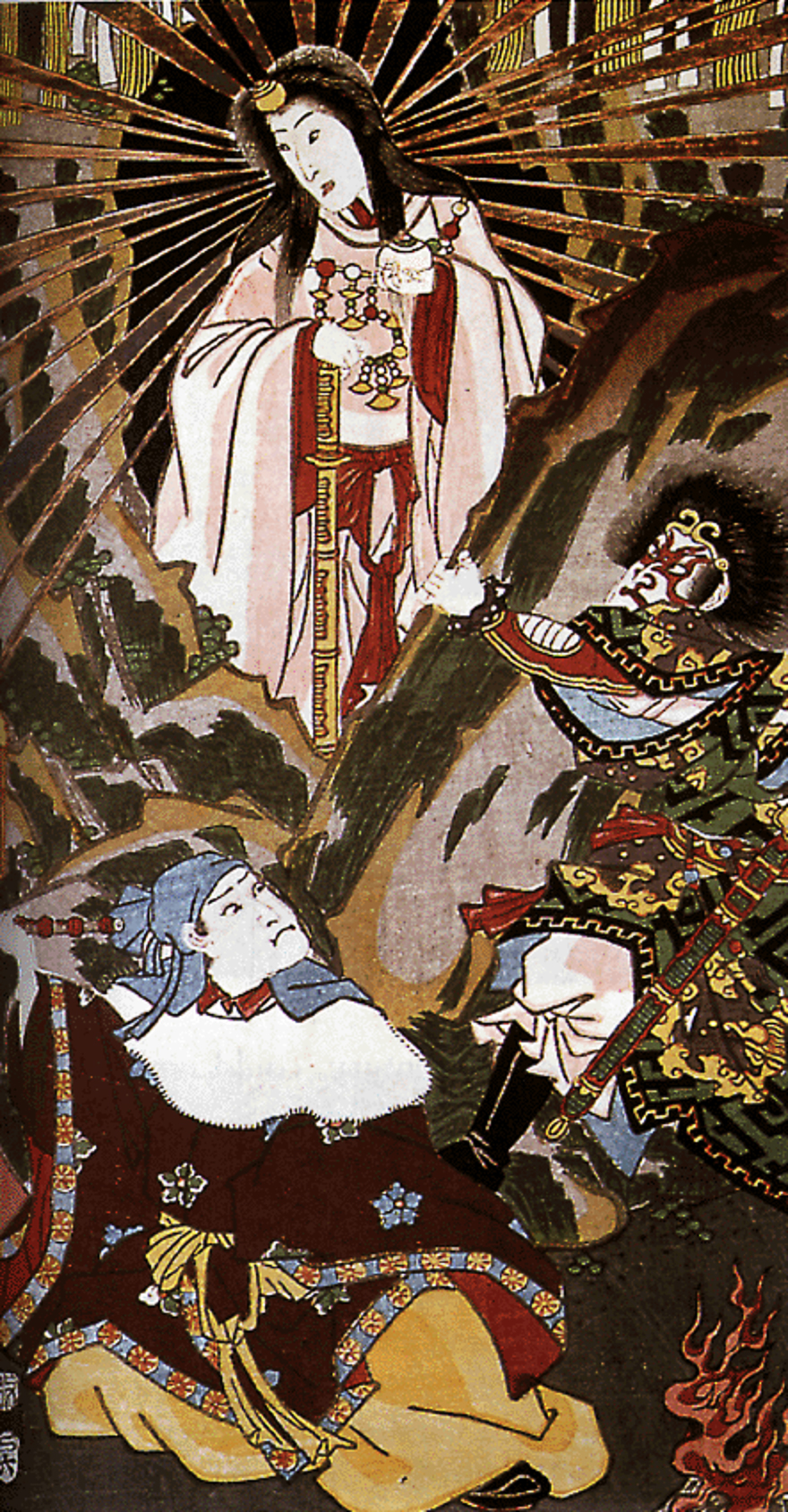
Amaterasu Omikami: The Sun Goddess of Japanese Shinto
When travelers think of Japan, the phrase “Land of the Rising Sun” often comes to mind. This isn’t just a geographical reference to Japan’s position east of the Asian continent; it is a spiritual nod to the country’s most revered deity: Amaterasu Omikami. As the Shinto Sun Goddess and the mythical ancestor of the Imperial Family, Amaterasu is the heart of Japanese mythology and culture.
For anyone interested in the spiritual roots of Japan, understanding Amaterasu is essential. From the ancient chronicles to the solemn gravel paths of the Ise Grand Shrine, her presence is woven into the very fabric of the nation.
The Origins of the Great Divinity
Amaterasu Omikami (天照大御神), whose name translates roughly to “The Great Divinity Illuminating Heaven,” holds the highest position in the Shinto pantheon (the kami).
According to ancient records, she was born from Izanagi, one of the creator gods. After escaping the underworld in a failed attempt to retrieve his deceased wife, Izanagi performed a cleansing ritual (misogi) to purify himself of the impurities of death. As he washed his left eye, Amaterasu was born, shining brilliantly. Izanagi was so pleased that he bestowed upon her the necklace of jewels and gave her rule over the High Celestial Plain (Takamagahara).
She is one of the “Three Precious Children” of Izanagi, alongside her brothers Tsukuyomi (the Moon God) and Susanoo (the Storm God). While Tsukuyomi ruled the night and Susanoo the oceans, Amaterasu became the source of all light and life.
The Legend of the Heavenly Rock Cave
The most famous myth involving Amaterasu—and perhaps the most pivotal story in Shintoism—is the incident of the Amano-Iwato (Heavenly Rock Cave).
The Storm God’s Rebellion
Amaterasu’s brother, Susanoo, was a tempestuous and chaotic figure. After a series of violent pranks, including throwing a flayed horse into Amaterasu’s weaving hall, the Sun Goddess was overcome with grief and fear. She fled into a cave, the Amano-Iwato, and sealed the entrance with a massive rock.
The World in Darkness
The moment Amaterasu hid, the world was plunged into eternal night. Chaos ensued, crops failed, and evil spirits swarmed the earth. The other 800 celestial gods gathered outside the cave, desperate to coax the sun back out.
The Divine Strategy
The gods devised a plan. Ame-no-Uzume, the goddess of dawn and mirth, overturned a tub and began a raucous, comical dance upon it. The gathered gods roared with laughter. Inside the cave, Amaterasu was puzzled. “Why are they celebrating when the world is dark?” she wondered.
She opened the cave door just a crack to peek out. A mirror (the Yata no Kagami) was held up to the opening. Dazzled by her own brilliant reflection, which she mistook for another sun goddess, she stepped forward. A strong god grabbed her hand and pulled her out, sealing the cave behind her with a sacred rope (shimenawa). Light returned to the world, restoring order and life.
Modern Culture and the Imperial Lineage
Amaterasu is not just a figure of the distant past; she is relevant to modern Japanese identity. The Imperial House of Japan claims direct descent from Amaterasu through her grandson, Ninigi-no-Mikoto, whom she sent to earth to rule.
She gifted him three sacred treasures—the Mirror, the Jewel, and the Sword—which are still the Imperial Regalia of Japan today. This lineage is why the Emperor was historically considered divine.
In pop culture, references to Amaterasu appear frequently. Video gamers might recognize her as the white wolf in the acclaimed game Okami, while anime fans see her influence in series like Naruto, where powerful techniques are named after her and her siblings.
Traveler’s Tips: Where to Worship
If you are planning a trip to Japan, there are specific sites where the connection to the Sun Goddess is strongest.
Ise Jingu (The Grand Shrine of Ise)
Located in Mie Prefecture, this is the holiest site in Shintoism. It is divided into two main parts, but Naiku (The Inner Shrine) is dedicated specifically to Amaterasu.
- The Vibe: The atmosphere is incredibly serene. Giant cypress trees tower over gravel paths.
- The Access: You cannot enter the main sanctuary itself, which is hidden behind wooden fences, but you can pray at the gate.
- The Rebuilding: Every 20 years, the shrine is dismantled and rebuilt from scratch in a ritual called Shikinen Sengu to symbolize renewal and impermanence.
Amano-Iwato Shrine (Miyazaki Prefecture)
For those willing to venture off the beaten path to Kyushu, this shrine is located near the cave where legend says Amaterasu hid. Visitors can walk along the river and see the cave across the gorge, a truly mystical experience.
Etiquette Tips
- Bow: Bow once at the Torii gate before entering.
- Cleanse: Use the temizuya (water pavilion) to wash your hands and mouth before approaching the shrine.
- Pray: The standard method is: Bow twice, clap twice, make your wish/prayer, and bow once more.
Sources & Further Reading
To deepen your understanding of Japanese mythology, I highly recommend consulting the primary historical texts that preserved these legends:
- The Kojiki (Records of Ancient Matters): The oldest extant chronicle in Japan (712 AD), detailing the myths of the gods.
- The Nihon Shoki (The Chronicles of Japan): Completed in 720 AD, this text provides a more historical and detailed account of the lineage.
Amaterasu Omikami remains a shining beacon in Japanese culture. Whether you are reading ancient texts or walking the sacred forests of Ise, her story illuminates the soul of Japan.