
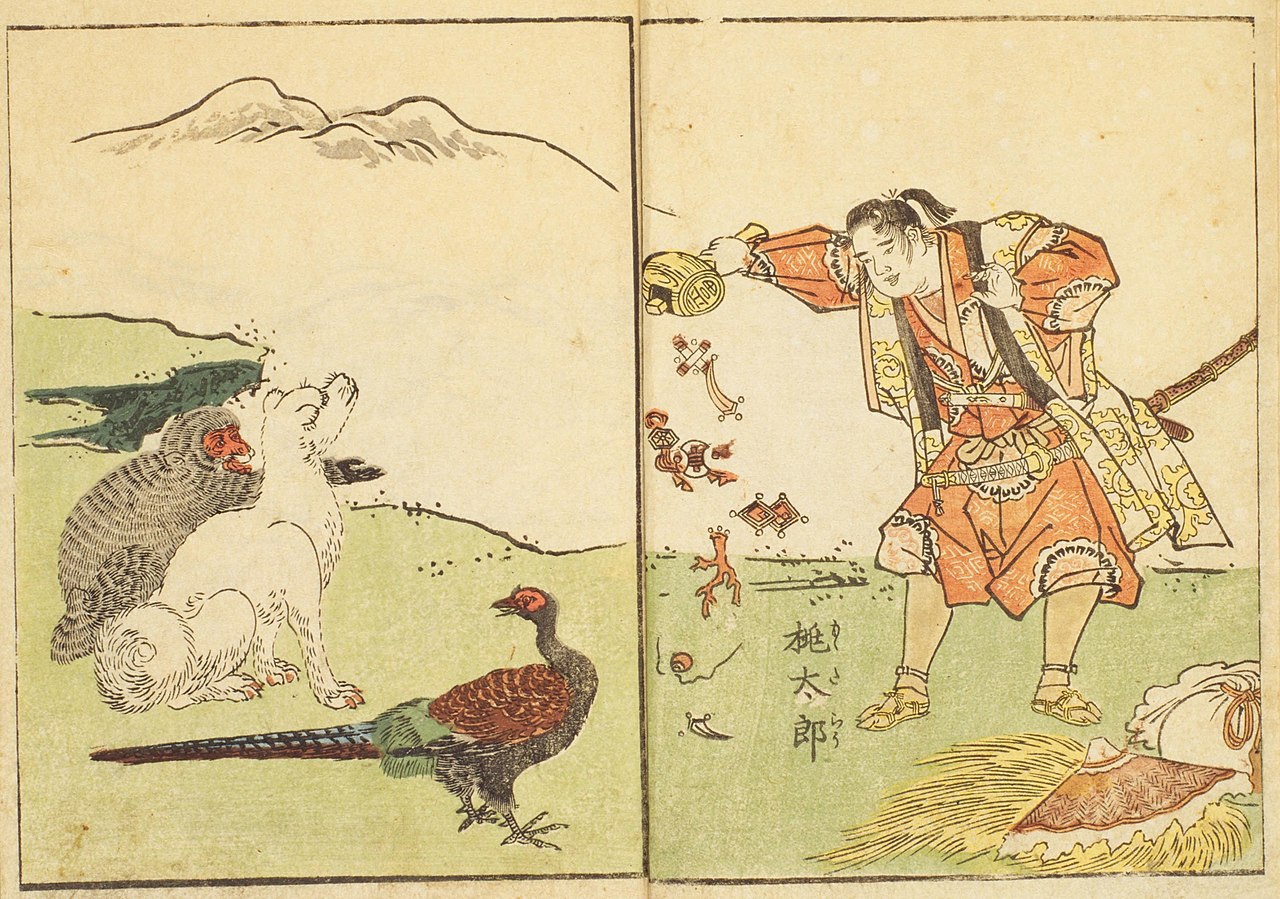
Momotaro: Unpeeling the Legend of Japan’s Peach Boy
If you have ever wandered through the bustling streets of Okayama or browsed a Japanese children’s bookstore, you have likely encountered a boy wearing a headband, brandishing a sword, and accompanied by a dog, a monkey, and a pheasant. This is Momotaro, the “Peach Boy,” the protagonist of perhaps the most famous piece of folklore in Japan. More than just a bedtime story, the legend of Momotaro is a cultural touchstone representing bravery, filial piety, and the triumph of good over evil.
The Origins of the Hero
While Momotaro is categorized as a mukashi-banashi (folktale), its roots run deep into Japanese history and regional identity. The story rose to national prominence during the Edo period (1603–1867), used as a tool for teaching moral values to children. However, the narrative is strongly believed to be a localized retelling of historical events centered in the Kibi Province (modern-day Okayama Prefecture).
Scholars often link the folklore to the life of Kibitsuhiko-no-mikoto, a legendary prince sent by the Imperial Court to subdue a tyrannical ogre named Ura. In this historical interpretation, the “demons” were likely a rival clan or foreign settlers in the region who possessed advanced iron-forging technology. over centuries, the military campaign against the Ura clan transformed into the magical tale of a boy born from a giant peach fighting literal monsters.
The Legend Retold
The classic version of the story begins with an elderly, childless couple. One day, while the old woman is washing clothes in a river, a giant peach comes tumbling downstream. Bringing it home to share with her husband, they are shocked when the peach splits open to reveal a healthy baby boy. They name him Momotaro (Momo meaning peach, Taro being a common suffix for an eldest son).
Momotaro grows up strong and kind. When he reaches adolescence, he hears of oni (demons) dwelling on Onigashima (Demon Island) who terrorize the mainland, stealing treasures and kidnapping villagers. Determined to protect his country, he asks his parents for permission to defeat them.
Before he departs, his grandmother gives him a pouch of kibi-dango (millet dumplings) that provide the eater with the strength of a hundred men. On his journey, Momotaro encounters a starving dog, a clever monkey, and a brave pheasant. He shares his dumplings with them, and in exchange, they pledge their loyalty.
Together, the quartet travels to Onigashima. Using their combined skills—the pheasant attacking from the air, the monkey scratching at the gates, the dog biting the demons, and Momotaro using his sword—they force the demon king to surrender. Momotaro returns home with the demons’ plundered treasure and lives happily ever after with his foster parents.
Modern Culture and Symbolism
Today, Momotaro is ubiquitous in Japanese pop culture. He is the central mascot for Okayama Prefecture, adorning everything from manhole covers to cookie packaging. The story has been adapted into countless anime, manga, and video games. For example, the structure of forming a party to defeat a boss in Japanese Role-Playing Games (JRPGs) often draws parallels to Momotaro’s recruitment of his animal companions.
However, the story has had complex usages. During World War II, the figure of Momotaro was utilized in propaganda, depicting Japan as the liberator of Asia (the animals) from Western powers (the demons). Post-war, the character reclaimed his status as a symbol of innocent heroism and the power of cooperation.
Traveler’s Tips: Chasing the Peach Boy
For travelers looking to walk in the footsteps of the Peach Boy, Okayama City is the ultimate destination.
1. Okayama Station
Your journey begins the moment you arrive. The station plaza features a prominent bronze statue of Momotaro and his companions, a popular meeting spot for locals.
2. Kibitsu Shrine
Located a short train ride from the city center, this is the spiritual home of the legend. The shrine is dedicated to Kibitsuhiko-no-mikoto (the historical model for Momotaro). It features a stunning 400-meter-long corridor and is said to be the site where the prince defeated the ogre Ura.
3. Megijima Island (Kagawa Prefecture)
Across the Seto Inland Sea lies Megijima, often marketed as the real “Onigashima.” You can explore a vast network of caves near the island’s peak, which are decorated with comical demon statues, recreating the atmosphere of the villain’s lair.
4. Taste the Legend
You cannot leave Okayama without buying kibi-dango. Unlike the millet dumplings of the legend, the modern souvenir version is a sweet, soft mochi (rice cake) often flavored with peach. It makes for a perfect gift to bring back home—though it likely won’t give you the strength to fight demons.
Sources & Further Reading
To deepen your understanding of the mythology behind the folklore, consider exploring the following ancient texts:
- The Kojiki (Records of Ancient Matters): While Momotaro is a later folktale, this text establishes the lineage of the imperial family and the deities, providing context for figures like Kibitsuhiko-no-mikoto.
- The Nihon Shoki (The Chronicles of Japan): This classical history book details the Yamato court’s expansion and the pacification of regions like Kibi, grounding the fairy tale in historical conflict.
- Japanese Fairy Tales by Yei Theodora Ozaki: An accessible English compilation of classic stories, including the standard version of Momotaro.