
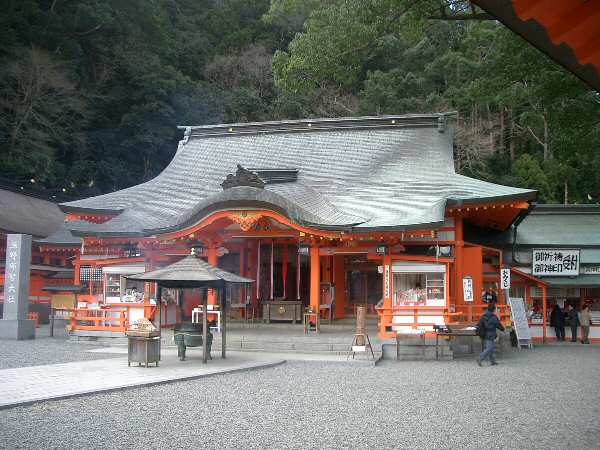
Kumano Nachi Taisha: Where Nature and Divinity Converge
Deep within the verdant mountains of Wakayama Prefecture lies a sight that defines the spiritual aesthetic of Japan: a brilliant vermilion three-story pagoda standing in striking contrast to the thundering white column of Japan’s tallest unbroken waterfall. This is Kumano Nachi Taisha, one of the three Grand Shrines of Kumano (Kumano Sanzan) and a pivotal stop on the UNESCO World Heritage-designated Kumano Kodo pilgrimage routes.
For centuries, emperors, samurai, and commoners have traversed the arduous trails of the Kii Peninsula to reach this sanctuary. It is a place where the air feels different—charged with the spray of the falls and the scent of ancient cedar.
The Origins: Worship of the Great Water
Long before the grand wooden halls were constructed, the area was already a sacred site. The origins of Kumano Nachi Taisha are rooted in primal nature worship. Unlike many shrines that house anthropomorphic deities, the primary focus of worship here was originally the waterfall itself, known as Nachi no Otaki.
Standing at 133 meters (436 feet) high, the waterfall was revered as the embodiment of the deity Hiro-gongen. Ancient people believed that the sheer power and longevity of the water represented the life force of the universe. It was only later, during the reign of Emperor Nintoku in the 4th century, that the shrine buildings were moved to their current location to facilitate easier worship, though the waterfall remains the spiritual heart of the complex.
This site stands as a testament to the Japanese concept of Shinbutsu-shugo—the syncretism of Shinto and Buddhism. Unlike other sites where the two religions were forcibly separated during the Meiji Restoration, Nachi Taisha retains a close relationship with the adjacent Seiganto-ji Temple, allowing visitors to experience the harmonious coexistence of these faiths.
The Legend of the Three-Legged Crow
The mythology surrounding Kumano Nachi Taisha is deeply intertwined with the founding of Japan itself. According to ancient chronicles, the first Emperor of Japan, Emperor Jimmu, landed on the Kii Peninsula on his journey to claim the throne in the Yamato region (modern-day Nara).
Legend tells that Jimmu and his troops became lost in the labyrinthine, mist-covered mountains of Kumano. The sun goddess Amaterasu sent a three-legged crow, known as Yatagarasu, to guide him. The crow led the Emperor to the Nachi Waterfall, where he found spiritual clarity and strength before continuing his conquest.
Today, the Yatagarasu is a ubiquitous symbol in the Kumano region and is even used as the emblem for the Japan Football Association, symbolizing divine guidance and agility. A special stone inside the shrine grounds is said to be the spot where the great crow turned into stone after fulfilling its mission.
Modern Culture and Festivals
In modern Japan, Kumano Nachi Taisha serves not only as a religious site but as a cultural icon. The view of the Seiganto-ji pagoda with the falls in the background is one of the most photographed landscapes in the country, symbolizing the enduring beauty of traditional Japan.
The shrine is also home to one of Japan’s most spectacular fire festivals, the Nachi no Ogi Matsuri (Nachi Fan Festival), held every July 14th. During this intense purification ritual, white-clad participants carry massive, flaming pine torches weighing up to 50 kilograms up the stone stairs to the waterfall. The fire is intended to purify the twelve portable shrines (mikoshi) being carried to the falls, creating a scene of danger, devotion, and dramatic beauty that attracts thousands of spectators.
Traveler’s Tips
Visiting Kumano Nachi Taisha requires some physical effort, but the rewards are immense. Here is how to make the most of your pilgrimage:
- Walk the Daimon-zaka: Instead of taking a bus all the way to the top, get off at the Daimon-zaka stop. This short, cobblestone section of the Kumano Kodo is lined with centuries-old cedar trees and offers a mystical, atmospheric approach to the shrine (approx. 45-minute walk up).
- Prepare for Stairs: There are over 400 stone steps leading up to the main shrine grounds. Wear comfortable walking shoes.
- Drink the Water: At the base of the waterfall (requires a small entrance fee), you can drink from a fountain fed by the falls. It is said to grant longevity.
- Combined Visit: Do not miss Seiganto-ji Temple, located immediately next to the shrine. It is the oldest building in the Kumano area and offers the classic photo angle of the pagoda.
Sources & Further Reading
For those interested in the deep historical and mythological context of the Kumano region, the following texts are essential:
- The Kojiki (Records of Ancient Matters): Contains the foundational myths of Japan, including references to Emperor Jimmu and the geography of the Kii Peninsula.
- The Nihon Shoki (The Chronicles of Japan): Provides detailed accounts of the Yamato dynasty’s origins and the significance of the Yatagarasu.
- Kumano Sanzan Official Guides: Local historical records maintained by the Wakayama Prefecture World Heritage Center.