
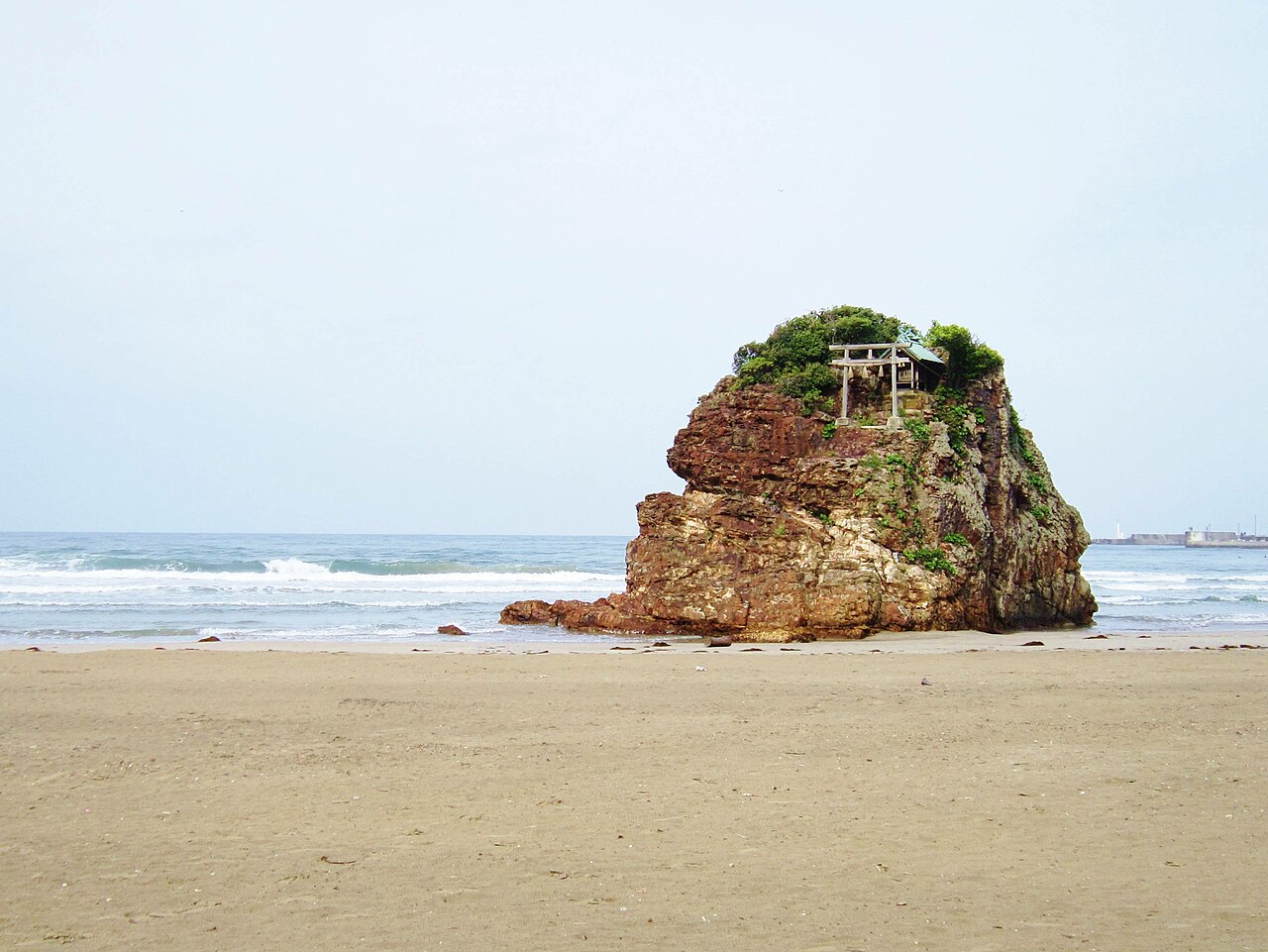
Inasa no Hama: Where Mythology Meets the Sea
Japan is a country steeped in spiritual history, but few places feel as palpably charged with ancient energy as Izumo in Shimane Prefecture. Just a short walk from the grand Izumo Taisha Grand Shrine lies Inasa no Hama, a sweeping stretch of coastline that is far more than just a scenic spot. It is a stage for Shinto mythology, a place of divine negotiation, and the welcoming gateway for the myriads of gods who visit the region annually.
With its striking rock formations and dramatic sunsets, Inasa no Hama offers travelers a unique blend of natural beauty and profound cultural significance. Whether you are a history buff, a spiritual seeker, or a photographer chasing the perfect golden hour, this sacred beach demands a spot on your itinerary.
Origins: The Geography of the Divine
Inasa no Hama is located on the western edge of the Shimane Peninsula, facing the Sea of Japan. Geographically, it is a white sandy beach that stretches in an elegant arc, renowned for its silence and the rhythmic crashing of waves.
The most iconic feature of the beach is Benten-jima, a large, craggy rock island surmounted by a small wooden shrine and a pine tree. While it is now connected to the mainland by a buildup of sand, historical maps and local memory recall a time when Benten-jima sat offshore, surrounded entirely by water.
Originally, the shrine atop the rock was dedicated to Benzaiten, the goddess of water and music. However, following the separation of Shinto and Buddhism in the Meiji era, the deity was changed to Toyotama-hime, a daughter of the sea god Watatsumi. The visual of this solitary shrine silhouetted against the setting sun is one of the most enduring images of the San’in region.
Legend: The Stage of Kuniyuzuri
To understand the gravity of Inasa no Hama, one must look to the Kojiki (Records of Ancient Matters), Japan’s oldest historical chronicle. This beach is the setting for the Kuniyuzuri (Transfer of the Land) myth, a pivotal moment in Shinto cosmology.
According to the legend, the heavenly deities (Amatsukami), led by the Sun Goddess Amaterasu, desired control over the earthly realm (Ashihara no Nakatsukuni), which was then ruled by Okuninushi no Okami. Amaterasu sent the thunder god, Takemikazuchi, to negotiate the transfer of power.
Takemikazuchi descended from the heavens and landed specifically at Inasa no Hama. He plunged his majestic sword hilt-deep into the waves, sat cross-legged upon its point, and demanded Okuninushi surrender the land. After consulting his sons, Okuninushi agreed, provided a grand palace was built for him to reside in forever—a structure that became the Izumo Taisha Grand Shrine. Thus, this beach represents the moment Japan unified under the imperial lineage, bridging the gap between the earthly and the divine.
Modern Culture: The Month of the Gods
While the legends are ancient, the traditions at Inasa no Hama are very much alive. The most significant event occurs during the 10th month of the lunar calendar. While the rest of Japan calls this month Kannazuki (Month Without Gods), in Izumo, it is called Kamiarizuki (Month of the Gods).
During this time, it is believed that eight million Kami (deities) from across Japan travel to Izumo to hold a divine conference on human relationships and destiny (En-musubi). Inasa no Hama serves as the official reception hall.
On the evening of the Kamimukaesai (Welcome Festival), priests light sacred bonfires on the beach to guide the spirits in. White curtains flutter in the wind as the chief priest conducts rituals to welcome the invisible procession of deities before leading them to the Grand Shrine. It is a solemn, mystical atmosphere that draws thousands of spectators annually.
Furthermore, a popular modern custom involves the Sand of Inasa. Visitors collect small amounts of sand from the beach and take it to the Soga-no-Yashiro shrine within the Izumo Taisha complex. There, they exchange their beach sand for blessed sand kept in wooden boxes under the shrine’s porch. This blessed sand is sprinkled around homes for protection or to bless gardens and agriculture.
Traveler’s Tips
If you plan to visit this sacred coastline, here are a few tips to enhance your experience:
- Getting There: Inasa no Hama is located about 1 kilometer west of Izumo Taisha. It is a pleasant 15 to 20-minute walk from the shrine. Alternatively, local buses run from Izumo Taisha to the Inasa no Hama bus stop.
- Best Time to Visit: The beach faces west, making it a prime location for sunsets. The sight of the sun dipping below the horizon behind Benten-jima is spectacular.
- The Sand Ritual: If you wish to participate in the sand exchange, bring a small sturdy bag or Ziploc to collect sand from the beach near the water’s edge before heading up to the main shrine complex.
- Etiquette: Remember that this is a religious site. While it is a public beach, respectful behavior is expected, especially near the Benten-jima shrine.
Sources & Further Reading
For those interested in delving deeper into the mythology and history surrounding Inasa no Hama, the following texts are essential:
- The Kojiki (Records of Ancient Matters): Specifically, the chapters detailing the Kuniyuzuri myth and the genealogy of Okuninushi.
- The Nihon Shoki (The Chronicles of Japan): Offers parallel accounts of the transfer of the land and the establishment of the Izumo lineage.
- Izumo no Kuni Fudoki: An ancient record of the culture and geography of Izumo province, providing local context that differs slightly from the imperial chronicles.