
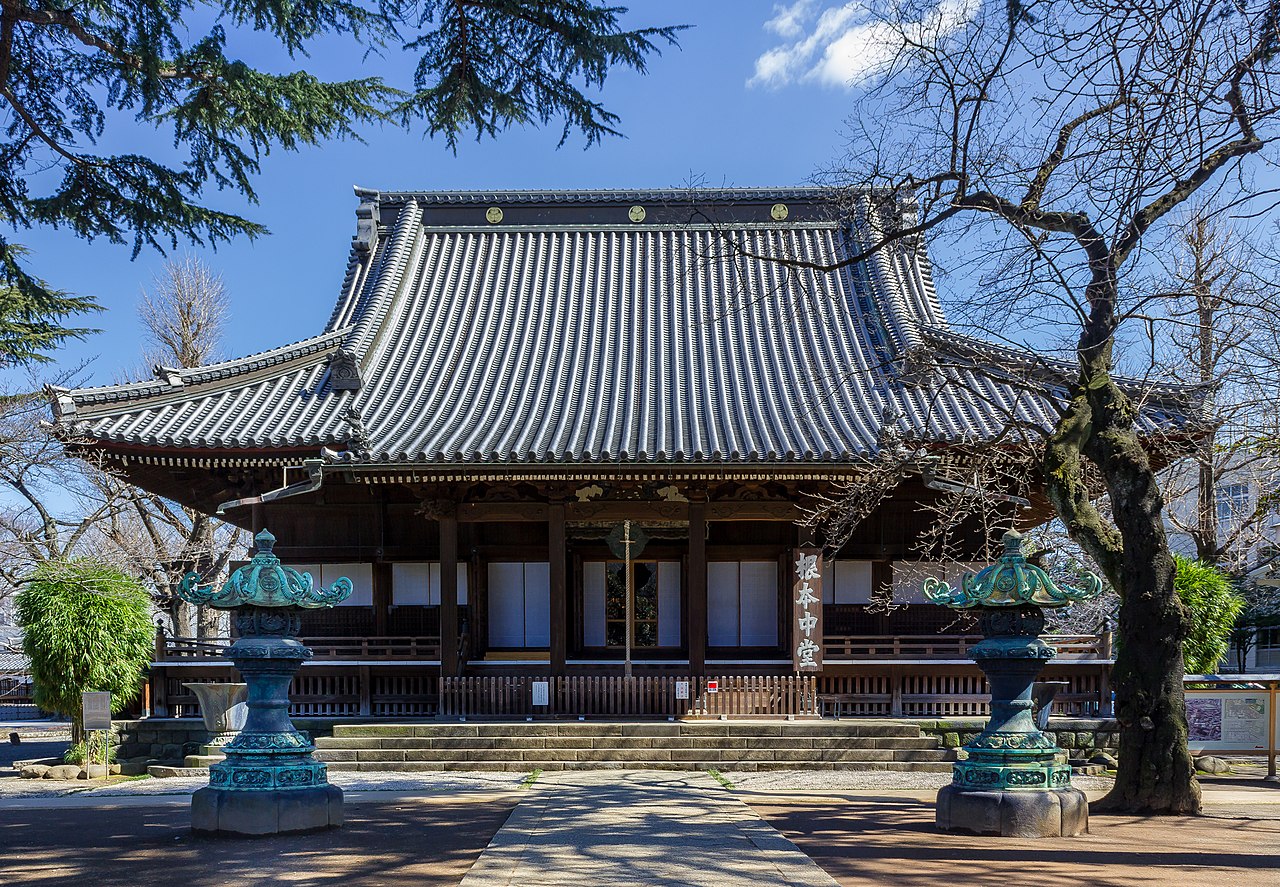
Ueno Kaneiji: The Lost Giant of Tokyo
When travelers visit Tokyo’s Ueno Park today, they are greeted by a sprawling landscape of museums, a zoo, and thousands of cherry blossom trees. However, few realize that they are walking upon the grounds of what was once one of the largest and most powerful temple complexes in Japan: Kaneiji Temple (寛永寺). Once the spiritual guardian of the Tokugawa Shogunate, Kaneiji’s footprint has diminished, but its legacy remains the beating heart of Ueno.
Introduction
Nestled quietly behind the Tokyo National Museum and the Tokyo University of the Arts lies the current main hall of Kaneiji. To the uninitiated, it appears to be a modest, serene temple. However, during the Edo period (1603–1867), the grounds of Kaneiji encompassed the entirety of what is now Ueno Park. It was a city within a city, wielding immense political and religious influence. Exploring Kaneiji is not just a temple visit; it is an act of uncovering the layers of history that define modern Tokyo, moving from the glory of the Shoguns to the ashes of civil war.
Origins: The Mount Hiei of the East
Kaneiji was established in 1625 by the high priest Tenkai, a trusted advisor to the first three Tokugawa Shoguns (Ieyasu, Hidetada, and Iemitsu). Tenkai’s vision was grand and calculated. He aimed to build a temple in Edo (modern Tokyo) that would rival the great Enryakuji Temple on Mount Hiei in Kyoto.
To signify this ambition, the temple was given the mountain name To-ei-zan (東叡山), literally meaning “Mount Hiei of the East.” It served as a familial temple (bodaiji) for the ruling Tokugawa clan, housing the mausoleums of six Shoguns. At its peak, the complex boasted over 30 sub-temples and countless auxiliary buildings, representing the absolute authority of the military government intertwined with Buddhist power.
Legend: Guarding the Demon Gate
The location of Kaneiji was not chosen by accident. According to ancient Chinese geomancy (Feng Shui) and Japanese spiritual beliefs, the Northeast direction is known as the Kimomon (鬼門), or the “Demon Gate.” It is believed that evil spirits and bad luck enter a city from this direction.
In Kyoto, the Enryakuji Temple on Mount Hiei protected the Imperial Palace from the Northeast. Tenkai replicated this spiritual defense for Edo Castle. By positioning Kaneiji in Ueno—located to the northeast of Edo Castle—he created a spiritual barrier to protect the Shogun from malevolent forces.
Legends suggest that Tenkai deliberately planted cherry blossom trees throughout the grounds not just for aesthetics, but to pacify the spirits of the land. This act gave birth to Ueno’s modern reputation as Tokyo’s premier hanami (flower viewing) spot, a tradition that has outlived the Shogunate itself.
Modern Culture and the Scars of War
The reason Kaneiji is no longer the giant it once was lies in the violent transition from feudalism to the modern era. In 1868, during the Boshin War, loyalists to the Shogunate (the Shogitai) barricaded themselves inside Kaneiji to fight against the new Imperial forces. The ensuing Battle of Ueno resulted in the burning and destruction of nearly the entire complex.
Today, the remnants of Kaneiji are scattered throughout Ueno Park like open-air museum exhibits:
- The Five-Story Pagoda: Visibly standing within the grounds of the Ueno Zoo.
- Kiyomizu Kannon-do: A surviving hall modeled after Kyoto’s Kiyomizu-dera, famous for its “Pine of the Moon.”
- Ueno Toshogu: A shrine that miraculously survived the war and WWII, glittering in gold.
Modern culture in Ueno is a direct descendant of the temple’s history; the park land was confiscated by the new government after the battle and eventually turned into Japan’s first public park.
Traveler’s Tips
To truly appreciate Kaneiji, you must look beyond the main park paths.
- Visit the Main Hall: The current Konpon Chudo (Main Hall) is located to the north of the museums, near Uguisudani Station. It is quiet, atmospheric, and houses a statue of Yakushi Nyorai (the Medicine Buddha).
- Tokugawa Mausoleum: While usually closed to the public, the gates to the Tokugawa mausoleum can be viewed adjacent to the main hall. It is a somber reminder of the clan’s power.
- Respect the Atmosphere: Unlike the noisy market streets of nearby Ameyoko, the Kaneiji grounds are a place of prayer. Photography is generally permitted outside, but keep voices low.
- The Great Buddha: Don’t miss the “Ueno Daibutsu.” Once a giant statue, it was damaged by earthquakes and melted for war metal. Now, only the face remains relief-style on a wall—a popular spot for students praying for success (as the face has “fallen” as much as it can, it can fall no further).
Sources & Further Reading
For those interested in the deep history of Japanese spirituality and the foundations of the political geomancy used by Tenkai, the following texts provide essential context:
- Edo Meisho Zue (Guide to Famous Edo Sites): An illustrated guide from the 1830s that depicts Kaneiji in its full, pre-war glory.
- Tokugawa Jikki: The official records of the Tokugawa Shogunate, detailing the relationship between the Shoguns and the temple.
- Nihon Shoki & Kojiki: While these ancient chronicles (c. 8th century) predate Kaneiji, they established the fundamental Shinto-Buddhist syncretism and the mythology of direction/geomancy that Monk Tenkai utilized to design the temple’s protective layout.