
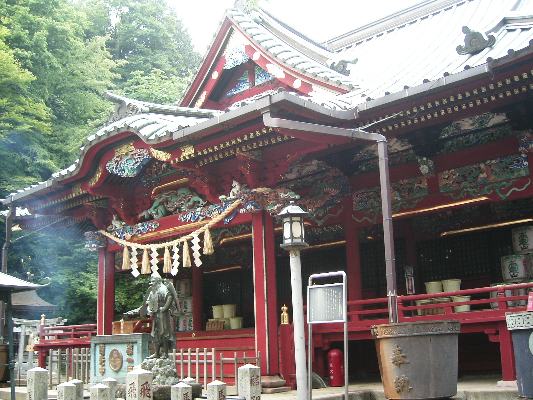
Honji Suijaku: The Sacred Union of Shinto and Buddhism
When travelers first arrive in Japan, they are often struck by a curious spiritual phenomenon. It is not uncommon to find a red Torii gate—the symbol of Shinto—standing guard at the entrance of a Buddhist temple, or to see a Buddhist altar tucked away within the precincts of a Shinto shrine. For the uninitiated, the lines between Japan’s two major religions can seem blurred. This is not a mistake or a modern confusion; it is the physical legacy of Honji Suijaku.
Honji Suijaku (本地垂迹) is a religious theory that dominated Japanese spiritual life for over a thousand years. It posits a profound unity between the indigenous gods of Japan and the imported deities of Buddhism. To understand this concept is to unlock the secrets of Japanese culture, art, and the unique worldview that allows distinct faiths to coexist in harmony.
Origins: When the Kami Met the Buddha
Buddhism arrived in Japan from the Korean peninsula in the 6th century, bringing with it advanced philosophy, art, and political structures. However, Japan was already populated by the Kami—the indigenous spirits of nature and ancestors revered in Shinto.
Initially, there was conflict between the clans supporting the new foreign religion and those defending the native gods. However, rather than one eradicating the other, a unique syncretism evolved. By the Heian period (794–1185), monks and scholars began to systematize this relationship using the theory of Honji Suijaku.
The term translates roughly to “Original Substance (Honji) and Manifest Traces (Suijaku).” The theory claimed that Indian Buddhist deities (Buddhas and Bodhisattvas) were the true original substance, and they appeared in Japan as Shinto Kami—the manifest traces—to save the Japanese people. This brilliant theological framework allowed the Japanese to embrace Buddhism without abandoning their native gods. The Kami were simply the local avatars of universal Buddhist truths.
Legend: Deities in Disguise
The application of Honji Suijaku created fascinating pairings of deities, fundamentally changing how the Japanese visualized the divine. Before Buddhism, Kami were rarely depicted in human form; they were felt in nature—in waterfalls, mountains, and great trees.
Under this theory, specific equivalencies were established:
- Amaterasu and Dainichi Nyorai: The supreme Shinto Sun Goddess, Amaterasu Omikami, was identified as the manifestation of Dainichi Nyorai (Mahavairocana), the Cosmic Buddha of the Shingon sect. This linked the imperial ancestor directly to the highest power in esoteric Buddhism.
- Hachiman the Bodhisattva: Hachiman, the Shinto god of war and archery, became one of the earliest syncretic figures. He was given the title of “Great Bodhisattva” and became a guardian of the great Todai-ji Temple in Nara.
These associations meant that praying to a Kami was effectively the same as praying to its Buddhist counterpart, creating a dual-system of worship that permeated every level of society.
Modern Culture: The Great Separation
If Honji Suijaku was so influential, why do we see distinct “Shinto Shrines” and “Buddhist Temples” today?
The answer lies in the Meiji Restoration of 1868. As the new government sought to modernize Japan and center power around the Emperor (the high priest of Shinto), they viewed Buddhism as a foreign corruption. They issued the Shinbutsu Bunri (Separation of Kami and Buddhas) orders.
This led to a forceful, sometimes violent, separation. Buddhist statues were removed from shrines, and monks were forced to laicize. Yet, despite this official divorce, the spirit of Honji Suijaku survives in the cultural DNA of Japan. Most Japanese people today identify as “both” Shinto and Buddhist, celebrating births and weddings with Shinto rites while turning to Buddhist rituals for funerals and ancestry worship. The mindset of fluidity remains intact.
Traveler’s Tips: Witnessing the Syncretism
While the institutions are legally separate, the observant traveler can still see the “traces” of this union throughout Japan.
- Visit the Kumano Kodo: The pilgrimage routes of Kumano are the epitome of syncretism. At Seiganto-ji temple and Kumano Nachi Taisha shrine, the buildings sit side-by-side near the Nachi waterfall, preserving the ancient relationship.
- Nikko Toshogu Shrine: Dedicated to Tokugawa Ieyasu, this UNESCO site is a masterpiece of “Gongen-zukuri” architecture, a style heavily influenced by the mix of Shinto and Buddhist aesthetics.
- Look for Jinguji: Keep an ear out for the term Jinguji (shrine-temple). While rare now, some sites have revived the tradition of housing both faiths in one complex.
- Etiquette: When visiting these sites, remember that the rituals differ. At a shrine, bow twice, clap twice, and bow once. At a temple, simply bow and press your hands together in prayer—do not clap.
Sources & Further Reading
To deepen your understanding of Japanese mythology and the foundations of these beliefs, consider exploring these historical texts:
- The Kojiki (Records of Ancient Matters): Japan’s oldest chronicle of myths and legends.
- The Nihon Shoki (The Chronicles of Japan): A classical history that provides context on the arrival of Buddhism.
- Tales of the Heike: A medieval epic that frequently references the interplay between Buddhist karma and local Kami.
- Teeuwen, Mark & Rambelli, Fabio (Editors): Buddhas and Kami in Japan: Honji Suijaku as a Combinatory Paradigm.