
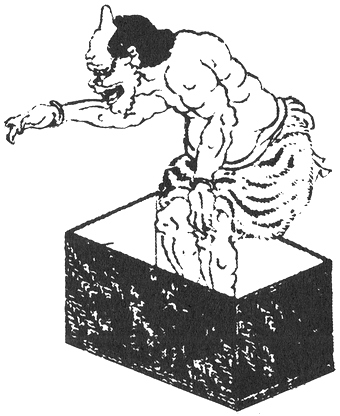
Amanojaku: Exploring Japan’s Contrarian Demon Folklore
By [Your Name], Cultural Travel Expert
Introduction
Have you ever met someone who instinctively does the exact opposite of what they are told? Or perhaps someone who delights in provoking others just for the sake of argument? In Western psychology, we might call this oppositional behavior. In Japanese folklore, however, this perversity is often attributed to a small, wicked yokai known as the Amanojaku (天邪鬼).
Literally translating to “Heavenly Evil Spirit,” the Amanojaku is a fascinating creature within the pantheon of Japanese monsters. Unlike the majestic dragons or the mischievous shapeshifting foxes (kitsune), the Amanojaku represents the darker side of human nature: the urge to incite discord and the refusal to conform. For cultural travelers and folklore enthusiasts, understanding the Amanojaku offers a unique window into how ancient Japan personified the concept of rebellion and wickedness.
Origins: From Deity to Demon
The origins of the Amanojaku are complex, blending native Shinto mythology with imported Buddhist traditions. Historically, the creature is believed to be derived from Amenosagueme, a deity mentioned in Japan’s oldest historical chronicles. In these ancient texts, Amenosagueme was a female kami capable of seeing into people’s hearts and naturally inclined to be contrarian. Over centuries, as legends mutated, this deity was demoted from a heavenly spirit to a malicious goblin.
In a separate evolution within Japanese Buddhism, the Amanojaku is associated with the Jaki, small demons that are often depicted being trampled under the feet of the Four Heavenly Kings (Shitenno). If you visit ancient temples in Nara or Kyoto, look closely at the fierce warrior statues guarding the altars; the squirming, grimacing creature trapped beneath their boots is often identified as an Amanojaku, symbolizing the triumph of righteousness over wickedness.
The Legend of Uriko-hime (The Melon Princess)
While the Amanojaku appears in various tales, its most infamous role is in the tragic and gruesome folktale of Uriko-hime.
According to the legend, an elderly couple found a melon floating down a river. When they cut it open, they found a baby girl inside and named her Uriko-hime. She grew into a beautiful and kind young woman, known for her skill in weaving. One day, the elderly couple had to leave the house, warning Uriko-hime not to open the door for anyone.
Inevitably, the Amanojaku appeared. Through cunning manipulation and pleading, the demon convinced the kind-hearted girl to open the door just a crack. Once the barrier was breached, the Amanojaku forced its way in. In the darkest version of the tale, the demon killed Uriko-hime, skinned her, and wore her skin as a suit to impersonate her. When the elderly couple returned, they were initially fooled, but eventually, the Amanojaku was exposed—often by a pet bird warning the couple—and chased away or killed. This story serves as a grim cautionary tale about obedience and the dangers of trusting strangers.
Modern Culture and Language
The legacy of the Amanojaku survives vibrantly in modern Japanese culture, though the meaning has softened over time. Today, the word “Amanojaku” is commonly used to describe a personality type rather than a literal monster. If a person is described as an amanojaku, it means they are perverse, contrarian, or argumentative—someone who hides their true feelings by acting the opposite way (similar to the “tsundere” archetype in anime).
In pop culture, the creature appears frequently:
- Anime and Manga: Series like GeGeGe no Kitaro and Ghost Stories (Gakkou no Kaidan) feature the Amanojaku as a prominent character, often playing up its trickster nature.
- Music: “Amanojaku” is a popular title for J-Pop and Vocaloid songs, usually exploring themes of unrequited love or the inability to be honest with oneself.
Traveler’s Tips: Where to Find the Amanojaku
If you are planning a trip to Japan and want to spot this ancient contrarian, here are a few tips:
- Temple Hopping: Visit Todai-ji in Nara or various temples in Kyoto. Look for the statues of Bishamonten or the Shitenno. The demons being trampled are the artistic ancestors of the Amanojaku.
- Souvenirs: In traditional mask shops in historic districts (like Asakusa in Tokyo or Higashiyama in Kyoto), you might find masks depicting the grimacing face of an Oni or Amanojaku. They make for striking, albeit slightly scary, wall decorations.
- Language Use: If you are learning Japanese and want to impress your guide, you can jokingly use the term. If a friend refuses to admit they are cold despite shivering, you might say, “Don’t be such an amanojaku!”
Sources & Further Reading
For those wishing to dig deeper into the lore of the Amanojaku and its mythological roots, the following texts are essential:
- The Kojiki (Records of Ancient Matters): Contains the accounts of Amenosagueme, the precursor to the Amanojaku.
- The Nihon Shoki (The Chronicles of Japan): Offers alternative historical perspectives on the ancient deities.
- Gazu Hyakki Yagyo (The Illustrated Night Parade of a Hundred Demons): By Toriyama Sekien. This 18th-century work provides the classic visual representations of yokai that define how we see them today.