
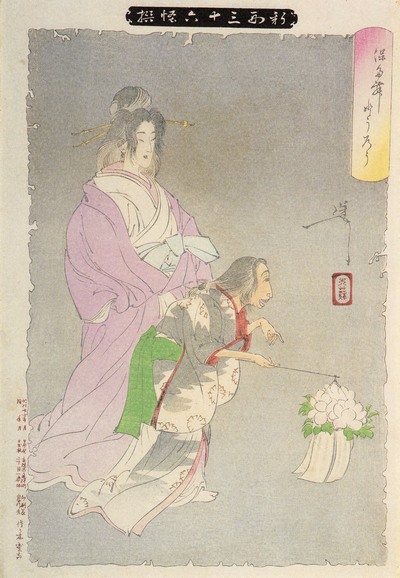
The Peony Lantern: Unveiling Japan’s Botan Doro
Summer in Japan is synonymous with fireworks, festivals, and surprisingly, fear. In a tradition known as Kaidan (strange tales), Japanese people gather during the humid summer months to tell ghost stories, believing the resulting chills will help cool them down. Among these spectral narratives, few are as beloved or as terrifying as Botan Doro (The Tale of the Peony Lantern).
Often cited as one of Japan’s three great ghost stories alongside Yotsuya Kaidan and Bancho Sarayashiki, Botan Doro serves as a fascinating window into the Japanese psyche regarding love, death, and the afterlife. For the cultural traveler, understanding this legend adds a layer of depth to visits to old temples and Kabuki theaters.
Origins: From Chinese Folklore to Edo Masterpiece
While Botan Doro is quintessentially Japanese today, its roots are continental. The story was adapted from a Chinese collection of supernatural tales titled Jiandeng Xinhua (New Tales for the Trimmed Lamp Wick), written during the Ming Dynasty.
It arrived in Japan during the Edo period (1603–1867), a time of flourishing arts and culture. The tale was first adapted into Japanese by Asai Ryoi in his 1666 collection Otogi Boko (Hand Puppets). However, the version most familiar to modern audiences was crafted by the legendary Rakugo (comic storytelling) master Sanyutei Encho in the late 19th century. Encho transformed the story into a complex melodrama of romance and betrayal, solidifying its place in the canon of Japanese horror.
The Legend of the Peony Lantern
The narrative centers on a young samurai (or student, depending on the version) named Shinzaburo. He falls deeply in love with a beautiful young woman named Otsuyu. Due to social circumstances or family intervention, they are kept apart, and Shinzaburo is eventually told that Otsuyu has died of lovesickness.
Heartbroken and grieving during the Obon festival—the time when spirits return to the earthly realm—Shinzaburo is sitting on his veranda when he sees two women approaching in the dark. One is Otsuyu, and the other is her servant, who carries a lantern painted with peonies. Overjoyed to find his lover alive, Shinzaburo invites them in, and they begin a secret nightly affair.
However, a suspicious neighbor (often a servant or a fortune teller) peeks into Shinzaburo’s room one night. Instead of seeing a young couple, the witness is horrified to see Shinzaburo embracing a rotting skeleton, bathed in the eerie glow of the peony lantern.
The Betrayal
Warned that his life energy is being drained by the spirit, Shinzaburo seeks help from a Buddhist priest. He is given Ofuda (holy paper charms) to paste on his doors and windows to keep the ghosts out. For a while, he is safe. The ghosts wail outside, unable to enter.
Tragically, the story often ends in betrayal. In many iterations, a servant is bribed by the ghosts—sometimes with gold that later turns into clay or leaves—to remove the charms. With the protection gone, the spirits enter. The next morning, Shinzaburo is found dead, his body entwined with a skeleton, a peony lantern standing silently nearby.
Modern Culture and Adaptations
Botan Doro has transcended its oral origins to become a staple of Japanese pop culture. It is a perennial favorite in Kabuki theater, usually performed during the summer months to align with Obon. The visual contrast between the beautiful kimono-clad Otsuyu and her eventual skeletal form provides dramatic flair that Kabuki is famous for.
The story has inspired countless films, from classic black-and-white horror cinema of the 1960s to modern anime interpretations. It serves as a romantic cautionary tale, exploring the Buddhist themes of attachment (miren) and the inability of the dead to let go of the living.
Traveler’s Tips: Experiencing the Legend
If you are visiting Japan, particularly Tokyo, there are several ways to immerse yourself in the world of Botan Doro:
- Visit Zensho-an Temple (Yanaka, Tokyo): This temple is the resting place of Sanyutei Encho, the storyteller who popularized the tale. Every August, the temple hosts a “Ghost Painting Exhibition” (Yurei-ga), displaying scroll paintings collected by Encho himself. Many feature scenes reminiscent of Botan Doro.
- Summer Kabuki: Check the schedule for the Kabuki-za Theatre in Ginza. Ghost plays are traditionally scheduled in July and August.
- Rakugo Performances: While usually in Japanese, some venues in Tokyo now offer Rakugo with English subtitles or explanations, giving you a taste of the storytelling style that made the lantern legend famous.
- Obon Festivals: Visiting any local Obon dance or lantern-lighting festival in mid-August will give you a sense of the atmosphere in which Shinzaburo first reunited with his ghostly lover.
Sources & Further Reading
To deepen your understanding of Japanese mythology and the supernatural, consider exploring the following texts:
- Otogi Boko (Hand Puppets) by Asai Ryoi: The 17th-century text that first adapted the Chinese tale for a Japanese audience.
- The Peony Lantern by Sanyutei Encho: Transcripts of the classic Rakugo performance are available in translation and offer the most dramatic version of the plot.
- Jiandeng Xinhua: For those interested in comparative folklore, this Chinese Ming Dynasty collection provides the source material.
- Kojiki (Records of Ancient Matters) and Nihon Shoki (The Chronicles of Japan): While Botan Doro is a later Edo-period story, these ancient 8th-century texts establish the foundational Japanese beliefs in the interaction between the living and the dead (Yomi), providing the cultural context that allows stories like Botan Doro to flourish.