
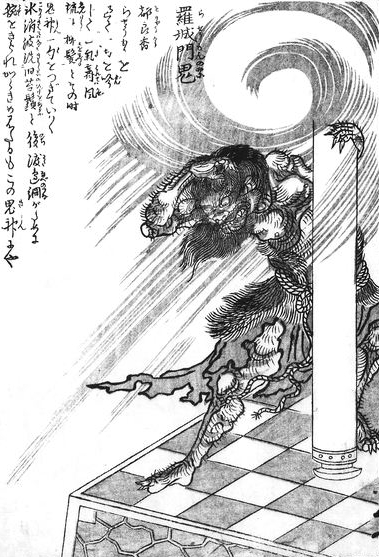
The Legend of the Rashomon Demon: Kyoto’s Gate of Mystery
Introduction
If you walk through the bustling streets of modern Kyoto, specifically south of Kyoto Station, it is hard to imagine that this area was once the eerie boundary between the civilized world and the darkness beyond. In the Heian period (794–1185), the capital was guarded by the majestic Rashōmon (Rajōmon) Gate. However, as the era progressed and the city faced decline, this gate became dilapidated, serving as a hideout for thieves, discarded corpses, and, according to folklore, the terrifying Rashomon no Oni (The Demon of Rashomon).
For cultural travelers and folklore enthusiasts, the legend of the Rashomon Demon is not just a ghost story; it is a window into the samurai spirit and the supernatural fears of ancient Japan. Let’s journey back in time to meet the demon that haunted the southern entrance of the capital.
Origins of the Gate
Rashōmon was the grand main gate at the southern end of Suzaku Avenue, the central thoroughfare of Heian-kyo (ancient Kyoto). Built to demonstrate the power of the Emperor, it stood nearly 20 meters wide and was topped with a massive roof.
However, by the late Heian period, the right side of the capital (Ukyo) had largely failed due to swampy ground, leading to the gate’s neglect. The once-glittering structure fell into ruin. The upper floor, originally designed to house statues of guardians, became a den for the supernatural. In the Japanese imagination, twilight and ruined boundaries are where the spiritual world bleeds into the physical one, making the crumbling Rashōmon the perfect setting for an encounter with an Oni.
The Legend: Watanabe no Tsuna and the Severed Arm
The most famous tale regarding the Rashomon Demon involves Watanabe no Tsuna, a legendary samurai and one of the “Four Guardian Kings” serving the warrior Minamoto no Raiko.
The Bet
According to the legend, during a drinking party, the warriors were discussing rumors that a demon haunted the Rashōmon Gate at night. Tsuna, known for his fearlessness, scoffed at the idea. To prove his bravery, he wagered that he would go to the gate alone and place a wooden sign there as proof of his visit.
The Encounter
Armed with his famous sword, Higekiri (Beard Cutter), Tsuna arrived at the desolate gate in the pitch black of a storm. As he dismounted his horse and approached the entrance, a massive hand reached down from the upper story and grabbed his helmet (some versions say his topknot), attempting to drag him up into the darkness.
Without a moment of hesitation or fear, Tsuna drew his sword and slashed upward in a violent arc. He severed the demon’s arm at the elbow. The demon, often identified in later folklore as Ibaraki-doji (a lieutenant of the demon king Shuten-doji), howled in pain and fled into the sky, leaving the hairy, clawed arm behind.
The Aftermath
Tsuna kept the arm as a trophy. However, the story continues with the demon returning days later, disguised as Tsuna’s elderly aunt or wet nurse. Tricking the samurai into showing her the trophy, the “aunt” snatched the arm, revealed her true demonic form, and flew away through the roof. This narrative arc highlights the classic Japanese theme of the deceptive nature of spirits.
Modern Culture: From Noh to Anime
The battle at Rashomon has permeated Japanese culture for centuries. It became a staple of Noh theater (specifically the play Rashōmon) and Kabuki, where actors utilize dramatic masks and movements to reenact the clash between samurai and demon.
In the 20th century, the gate gained global fame through Akira Kurosawa’s film Rashomon (based on Ryūnosuke Akutagawa’s short story). While Kurosawa’s film focuses on the relativity of truth among humans taking shelter at the gate, the atmospheric ruin owes its vibe to the original demon legends.
Today, the legend thrives in pop culture:
- Anime & Games: Characters based on Watanabe no Tsuna and Ibaraki-doji appear frequently in franchises like Fate/Grand Order, Onmyoji, and Nioh, where the severed arm and the gate are recurring motifs.
- Literature: The story is a classic example of yōkai (spirit) literature, influencing modern horror and fantasy manga.
Traveler’s Tips: Finding the Phantom Gate
While the massive gate no longer stands, travelers can still visit the site to pay their respects to the legend.
- The Monument: There is a small stone monument marking the location of Rashōmon in a quiet playground near Toji Temple. It is a humble spot, but profound for those who know the history.
- Location: West of Kujo-Omiya intersection, Minami-ku, Kyoto.
- Toji Temple: Just a short walk away is Toji Temple, a UNESCO World Heritage site. It was built around the same time as the original gate and gives you a sense of the scale of Heian architecture.
- Kyoto Station: The site is walkable from Kyoto Station (about 15-20 minutes). It is best visited during the day, though a twilight visit adds the necessary atmosphere for ghost hunting.
Sources & Further Reading
To dive deeper into the lore of ancient Japan and the samurai era, consider exploring these historical texts:
- Konjaku Monogatarishu (Anthology of Tales from the Past): A Heian-period collection where early versions of the Rashomon encounters are recorded.
- The Taiheiki (Chronicle of Great Peace): Contains detailed accounts of the warrior Minamoto no Raiko and his retainers battling demons.
- Heike Monogatari (The Tale of the Heike): Essential reading to understand the samurai culture that birthed heroes like Watanabe no Tsuna.
- Nihon Shoki & Kojiki: While these ancient chronicles focus on gods and early creation myths, they establish the foundation of the spiritual worldview (Shinto) that allows Oni to exist.