
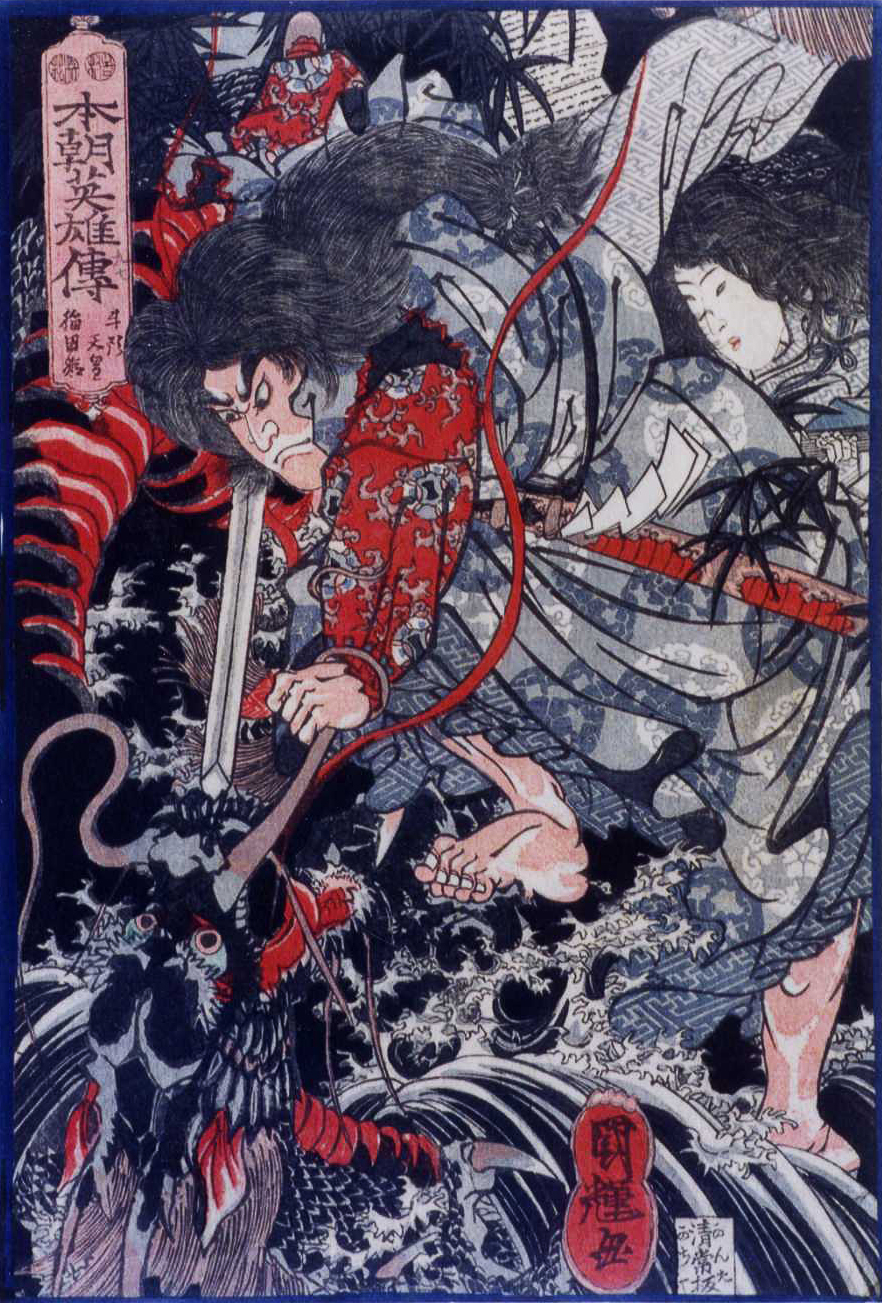
The Legend of Susanoo-no-Mikoto: Japan’s Wild Storm God
Japan is a country where the divine and the natural world are inextricably linked. Among the myriad of kami (gods) in the Shinto pantheon, few are as dynamic, controversial, or culturally significant as Takehayasusanoo-no-Mikoto, commonly known simply as Susanoo.
Often described as the god of storms and the sea, Susanoo is a figure of duality. He is a trickster and a troublemaker, yet he is also a hero and a protector. For travelers interested in Japanese culture, understanding Susanoo provides a fascinating lens into the country’s ancient roots, bridging the gap between the imperial history of Kyoto and the mystical landscapes of the Izumo region.
Origins: The Birth of a Tempest
To understand Susanoo, one must look to the Kojiki (Records of Ancient Matters) and the Nihon Shoki (Chronicles of Japan), the oldest historical texts in Japanese history. According to these myths, Susanoo was born from Izanagi-no-Mikoto, the creator god.
After escaping the underworld, Izanagi performed a purification ritual. When he washed his left eye, the Sun Goddess Amaterasu was born. When he washed his right eye, the Moon God Tsukuyomi emerged. Finally, when he washed his nose, Susanoo came into existence. Together, these three are known as the “Three Precious Children.”
While Amaterasu was given rule over the High Celestial Plain (Takamagahara) and Tsukuyomi the night, Susanoo was assigned dominion over the seas. However, his tempestuous nature led to conflict. He was loud, destructive, and prone to tantrums that caused natural disasters. His notorious rivalry with his sister, Amaterasu, eventually led to his banishment from the heavens, setting the stage for his most famous adventure on Earth.
The Legend: Slaying the Eight-Headed Serpent
Susanoo’s exile led him to the province of Izumo (modern-day Shimane Prefecture), a land steeped in mythology. It is here that he transitioned from a petulant storm god to a cultural hero.
Upon arriving at the Hi River, Susanoo encountered an elderly couple weeping over their daughter, Kushinadahime. They explained that for the past seven years, a terrifying monster known as the Yamata-no-Orochi—a giant serpent with eight heads and eight tails—had come to devour one of their daughters. Now, only Kushinadahime remained, and the beast was coming for her.
Susanoo struck a deal: he would slay the beast in exchange for Kushinadahime’s hand in marriage.
The Strategy
Rather than using brute force, Susanoo used intellect. He instructed the couple to brew eight vats of strong sake (rice wine) and place them behind eight gates. When the Orochi arrived, its eight heads drank greedily from the vats. The serpent soon fell into a drunken stupor.
Seizing the moment, Susanoo drew his sword and chopped the beast into pieces. While cutting the serpent’s tail, his blade struck something hard. Inside, he found a magnificent sword: the Kusanagi-no-Tsurugi (Grass-Cutting Sword). Recognizing its divine quality, he later gifted this sword to his sister Amaterasu as a reconciliation offering. Today, this sword is one of the Three Sacred Treasures of the Imperial Family of Japan.
Modern Culture and Legacy
Susanoo remains a vibrant figure in modern Japanese culture. He is the archetype of the anti-hero—flawed and emotional, yet capable of great feats. You will find references to him in popular anime and manga, such as Naruto, where “Susanoo” is a powerful avatar ability, highlighting his destructive yet protective nature.
Culturally, he is also syncretized with Gozu Tenno (the Ox-Headed King), a deity of disease prevention. This connection makes him the central figure of the famous Gion Matsuri in Kyoto, one of Japan’s most spectacular festivals, originally held to appease the gods during a plague.
Traveler’s Tips: Where to Find Susanoo
For those wishing to walk the path of the storm god, there are specific spiritual sites you must add to your itinerary:
1. Izumo Taisha and Area (Shimane Prefecture)
While Izumo Taisha is dedicated to Okuninushi (Susanoo’s descendant), the entire region is Susanoo territory. Visit Susa Shrine, which is said to house his spirit, and Yaegaki Shrine, the site believed to be where he married Kushinadahime. It is a popular power spot for matchmaking.
2. Yasaka Shrine (Kyoto)
Located in the Gion district, this is arguably the most famous shrine dedicated to Susanoo. It is the heart of the Gion Matsuri. Visiting here in July allows you to witness the grandeur of traditions meant to appease this powerful deity.
3. Hikawa Shrines (Tokyo and Saitama)
The Hikawa shrine network, prominent in the Kanto region (including the famous one in Omiya/Saitama and Kawagoe), is dedicated to Susanoo. These are excellent day trips from Tokyo for those seeking history and nature.
Sources & Further Reading
To deepen your understanding of Japanese mythology, consider reading the primary sources:
- The Kojiki: Translated by Donald L. Philippi or Basil Hall Chamberlain.
- The Nihon Shoki: The Chronicles of Japan.
Susanoo-no-Mikoto represents the untamed power of nature—fearsome when angry, but a provider of rain and protection when appeased. By visiting these shrines, you aren’t just seeing old buildings; you are stepping into a story that has defined the Japanese spiritual landscape for millennia.