
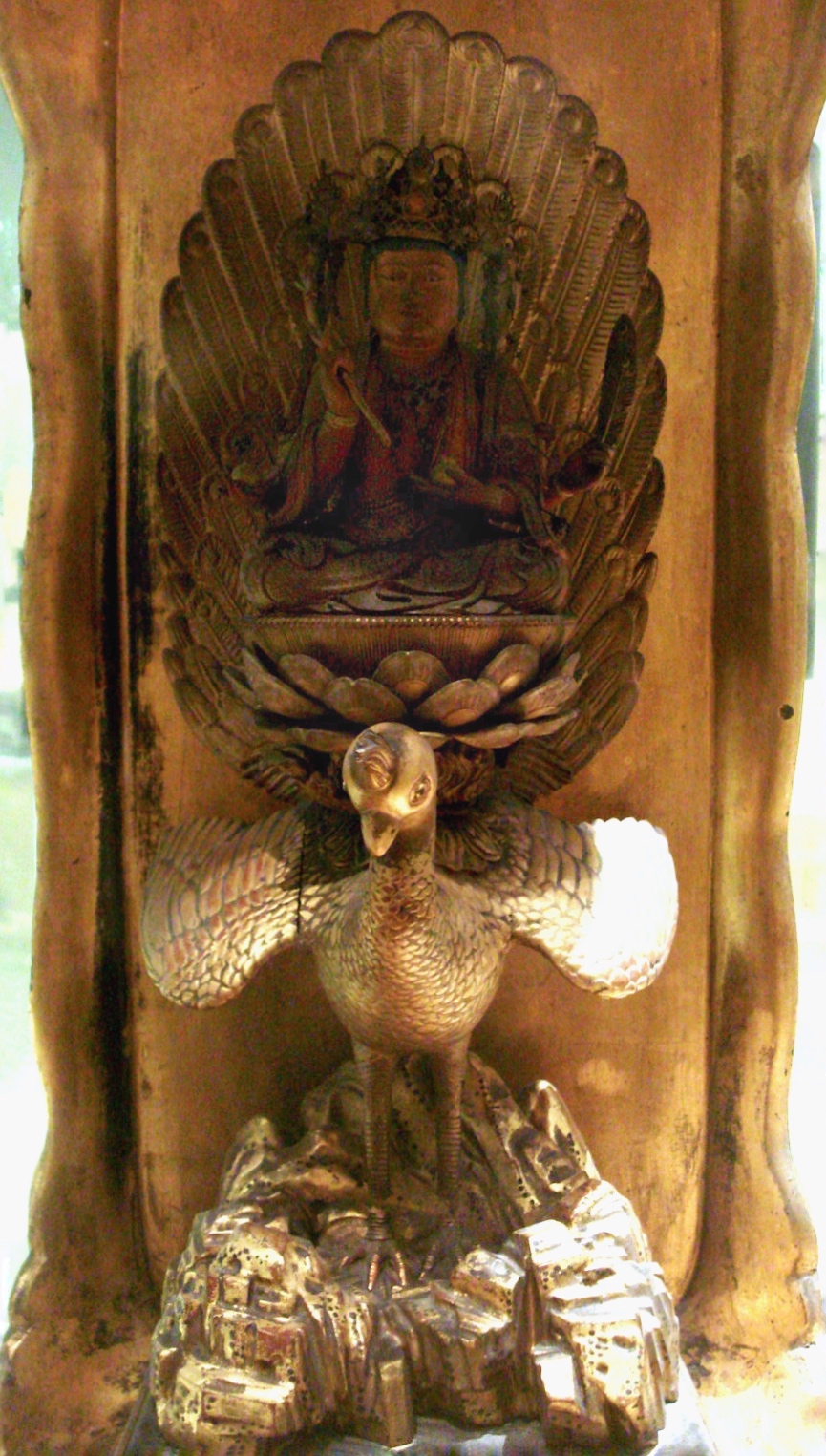
Unveiling Kujaku Myoo: The Peacock Wisdom King of Japan
When exploring the profound and visually striking world of Japanese Buddhism, travelers often encounter fearsome, weapon-wielding deities engulfed in flames. These are typically the Myoo (Wisdom Kings), the warlike protectors of the faith. However, amidst this pantheon of fury, there sits a singular, serene anomaly: Kujaku Myoo, the Peacock Wisdom King.
Unlike his wrathful counterparts who use aggression to subdue evil, Kujaku Myoo represents a gentler, yet equally powerful, force of purification. For cultural travelers and history buffs visiting Japan, understanding this unique deity offers a fascinating glimpse into the esoteric traditions of the country.
Origins: From India to Japan
Kujaku Myoo traces his lineage back to India, known in Sanskrit as Mahamayuri. Originally, Mahamayuri was depicted as a female divinity—a personification of the spell (dharani) that protects against snakebites and poisons. As Buddhism traveled along the Silk Road through China and eventually to Japan, the gender and representation of the deity shifted.
In Japan, Kujaku Myoo is generally depicted as male, though he retains a softness and grace not seen in other Wisdom Kings like Fudo Myoo. He was introduced to Japan during the Nara period but gained significant prominence during the Heian period (794–1185), particularly within the Shingon and Tendai sects of Esoteric Buddhism. The founder of Shingon Buddhism, Kobo Daishi (Kukai), viewed the Peacock King as a vital protector of the state, capable of warding off calamities and bringing rain during droughts.
The Legend and Symbolism
The most distinctive feature of this deity is, naturally, the peacock (kujaku) he rides. In ancient Indian folklore, peacocks were believed to have the ability to eat poisonous snakes and insects without being harmed. In fact, it was thought that the poison they consumed was what gave their feathers such brilliant, iridescent colors.
In the context of Buddhist philosophy, this biology was transformed into a powerful metaphor. Kujaku Myoo symbolizes the power to consume the “three poisons” of the human spirit:
- Greed
- Anger
- Ignorance
Rather than eliminating these negative emotions through force, Kujaku Myoo transmutes them into enlightenment, much like the peacock turns snake venom into beautiful plumage. Furthermore, because peacocks are said to dance before the rain, this deity became historically associated with rain-making rituals practiced by esoteric monks for the Imperial court.
Kujaku Myoo in Modern Culture
While deeply rooted in ancient scripture, the Peacock Wisdom King has found a surprising second life in modern Japanese pop culture. The visual distinctiveness of a deity riding a peacock has inspired various artists and creators.
- Anime and Manga: Kujaku Myoo appears in various forms in series like RG Veda by CLAMP and is referenced in the lore of Naruto regarding chakra natures and sealing techniques.
- Video Games: In the Shin Megami Tensei and Persona series, Kujaku Myoo (often listed as Mahamayuri) appears as a summonable demon or persona, usually specializing in healing or wind magic.
These modern adaptations keep the name and concept of the deity alive for younger generations, bridging the gap between sacred temples and digital screens.
Traveler’s Tips: Where to Visit
If you are planning a trip to Japan and wish to see Kujaku Myoo, there are specific locations known for their exquisite statues and paintings of this deity.
1. Koyasan (Mount Koya)
As the headquarters of Shingon Buddhism, Koyasan is the premier destination. The Kongobuji Temple complex and the Reihokan Museum often display treasures related to the Peacock King. Look for the masterful sculpture by the famous artist Kaikei (Kamakura period), which captures the deity in stunning, realistic detail.
2. Tokyo National Museum (Ueno)
The Tokyo National Museum frequently rotates its collection of National Treasures. They house a famous 12th-century painting of Kujaku Myoo that is considered a masterpiece of Heian Buddhist art, celebrated for its delicate use of color and