
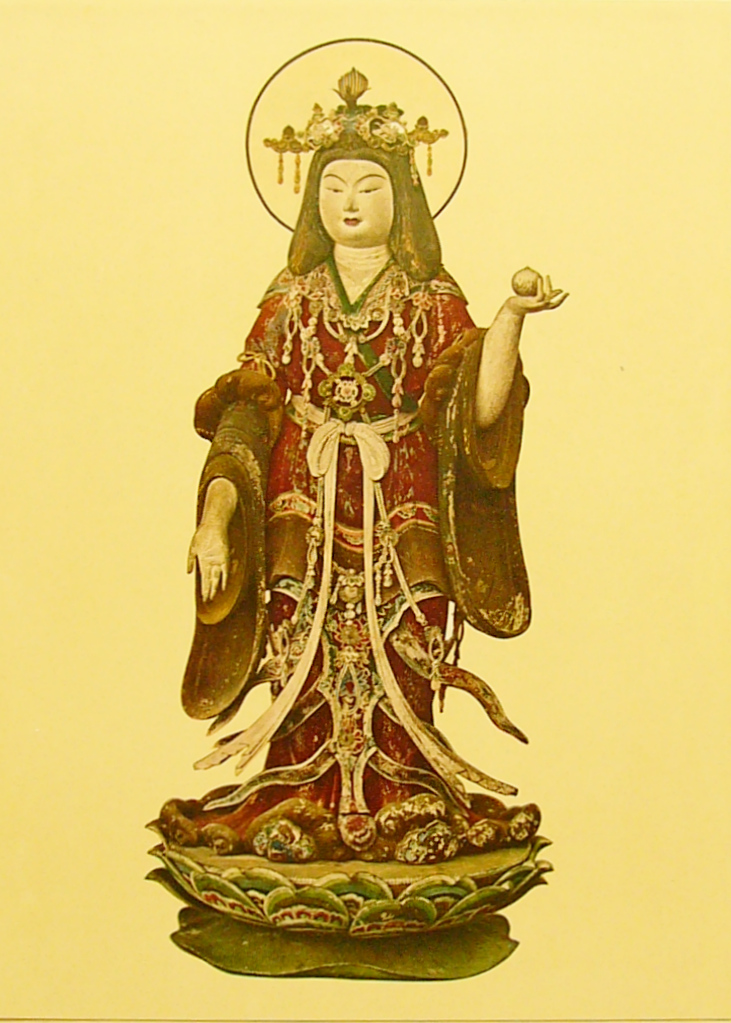
Unveiling Kisshoten: The Goddess of Beauty and Prosperity
When travelers explore the ancient temples of Nara or the quiet shrines of Kyoto, they are often introduced to the Seven Lucky Gods (Shichifukujin). Among the pantheon of Japanese deities, there is one figure who radiates an aura of elegance, abundance, and sheer aesthetic perfection: Kisshōten (吉祥天).
While she may not be as universally recognized today as the biwa-playing Benzaiten, Kisshōten remains a pivotal figure in Japanese art history and religious culture. Known as the Goddess of Beauty, Fertility, and Prosperity, her imagery offers a fascinating glimpse into the aristocratic ideals of ancient Japan.
Origins: From India to Japan
Like many deities in the Japanese Buddhist pantheon, Kisshōten’s roots trace back to India. She is the Japanese adaptation of Lakshmi, the Hindu goddess of wealth, fortune, and prosperity.
Her journey to Japan occurred via the Silk Road, passing through China where her iconography was heavily influenced by the Tang Dynasty’s courtly standards of beauty. By the time she arrived in Japan during the Nara period (710–794 AD), she was established as a protector deity in Buddhism.
In the early centuries of Japanese Buddhism, Kisshōten was worshipped fervently. The Konkomyo-kyo (Sutra of Golden Light) cites her as a powerful protector of the state who could bestow good harvests and peace upon the land. Consequently, the Imperial court frequently held repentance services called Kichijo-keka in her honor to ensure the nation’s prosperity.
The Legend and Iconography
In Buddhist mythology, Kisshōten is often described as the sister of the dark deity Kuroanten (who represents misfortune), embodying the duality of luck and disaster. She is also traditionally regarded as the wife of Bishamonten, the armor-clad god of war and warrior protector. This pairing symbolizes a harmonious balance between strength and beauty, protection and abundance.
Visual Depiction: Unlike the multi-armed, warrior-like deities often seen in Buddhism, Kisshōten is depicted as a noblewoman. Her iconography serves as a time capsule for the fashion of the Nara period, which mirrored Tang Chinese styles:
- Attire: She wears elaborate, multi-layered robes with flowing sleeves.
- Attributes: In her left hand, she typically holds the Nyoiju (Cintamani), a wish-granting jewel that glows with magical power. Her right hand is often raised in a mudra (gesture) of granting protection or fearlessness.
- Appearance: She is portrayed with a full, round face, heavy makeup, and an air of serene elegance, representing the ideal feminine beauty of the 8th century.
Modern Culture & The Seven Lucky Gods
One of the most interesting aspects of Kisshōten’s history is her rivalry—or rather, her replacement—by another goddess. Originally, Kisshōten was counted among the Seven Lucky Gods. However, over centuries, the more populist figure of Benzaiten (the goddess of music and flow) largely usurped her position in the group.
Despite this, Kisshōten has not disappeared. In some traditions, she is still included as the eighth Lucky God, or she replaces the longevity god Fukurokuju. Today, she is primarily revered by those seeking beauty, artistic inspiration, and protection from disasters. You may find her amulets in temples being purchased by geisha, artists, or anyone wishing to cultivate inner and outer grace.
Traveler’s Tips: Where to See Kisshōten
For the cultural traveler, finding depictions of Kisshōten is a treasure hunt through Japan’s oldest religious sites. Here are the top locations to pay your respects:
1. Yakushiji Temple (Nara)
This is the home of the most famous image of the goddess: the Kichijoten Painting. Dating back to the 8th century, this National Treasure is a masterpiece of color and delicacy.
- Note: The original painting is fragile and only displayed for a few weeks in January during the New Year period. However, high-quality replicas are often viewable year-round.
2. Joruriji Temple (Kyoto)
Located on the border of Nara and Kyoto, this temple houses a stunning wooden statue of Kisshōten. The statue is known for its vibrant colors and intricate jewelry.
- Tip: This is a “Secret Buddha” (Hibutsu), meaning it is usually kept behind closed doors. Check the temple schedule for special opening periods (typically spring and autumn).
3. Kurama-dera (Kyoto)
In the mountains north of Kyoto, Kisshōten is worshipped alongside Bishamonten and Senju Kannon as part of a trinity deity known as Sonten.
Sources & Further Reading
To deepen your understanding of Kisshōten and the religious landscape of early Japan, consider exploring the following:
- The Suvarnaprabhasa Sutra (Sutra of Golden Light): The primary Buddhist text responsible for elevating Kisshōten’s status as a guardian of the nation.
- Nihon Shoki (The Chronicles of Japan): While primarily focused on Shinto origins, this text provides the historical context of the Nara period when Buddhism became the state religion, paving the way for deities like Kisshōten to be adopted by the Imperial court.
- Encyclopedia of Japanese Buddhist Statuary: For detailed iconography and artistic evolution.