
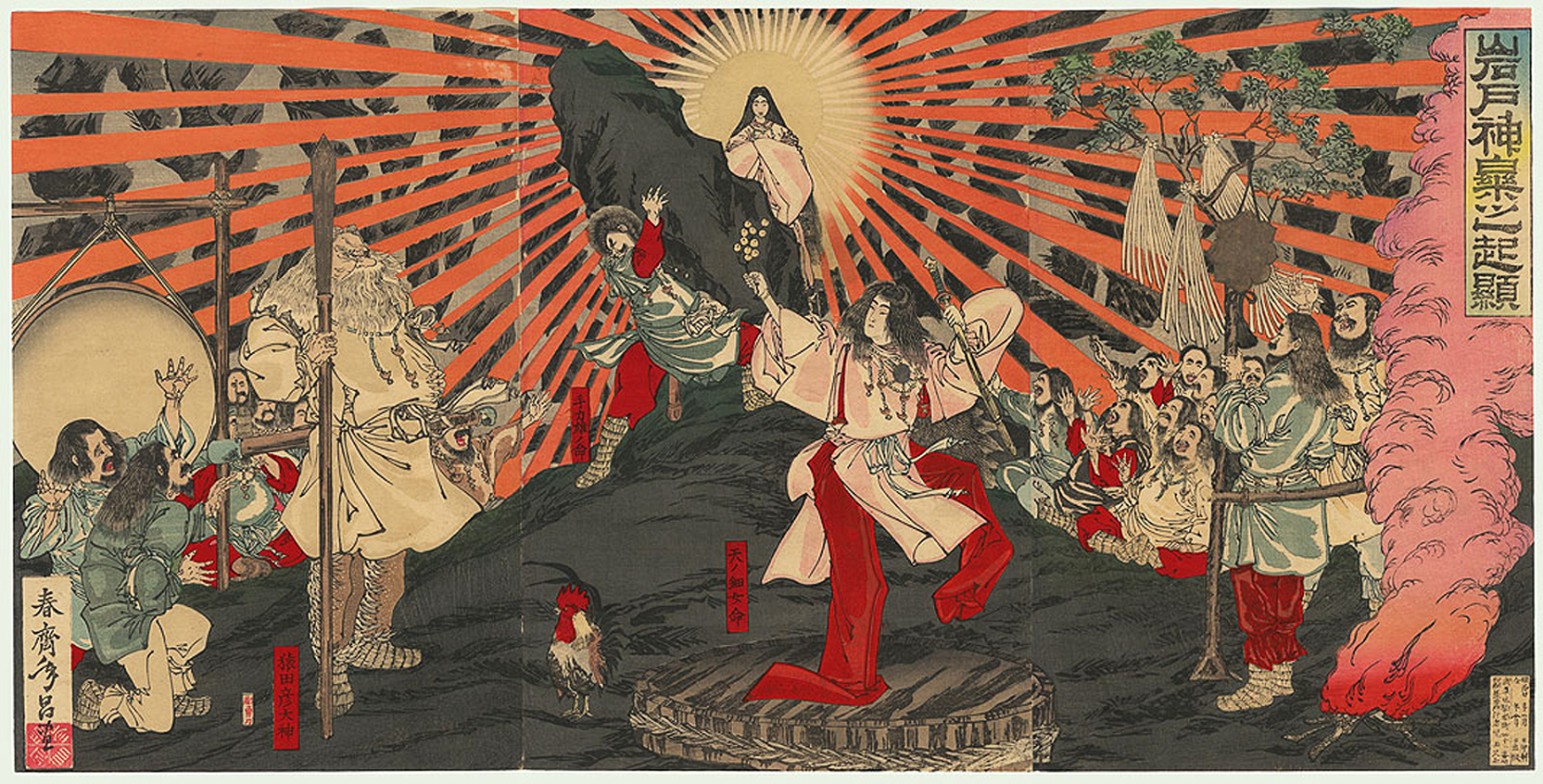
Unveiling Ame-no-Iwato: The Cave Where the Sun Hid
Imagine a world plunged into sudden, eternal darkness. Chaos reigns, crops wither, and malevolent spirits emerge from the shadows. In Japanese mythology, this apocalyptic scenario wasn’t science fiction—it was the result of a divine family feud. At the center of this tale is Ame-no-Iwato, the “Heavenly Rock Cave.”
For travelers and culture enthusiasts, Ame-no-Iwato is more than just a mythological footnote; it represents the resilience of light and the origins of Japanese performance arts. Whether you are planning a pilgrimage to Japan’s spiritual heartlands or simply exploring the depths of Shinto lore, understanding this legend is essential to grasping the Japanese soul.
Origins of the Myth
The story of Ame-no-Iwato is recorded in Japan’s oldest historical chronicles, the Kojiki (Records of Ancient Matters, 712 AD) and the Nihon Shoki (The Chronicles of Japan, 720 AD). These texts form the backbone of Shinto, Japan’s indigenous spirituality.
The drama focuses on the Sun Goddess, Amaterasu Omikami, the supreme deity of the Shinto pantheon and the mythical ancestor of the Imperial Family. Her brother, Susanoo-no-Mikoto, the Storm God, was a volatile figure. After being banished from heaven, Susanoo went on a rampage, destroying Amaterasu’s rice fields, defiling her sacred halls, and flaying a pony, which he threw into her weaving hall. Grief-stricken and terrified by her brother’s violence, Amaterasu fled to the Ame-no-Iwato cave and barricaded herself inside, sealing the entrance with a massive rock.
The Legend of the Rock Door
When the Sun Goddess vanished, the heavy curtain of night fell upon both the heavens (Takamagahara) and the earth (Ashihara-no-Nakatsukuni). The world descended into chaos. Desperate to restore light, the pantheon of eight million kami (gods) gathered at the dry riverbed of heaven to devise a plan.
They realized that force would not work against the supreme goddess. Instead, they chose to lure her out with curiosity and merriment. The gods crafted a sacred mirror (Yata no Kagami) and a string of jewels (Yasakani no Magatama)—two of the three Imperial Regalia of Japan today—and hung them on a tree outside the cave.
The plan hinged on Ame-no-Uzume, the goddess of dawn and mirth. She overturned a wooden tub and began a frantic, comical, and somewhat erotic dance upon it, stomping her feet to create a rhythm. The other gods roared with laughter and applause.
Inside the dark cave, Amaterasu was puzzled. “Why are they celebrating when the world is in darkness?” she wondered. She opened the rock door just a crack to peek out. She asked why they laughed, and Uzume replied, “We rejoice because there is a god here more illustrious than you.”
Curious, Amaterasu leaned forward to see this “new god,” catching her own brilliant reflection in the mirror hung on the tree. At that precise moment, Ame-no-Tajikarao (the god of strength), who had been hiding in the shadows, grabbed the stone door and pulled it open with immense force, dragging Amaterasu out. He threw the stone door away (legend says it landed in Togakushi, Nagano), and the world was bathed in light once more.
Modern Culture and Significance
The Ame-no-Iwato myth is not just a story of the past; it is a living part of Japanese culture. The dance performed by Ame-no-Uzume is considered the origin of Kagura, a traditional form of Shinto theatrical dance still performed at shrines today. If you visit rural Japan during festivals, you will often see Iwato Kagura, a reenactment of this very myth.
Furthermore, the concept of light returning after darkness is a powerful symbol in Japanese resilience. The mirror and jewels used in the ruse remain the sacred treasures of the Imperial House, symbolizing wisdom and benevolence.
Traveler’s Tips: Visiting the Legend
While the “High Plain of Heaven” is mythical, the location most strongly associated with this legend is real and accessible.
Amano Iwato Shrine (Miyazaki Prefecture)
Located in Takachiho, Miyazaki, this is the premier destination for those seeking the legend.
- The Vibe: The area is mystical, surrounded by deep gorges and lush forests.
- The Cave: You cannot enter the actual cave as it is sacred ground. However, priests at the West Sanctuary (Nishi-hongu) can guide you to a special observation deck where you can worship the cave from across the river.
- Amano Yasukawara: A short walk from the shrine along the river leads to a massive cavern filled with thousands of stacked stones. It is said this is where the gods gathered to discuss how to lure Amaterasu out. The atmosphere here is incredibly spiritual and photogenic.
Togakushi Shrine (Nagano Prefecture)
For a different angle, visit Togakushi. Legend holds that the rock door thrown by the strength god Tajikarao landed here, forming the jagged Togakushi mountain range.
Etiquette
- Silence: These are active religious sites. Keep your voice down.
- Photography: Always check signage. Photography is strictly forbidden at the observation deck facing the sacred cave at Amano Iwato Shrine.
- Bow: It is polite to bow once at the shrine gate (torii) before entering and leaving.
Sources & Further Reading
To deepen your understanding of the Ame-no-Iwato myth, consider exploring these historical texts:
- The Kojiki: Translated by Basil Hall Chamberlain or Donald L. Philippi. This text focuses on the mythological origins of the islands and the kami.
- The Nihon Shoki: Translated by W.G. Aston. This offers a more historical approach but includes the detailed variations of the sun goddess myth.
- Takachiho Tourism Association: Offers local insights into the Kagura performances and shrine history.