
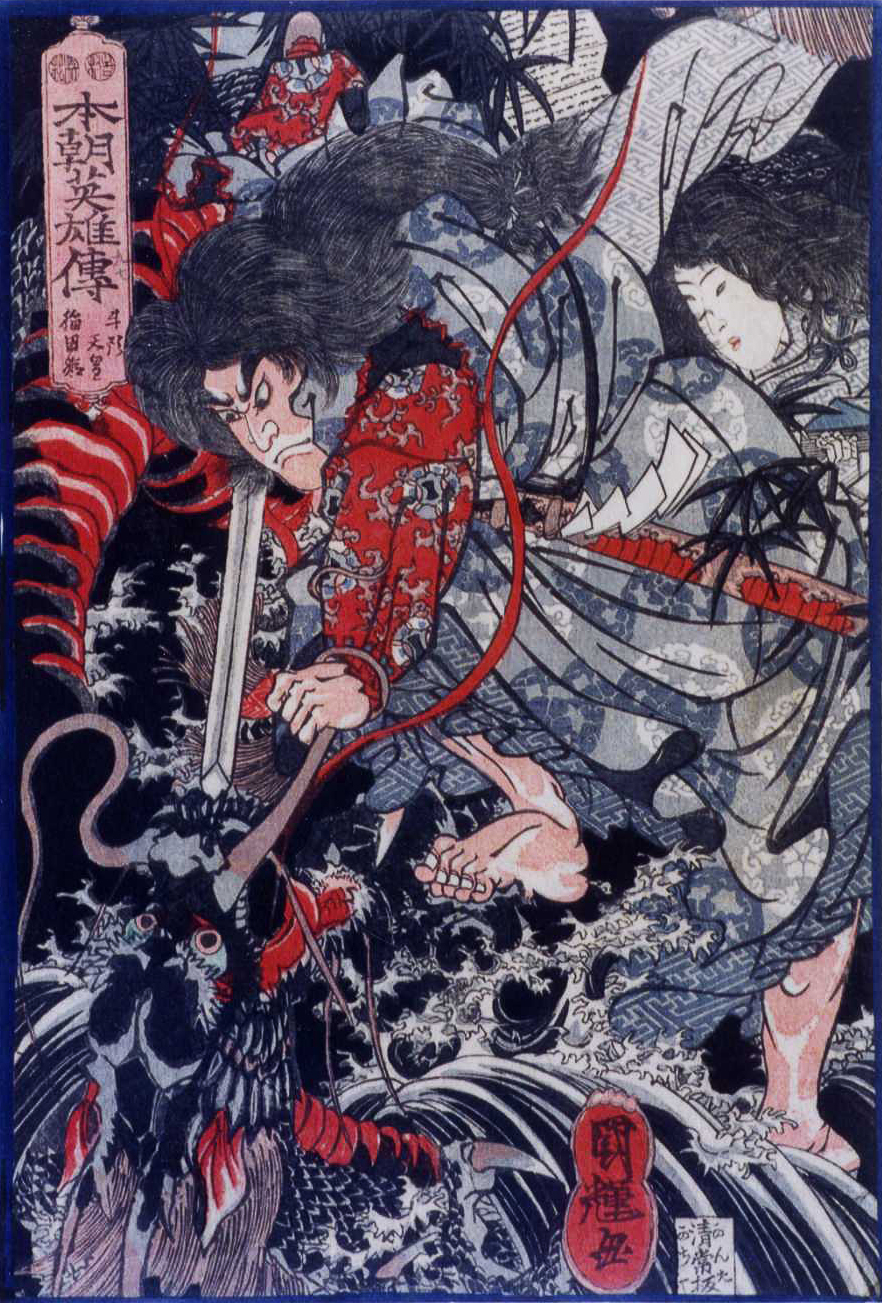
Susanoo-no-Mikoto: Japan’s Storm God and Serpent Slayer
In the pantheon of Shinto deities (Kami), few figures are as complex, volatile, and ultimately heroic as Susanoo-no-Mikoto. Known primarily as the god of storms and the sea, Susanoo embodies the dual nature of nature itself: destructive and chaotic, yet capable of bestowing great blessings and protection. For travelers exploring the spiritual landscape of Japan, understanding Susanoo is key to appreciating some of the country’s most significant festivals and shrines.
Introduction to the Storm God
Susanoo (often spelled Susano-o) is the younger brother of Amaterasu, the Sun Goddess, and Tsukuyomi, the Moon God. While Amaterasu represents order and imperial authority, Susanoo is the archetypal trickster and warrior. He is often depicted as a wild, impulsive figure with long hair and a beard, wielding a sword. His full title, Susanoo-no-Mikoto, roughly translates to “The Great God Susanoo.”
Historically, he represents the raw power of the wind and rain—forces that can ruin a harvest but are also necessary for life. His journey from a petulant outcast to the slayer of monsters is one of the most beloved narrative arcs in Japanese folklore.
Origins: Birth and Banishment
According to Japan’s oldest historical chronicles, Susanoo was born from the nose of the creator god Izanagi as he purified himself after visiting the Underworld. Along with his siblings, he was appointed to rule a third of the universe; specifically, the sea and storms.
However, Susanoo was not a content ruler. He neglected his duties and wept constantly, longing to visit his mother in the Underworld. His weeping caused forests to wither and rivers to dry up. When his father, Izanagi, expelled him, Susanoo went to say goodbye to his sister, Amaterasu, in the High Plain of Heaven (Takamagahara).
Susanoo’s behavior in heaven was disastrous. He destroyed rice fields, defiled sacred weaving halls, and caused general chaos. This behavior terrified Amaterasu so much that she hid in a cave, plunging the world into darkness. As punishment for his transgressions, the other gods banished Susanoo from heaven, sending him down to the earthly realm of Izumo.
The Legend: Slaying the Yamata-no-Orochi
It was in his exile that Susanoo found his redemption. He descended to the province of Izumo (modern-day Shimane Prefecture), where he encountered an elderly couple weeping by the Hiikawa River. They explained that a terrifying eight-headed, eight-tailed dragon named Yamata-no-Orochi had devoured seven of their daughters, and was coming for the eighth, the Princess Kushinadahime.
Susanoo struck a deal: he would slay the beast if he could marry the princess. He transformed the girl into a comb and placed her in his hair for safety. He then ordered the couple to build a fence with eight gates, placing a vat of strong sake (rice wine) at each gate.
When the dragon arrived, its eight heads drank greedily from the vats and fell into a drunken stupor. Susanoo drew his sword and chopped the beast to pieces. When he cut open the dragon’s tail, he discovered a magnificent blade inside—the Kusanagi-no-Tsurugi (Grass-Cutting Sword). He later presented this sword to his sister Amaterasu as a reconciliation gift. Today, it remains one of the Three Sacred Treasures of the Imperial House of Japan.
Modern Culture and Pop Media
Susanoo’s legacy extends far beyond ancient scrolls. In modern Japan, he is a cultural icon representing strength and anti-heroism.
- Anime and Manga: Fans of Naruto recognize Susanoo as a massive spiritual avatar used by the Uchiha clan. In One Piece, references to Wano Country draw heavily on the Susanoo mythos.
- Video Games: He appears frequently in games like Persona, Shin Megami Tensei, Smite, and Okami, usually depicted as a powerful warrior wielding storms or blades.
- Festivals: The most famous festival in Japan, the Gion Matsuri in Kyoto, is held at Yasaka Shrine, which is dedicated to Susanoo. The festival originated as a purification ritual to appease the god and stop plagues.
Traveler’s Tips: Where to Find Susanoo
If you are planning a cultural trip to Japan, visiting sites associated with Susanoo offers a deep dive into Shinto roots.
1. Izumo Taisha & Susa Shrine (Shimane Prefecture)
Shimane is known as the “Land of the Gods.” While Izumo Taisha is primarily dedicated to Okuninushi (Susanoo’s descendant or son-in-law), the surrounding area is the setting for the Orochi legend.
- Susa Shrine: Located in Izumo, this shrine is said to house Susanoo’s spirit specifically. It is a powerful “power spot” surrounded by ancient cedars.
2. Yasaka Shrine (Kyoto)
Located in the Gion district, this is arguably the most accessible shrine dedicated to him. It is vibrant, famous for its lantern-lit stages, and central to the Gion Matsuri in July.
3. Yaegaki Shrine (Shimane)
This shrine is dedicated to the marriage of Susanoo and Princess Kushinadahime. It is a popular spot for couples praying for a happy marriage. The “Mirror Pond” allows visitors to divine their romantic fortunes.
Sources & Further Reading
To truly understand the depth of these stories, referring to the primary historical texts of Japan is essential:
- The Kojiki (Records of Ancient Matters): Compiled in 712 AD, this text contains the most detailed and dramatic account of Susanoo’s birth, banishment, and battle with the dragon.
- The Nihon Shoki (The Chronicles of Japan): Completed in 720 AD, this offers slightly different variations of the myths and focuses more on the lineage of the Imperial family.
Susanoo remains a fascinating figure—a god who fell from grace only to rise as a savior. Retracing his steps in Izumo or Kyoto connects travelers to the very heart of Japanese mythology.