
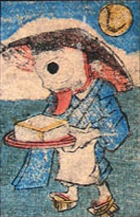
The Gaze of Hitotsume-kozo: Unveiling Japan’s One-Eyed Monk
Imagine walking down a dimly lit street in old Edo. You spot a small boy, perhaps ten years old, standing in the shadows wearing the robes of a novice monk. Concerned, you call out to him. He turns slowly, pulling down the brim of his hat or removing his hands from his face. But instead of the familiar features of a child, you are met with a single, massive eye pulsing in the center of his forehead and a long red tongue lolling from his mouth.
You have just met the Hitotsume-kozo (一つ目小僧), one of Japan’s most iconic and enduring yōkai (supernatural spirits). While his gaze might terrify the unexpecting traveler, this one-eyed goblin boy is generally more mischievous than malevolent. For cultural travelers and folklore enthusiasts, understanding the Hitotsume-kozo offers a fascinating glimpse into the whimsical and animistic worldview of traditional Japan.
The Origins of the One-Eyed Priest
The Hitotsume-kozo literally translates to “One-Eyed Priest Boy.” Historically, his image was solidified during the Edo period (1603–1867) by ukiyo-e artists and folklorists like Toriyama Sekien, who featured the creature in his famous catalog, Gazu Hyakki Yagyō (The Illustrated Night Parade of a Hundred Demons).
However, the roots of this entity go much deeper than artistic catalogs. Folklorists suggest that the Hitotsume-kozo may be a degraded form of a mountain deity (Yama-no-kami). In ancient Japanese tradition, deformities—particularly the loss of one eye—were sometimes associated with divinity or sacrifice. There is also a connection to the Ame-no-mahitotsu-no-kami (One-Eyed God of Heaven), the deity of blacksmithing found in ancient texts, as blacksmithing accidents often led to the loss of an eye.
Over centuries, what may have once been a revered nature spirit evolved into a playful, city-dwelling trickster, warning people against bad behavior or simply existing to startle the unaware.
Legends and The Day of Preparation
Unlike the horrifying Oni or the vengeful Yurei, the Hitotsume-kozo does not typically attack humans. His primary modus operandi is the prank. He enjoys appearing in quiet places to shout “Be quiet!” or simply turning around to reveal his cyclopean face, relishing the scream of his victim.
One of the most persistent legends surrounding this yōkai involves the “Days of Preparation” or Kotoyoka (typically the 8th day of the 2nd and 12th lunar months). It is believed that on these days, the Hitotsume-kozo travels from house to house, carrying a notebook to record the names of families who have behaved poorly or failed to properly maintain their household shrines. Being on his list meant bad luck or sickness for the coming year.
The Basket Defense
To ward off this investigative spirit, villagers developed a unique talisman. They would hang a bamboo basket (zaru) or a holly branch pierced through with sardine heads at their entrances. The logic was surprisingly simple: the Hitotsume-kozo, seeing the many holes in the woven bamboo basket, would mistake them for hundreds of eyes. Feeling outnumbered and watched by so many “eyes,” the one-eyed goblin would flee in terror.
Hitotsume-kozo in Modern Culture
Today, the terrifying gaze of the Hitotsume-kozo has softened into something decidedly kawaii (cute). He is a staple in the pantheon of pop culture yōkai. If you watch anime or read manga, you have likely seen him.
He appears as a classic character in Shigeru Mizuki’s GeGeGe no Kitaro, often serving as a comic relief character. He also features in the globally popular Yo-Kai Watch franchise. In modern Japan, he is often depicted as a misunderstood, slightly clumsy child rather than a harbinger of doom. This transformation from an omen of the gods to a cute mascot perfectly illustrates Japan’s ability to preserve its folklore by adapting it to contemporary tastes.
Traveler’s Tips: Where to Find the One-Eyed Monk
If you are visiting Japan and want to cross paths with the legacy of the Hitotsume-kozo (without the bad luck), here are the best places to visit:
1. Yokai Street (Ichijo-dori), Kyoto
Kyoto is the ancient capital and the heart of Japanese tradition. Ichijo-dori is known as “Yokai Street.” Here, local shopkeepers have created homemade yōkai statues that sit outside their stores. You will almost certainly find a Hitotsume-kozo guarding a storefront. It is a fantastic photo opportunity and a great way to support local artisans.
2. Mizuki Shigeru Road, Sakaiminato
Located in Tottori Prefecture, this town is dedicated to the creator of GeGeGe no Kitaro. The street is lined with over 170 bronze statues of spirits, including our one-eyed friend. It is a pilgrimage site for folklore lovers.
3. Zengyo-ji Temple, Tokyo
For a more historical approach, some temples in the Kanto region preserve scrolls and artworks depicting the Night Parade of One Hundred Demons. While public viewings are seasonal, visiting old temple districts often imparts the eerie, quiet atmosphere where one might imagine a Hitotsume-kozo hiding around the corner.
Sources & Further Reading
To deepen your understanding of the Hitotsume-kozo and Japanese mythology, consider exploring these texts:
- Gazu Hyakki Yagyō by Toriyama Sekien: The foundational 18th-century visual catalog of yōkai.
- The Kojiki (Records of Ancient Matters): While it does not feature the “kozo” character, it introduces the concept of one-eyed deities like Ame-no-mahitotsu-no-kami.
- Tono Monogatari (The Legends of Tono) by Kunio Yanagita: A pivotal collection of folk tales that explores the relationship between mountain spirits and human settlements.
- Yokai Attack! The Japanese Monster Survival Guide by Hiroko Yoda and Matt Alt: A fun, modern, and English-accessible guide to these creatures.