
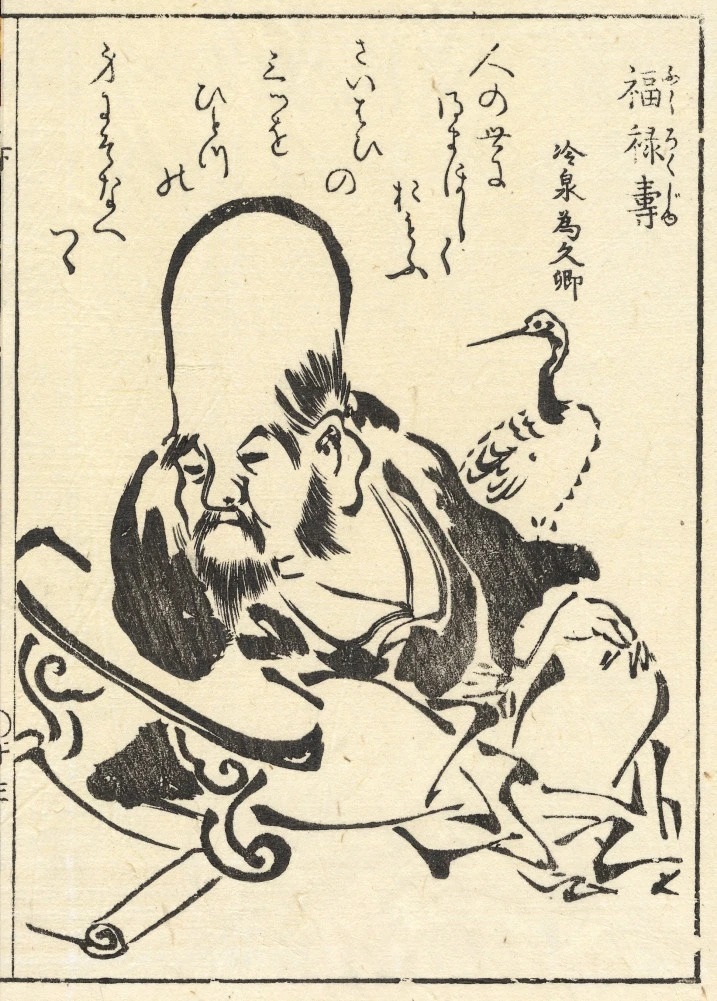
The Enigma of Fukurokuju: Why the Long Head?
If you have ever strolled through the vibrant streets of Asakusa or explored the quiet temple districts of Kyoto, you have likely encountered figures of the Shichifukujin, or the Seven Lucky Gods. Among this joyful pantheon, one figure stands out instantly—not for his weapons or his size, but for the distinct, towering shape of his cranium. He is Fukurokuju, the god of wisdom, luck, and longevity.
To the uninitiated traveler, his appearance might seem comical or exaggerated. However, the elongated head of Fukurokuju is a profound symbol steeped in centuries of Taoist philosophy and Japanese folklore. In this deep dive, we explore the origins, legends, and cultural significance of this unique deity.
The Taoist Origins: A Star from the South
To understand Fukurokuju, one must look west to China. Unlike the indigenous kami of Japan found in ancient texts, Fukurokuju is of Taoist origin. His name is a compound of three Chinese characters representing the ultimate desires of humanity:
- Fuku (福): Happiness and Luck
- Roku (禄): Wealth and Prosperity
- Ju (寿): Longevity
He is widely believed to be the incarnation of the Southern Polestar (Nanji Laoren). In Chinese mythology, the Star God of the South Pole determines the date of a person’s death; consequently, paying homage to him is a method of pleading for a longer life.
He is often confused with Jurojin, another member of the Seven Lucky Gods who shares a similar origin and appearance (an old man with a staff). However, Fukurokuju is distinguished almost exclusively by the sheer height of his forehead, a feature that Jurojin lacks.
The Legend of the Long Head
A Vessel for Wisdom
Why the long head? In the realm of religious iconography, physical traits are rarely accidental. Fukurokuju’s elongated forehead is not a deformity, but a divine attribute known as a “phrenological sign of greatness.”
According to legend, the size of his head corresponds to the immense volume of wisdom and experience he has accumulated over millennia. It is said that he was once a Chinese hermit sage during the Song Dynasty who performed miracles and could survive without food. Over centuries of meditation and accumulating the qi (life force) of the universe, his cranial capacity expanded to house his enlightenment.
Humorous Depictions
Japanese folklore, known for its ability to mix the sacred with the playful, has created various anecdotes about his head. In some ukiyo-e woodblock prints from the Edo period, Fukurokuju is depicted having to use a ladder just to shave the top of his head. In others, playful children are shown climbing his head as if it were a tree. These depictions make him an approachable, grandfatherly figure rather than a terrifying deity.
Modern Culture and Symbolism
Today, Fukurokuju remains a beloved figure in Japanese culture, particularly for the elderly and those seeking academic success.
The Shichifukujin Meguri
During the New Year, Japanese people participate in the Shichifukujin Meguri, a pilgrimage to temples dedicated to the Seven Lucky Gods. Fukurokuju is a central stop. It is common belief that rubbing the head of a Fukurokuju statue transmits a portion of his intelligence and luck to the devotee. If you see a statue with a particularly shiny forehead, you know thousands of travelers before you have sought his blessing.
Pop Culture
His unique silhouette makes him an instantly recognizable character in manga and anime. He is often portrayed as a jovial, wise old man, sometimes serving as a comic relief due to his difficulty fitting through low doorways, yet always commanding respect when matters of life and death arise.
Traveler’s Tips: Where to Find Him
If you are planning a trip to Japan and wish to pay respects to the god of longevity, here are the best locations and tips:
- The Yanaka Seven Lucky Gods Pilgrimage (Tokyo): This is one of the oldest pilgrimages in Tokyo. Visit the Togakuji Temple in Tabata to see a magnificent statue of Fukurokuju.
- Asakusa Shrine (Tokyo): Located right next to the famous Senso-ji, this shrine often features imagery of the Seven Lucky Gods.
- Souvenir Hunting: Look for Netsuke (miniature carvings) or small ceramic dolls. A small Fukurokuju figurine is an excellent gift for grandparents or students facing exams.
- Identification: Look for the attributes. He usually carries a cane with a scroll (containing the lifespan of all living things) tied to it, and he is often accompanied by a crane or a turtle—symbols of longevity.
Sources & Further Reading
To deepen your understanding of Japanese mythology and the syncretism that allowed a Taoist god to sit beside Shinto deities, consider exploring the following:
- The Kojiki and Nihon Shoki: While Fukurokuju is not native to these foundational Shinto texts (which focus on gods like Amaterasu and Susanoo), reading them provides the necessary context to understand the indigenous pantheon he was integrated into.
- Japanese Pilgrimage by Oliver Statler: A wonderful look into the tradition of sacred journeys in Japan.
- Handbook of Japanese Mythology by Michael Ashkenazi: Offers detailed entries on the Seven Lucky Gods.
Fukurokuju reminds us that wisdom takes time to grow, and that a long life is a blessing best spent in the pursuit of happiness and knowledge. Next time you see the figure with the tall head, give it a respectful nod—or a rub for good luck!