
The Flight of the Hamaya: Japan’s Sacred Demon-Breaking Arrow
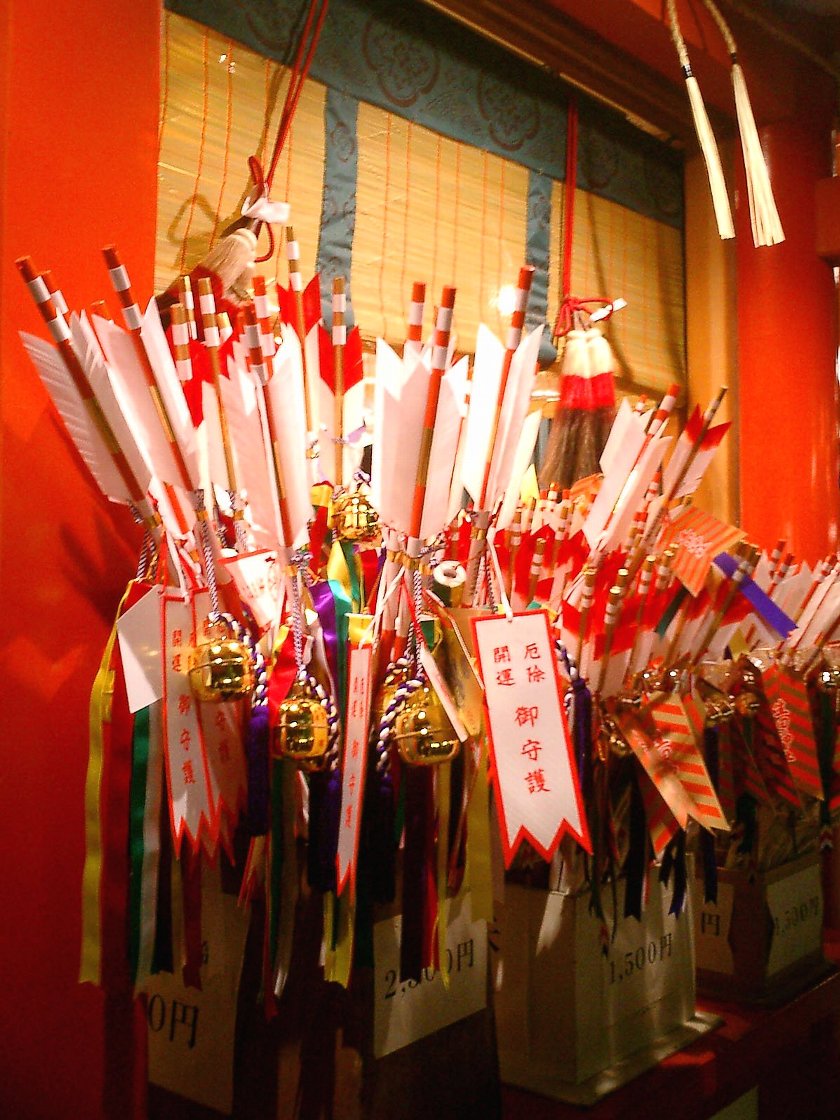
If you visit a Shinto shrine in Japan during the first few days of the New Year—a tradition known as Hatsumode—you will witness a sea of visitors purchasing colorful amulets. Among the rectangular silk charms (omamori) and wooden votive tablets (ema), you will undoubtedly see people carrying long, decorative arrows adorned with white feathers and bells. These are Hamaya (破魔矢), literally translating to “demon-breaking arrows.”
The “Flight of the Hamaya” is not merely physical; it represents a spiritual trajectory meant to pierce through bad luck and clear a path for fortune. For travelers and culture enthusiasts, understanding the Hamaya unlocks a deeper appreciation of how Japan blends ancient martial symbolism with peaceful spiritual protection.
Origins: From Archery Competitions to Amulets
The history of the Hamaya is deeply intertwined with the Japanese reverence for archery. In ancient Japan, the bow and arrow were not only weapons of war but also sacred tools used to communicate with the gods and purify the land.
The specific origin of the Hamaya can be traced back to an ancient New Year’s ritual called Jarin (射礼). During the Heian period, court nobles would participate in archery contests using bows made of catalpa wood and arrows made of mugwort. These materials were believed to possess magical properties capable of dispelling evil.
Over time, the focus shifted from the competition itself to the tools used. The bow used to ward off evil became known as the Hamayumi (demon-breaking bow), and its accompanying arrow, the Hamaya. Eventually, the practice evolved from a literal archery contest into a symbolic offering available to the common people, transforming the deadly projectile into a decorative talisman of peace.
The Legend and Spiritual Symbolism
The Sound of Purification
According to Shinto mythology and folklore, evil spirits and demons (Oni) fear specific sounds. One such sound is the plucking of a bowstring, a ritual known as Meigen-shiki. It is believed that the high-pitched vibration of the string scares away invisible malevolent forces lurking in the shadows.
The flight of the arrow carries similar weight. In legends, a hero or deity often fires an arrow not to kill a beast, but to strike the “eye” of the misfortune or to break a curse. The Hamaya symbolizes this decisive action. It does not need to be fired physically to be effective; its presence in the home acts as a spiritual sentry.
Connection to Imperial History
The reverence for the bow is also cemented in Japan’s oldest historical texts. While the specific commercial Hamaya we see today is a later evolution, the Kojiki and Nihon Shoki describe deities using bows and arrows to subdue the land and assert order over chaos. The arrow represents divine will—straight, unwavering, and true.
Modern Culture: How the Hamaya is Used Today
In modern Japan, the Hamaya is primarily a New Year’s lucky charm (engimono). It is commonly purchased to ensure the safety of one’s family and to ward off illness and disaster for the coming year.
Placement in the Home
Once brought home, the Hamaya is not tossed in a drawer. It is treated with immense respect. Traditionally, it is placed on the Kamidana (household Shinto altar). If a household does not have an altar, the arrow is placed in a clean, high location, often in the living room.
The direction the arrow points is crucial. It should generally point toward the “lucky direction” of the year (determined by the Chinese zodiac) or simply toward the south or east, inviting sunlight and positive energy while blocking the entry of “demons” from the unfortunate directions.
Rites of Passage
The Hamaya also plays a role in the growth of children. It is customary for relatives to gift a Hamaya to a baby boy on his first New Year (Hatsu-zekku) to ensure he grows up strong and healthy. It is also a popular gift during the Coming of Age Day (Seijin no Hi), symbolizing the young adult’s ability to cut through life’s obstacles.
Traveler’s Tips: Buying and Handling a Hamaya
For tourists, a Hamaya makes for a beautiful and culturally significant souvenir. However, there are protocols to follow to ensure you are respectful of the tradition.
- Where to Buy: You can find Hamaya at almost any major Shinto shrine, particularly from January 1st to January 15th. Famous shrines like Meiji Jingu (Tokyo) or Tsurugaoka Hachimangu (Kamakura) offer distinct variations. The price usually ranges from 1,000 to 3,000 yen.
- Handling: Do not treat the Hamaya as a toy. Do not mimic shooting it at people or statues. Carry it by the shaft, preferably upright.
- The One-Year Rule: Traditionally, Japanese amulets are effective for one year. At the end of the year, people return their old Hamaya to the shrine to be ritually burned in a fire festival known as Dondo Yaki. As a traveler, if you cannot return it, you may keep it as a keepsake, but treat it with respect. If you wish to dispose of it, sprinkle it with salt for purification and wrap it in white paper before disposal.
Sources & Further Reading
To delve deeper into the mythology of Japanese archery and Shinto rituals, the following texts and subjects are recommended:
- The Kojiki (Records of Ancient Matters): For accounts of deities and the divine significance of weaponry.
- The Nihon Shoki (The Chronicles of Japan): For historical context on court rituals and the establishment of Imperial ceremonies.
- Kyudo: The Essence and Practice of Japanese Archery: To understand the philosophy of the “perfect shot” and spiritual clarity.
The flight of the Hamaya is a journey from the hands of the gods to the homes of the people—a timeless flight ensuring that even in the modern world, we remain protected from the invisible arrows of misfortune.