
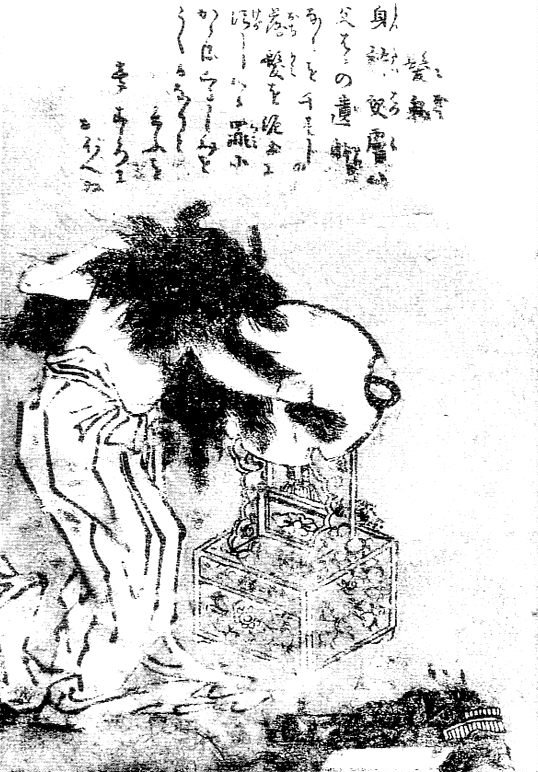
The Hair Oni: Unraveling Japan’s Tangled Tales of Cursed Locks
When travelers think of Japanese horror, one image almost immediately springs to mind: long, unkempt, jet-black hair obscuring a pale face. From the terrifying Sadako in The Ring to the vengeful spirits of ancient woodblock prints, hair has long been a conduit for the supernatural in Japan. Among the myriad of yōkai (spirits and monsters) that populate Japanese folklore, few are as unsettling as the concept of the Hair Oni (often associated with Kamioni or hair-related demons like Kejōrō).
While the Western world views hair merely as an aesthetic feature, Japanese culture has historically imbued it with deep spiritual significance. In this deep dive, we explore the tangled history of the Hair Oni, a creature born of vanity, jealousy, and the spiritual power of the human strand.
The Origins: When Hair Becomes Spirit
To understand the Hair Oni, one must first understand the linguistic pun that sits at the heart of Japanese spirituality. The Japanese word for hair is kami (髪), which is phonetically identical to the word for god or spirit, kami (神). Ancient Japan believed that hair was not dead cells, but a living extension of the soul. It was thought to harbor a person’s vitality and, if treated improperly or charged with negative emotion, could gain a consciousness of its own.
The concept of the Hair Oni likely stems from the Heian period (794–1185), an era defined by aristocracy and aesthetics. For noblewomen, floor-length hair was the ultimate symbol of beauty. However, the maintenance of such hair required immense effort. Folklore suggests that hair which was obsessively groomed out of vanity—or conversely, hair that was neglected and filled with resentment—could transform into a demonic entity. The “Oni” aspect refers to the ogre-like, malevolent nature that takes over the human host or manifests through the strands themselves.
The Legend of the Living Locks
Legends of the Hair Oni vary across prefectures, but they often share a cautionary theme regarding obsession and jealousy.
One prevalent variation tells the story of a woman whose jealousy over her husband’s wandering eye was so potent that it transferred into her beautiful long hair. At night, while she slept, her hair would animate like serpents. The strands would slither across the room, seeking out the source of her envy or even strangling small animals. In these tales, the woman is often unaware that she has become a vessel for a Hair Oni until it is too late.
Another related legend is that of the Kamikiri (Hair Cutter), a small oni-like creature that sneaks up on people to sever their hair. While the Kamikiri is a mischievous prankster, the true Hair Oni is far more malevolent. It is said that in some remote villages, tangled clumps of hair found on the roadside were feared as Keukegen, a hairy monster that brings sickness. The Hair Oni represents the apex of this fear: hair that is not just dirty or mischievous, but actively predatory.
Modern Culture: From Woodblocks to The Grudge
The legacy of the Hair Oni is undeniably alive in modern Japanese pop culture. The terrifying imagery of prehensile hair is a staple in anime, manga, and cinema.
The J-Horror Phenomenon
The most famous global export of this folklore is the Onryō (vengeful spirit) seen in films like Ringu (The Ring) and Ju-On (The Grudge). The iconic image of Sadako crawling out of the TV with her face hidden by hair is a direct visual descendant of the Hair Oni legends. In these modern iterations, the hair represents a curtain between the living and the dead, a physical manifestation of a curse that cannot be cut away.
Anime and Manga
Characters manipulating their hair as a weapon are common tropes in series like Naruto (Jiraiya’s needle jizō) and JoJo’s Bizarre Adventure (Yukako Yamagishi). These abilities often nod to the supernatural strength attributed to hair in yōkai folklore, turning the horrifying legend into a supernatural superpower.
Traveler’s Tips: Seeking the Spirits
If you are a folklore enthusiast visiting Japan, you can explore locations associated with hair legends without facing the wrath of an Oni.
1. Mikami Shrine (Kyoto)
Located in the Arashiyama district, this is the only shrine in Japan dedicated specifically to hair. While it is generally a place for barbers and those seeking to prevent hair loss to pray, it acknowledges the spiritual importance of hair. It is a peaceful counter-balance to the scary legends.
2. Yōkai Street (Kyoto)
Kyoto’s Ichijo-dori is known as “Yōkai Street.” Here, shop owners display homemade monsters outside their stores. You can often find depictions of classic spirits, and occasionally, hair-based monsters inspired by Toriyama Sekien’s art.
3. Kabuki Theater
Keep an eye out for plays involving the Lion Dance (Renjishi), where actors whip massive, long manes of hair. While not demonic, the performance is a breathtaking display of the power and “life” attributed to hair in Japanese performing arts.
Sources & Further Reading
For those interested in the academic and historical roots of these legends, the following texts are essential:
- Gazu Hyakki Yagyō (The Illustrated Night Parade of a Hundred Demons) by Toriyama Sekien: The seminal 18th-century bestiary that visually defined many hair-related yōkai.
- Kwaidan by Lafcadio Hearn: A collection of ghost stories that introduced Japanese horror to the West, featuring themes of reconciliation and the supernatural.
- Nihon Shoki (The Chronicles of Japan): While primarily a history text, it establishes the ancient spiritual connection between humans, gods (kami), and the physical body.