
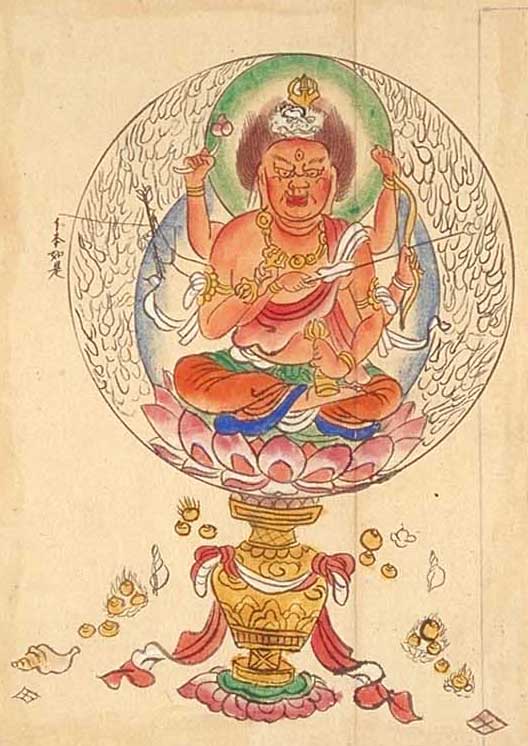
Aizen Myoo: The Wisdom King of Passion
When travelers visit Japanese temples, they are often greeted by serene statues of Buddha, eyes half-closed in meditation. However, hidden within the dimly lit halls of Esoteric Buddhism stands a figure that shatters this tranquility: Aizen Myoo (愛染明王). With crimson skin, a furious expression, and six arms wielding weapons, he looks like a demon of war. Yet, paradoxically, he is Japan’s deity of love, intimacy, and passion.
For cultural enthusiasts and spiritual travelers, understanding Aizen Myoo offers a fascinating glimpse into the complex philosophy of Japanese Buddhism, where earthly desires are not rejected but transformed into spiritual fuel.
The Origins of the Red Deity
Aizen Myoo is known in Sanskrit as Rāgarāja, which translates roughly to the “King of Passion” or “King of Tinted Desire.” Unlike many Buddhist deities who originated in early Indian Buddhism, Aizen Myoo is a figure specific to Esoteric Buddhism (Vajrayana).
He was introduced to Japan primarily during the Heian period (794–1185) by the legendary monk Kukai, the founder of the Shingon sect. While mainstream Buddhism often taught the suppression of desire (bonno) to achieve enlightenment, Esoteric Buddhism introduced a radical concept: Bonno Soku Bodai, meaning “Earthly desires are themselves enlightenment.”
Aizen Myoo is the embodiment of this philosophy. He does not ask you to cast away your lust, ambition, or love. Instead, he captures that intense energy and redirects it toward a higher purpose—the pursuit of wisdom and compassion.
Legend and Iconography
To the untrained eye, Aizen Myoo is terrifying. However, every aspect of his appearance holds deep symbolic meaning regarding the nature of love and salvation.
The Red Body and Furious Face
His skin is a deep, vibrant red, symbolizing the burning intensity of passion and the setting sun. His angry expression is not one of hatred, but of fierce determination to save sentient beings who are too consumed by lust to listen to gentler deities. He scares the ego into submission.
The Six Arms
Aizen Myoo is typically depicted with six arms, holding various items:
- Bell and Vajra: representing the union of wisdom and action.
- Lotus Flower: symbolizing the purity that can rise from the mud of desire.
- Bow and Arrow: Perhaps his most famous attribute, reminiscent of Cupid. However, Aizen shoots arrows not just to create romance, but to pierce the heart of delusion, instantly connecting the devotee to the Buddha mind.
The Wisdom King of Dyeing
Interestingly, the character “Ai” (愛) means love, but historically, the sound “Ai” was also associated with indigo (creeping smartweed). Consequently, Aizen Myoo became the patron deity of dyers and textile workers in feudal Japan, blending the concept of “dyeing cloth” with “dyeing the heart with compassion.”
Modern Culture and Relevance
In contemporary Japan, Aizen Myoo has evolved from a strictly esoteric figure into a popular “power spot” deity for romance. While he was historically worshipped by warriors seeking the passion to win battles, today he is sought after by couples praying for marriage, actors seeking popularity, and nightlife workers praying for benevolent patrons.
His influence extends into Japanese pop culture as well. Aizen Myoo appears frequently in anime, manga, and video games (such as the Persona and Shin Megami Tensei series), often depicted as a powerful summon that utilizes fire and psychological attacks. This pop-cultural presence keeps the deity relevant to a younger generation, bridging the gap between ancient theology and modern media.
Traveler’s Tips: Where to Find Aizen Myoo
If you are looking to pay your respects or simply witness the incredible artistry of Aizen Myoo statues, there are specific locations you should prioritize.
Aizendo Shoman-in (Osaka)
Located in the Tennoji district, this is perhaps the most famous temple dedicated to him. It hosts the Aizen Festival (Aizen Matsuri) in late June, one of the first major summer festivals in Osaka. It is a lively event featuring a parade of women in yukata carried in palanquins (hoekago).
Saidai-ji (Nara)
This temple houses a famous small statue of Aizen Myoo famously discovered inside a larger statue, a hidden treasure of intense spiritual significance.
Worship Etiquette
When visiting these halls:
- Silence: These halls are often places of intense prayer.
- Mantra: If you wish to pray like a local, the short mantra for Aizen Myoo is “On Makara-gya Bazara-ushunisha Bazara-sata Ban Jakka Un.” (Chanting it once is a gesture of respect).
- Offerings: Small monetary offerings (saisen) are standard. At some temples, you may find EMA (wooden plaques) specifically shaped like hearts or bows.
Sources & Further Reading
For those interested in the textual history of Japanese divinity, context is key. While the ancient Shinto chronicles like the Kojiki and Nihon Shoki detail the indigenous gods of Japan, Aizen Myoo’s lore is firmly rooted in the imported Buddhist texts.
- The Yogin Sutra (Yugi-kyo): This is the primary Esoteric text that details the rituals and iconography of Aizen Myoo.
- Kukai’s Writings: To understand how this deity fit into Japanese society, reading the works of Kukai (Kobo Daishi) regarding the Shingon school is essential.
- Recommended Book: “The Weaving of Mantra” by Ryūichi Abé for an academic look at Esoteric Buddhism’s impact on Japanese culture.
By visiting Aizen Myoo, you aren’t just seeing a statue; you are engaging with a millennium-old psychological practice that affirms human emotion as a path to the divine.