
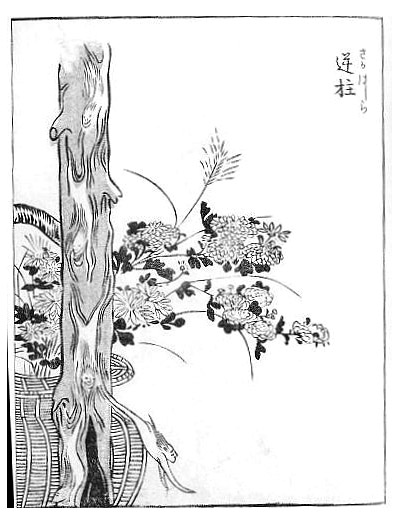
Sakabashira: The Haunting Tale of the Inverted Pillar
When walking through the ancient wooden halls of a Japanese ryokan or gazing up at the intricate carpentry of a Shinto shrine, one cannot help but admire the reverence paid to wood. In Japan, carpentry is not merely construction; it is a spiritual dialogue with nature. However, deep within the annals of Japanese folklore lies a cautionary tale known as Sakabashira (逆柱), or the “Inverted Pillar.” It is a superstition stating that if a tree is installed as a pillar upside-down—opposite to the direction it grew in the forest—it will bring haunting sounds, misfortune, and disaster to the household.
The Origins of the Belief
The concept of Sakabashira is deeply rooted in Japanese animism and Shinto beliefs, which hold that all natural objects possess a spirit, or kami. Trees are believed to house spirits known as Kodama.
According to traditional Japanese architecture, the orientation of the wood matters immensely. A tree draws water and nutrients from its roots up to its canopy. To cut a tree and install it as a structural post with its roots facing the sky and its top facing the ground is considered a violation of the natural order. It is believed to confuse and anger the spirit of the tree, trapping its life force in an unnatural flow.
This belief was so pervasive among carpenters during the Edo period (1603–1867) that inadvertently installing a Sakabashira was seen as a mark of incompetence, potentially leading to the master carpenter losing their reputation.
The Legend and the Haunting
What happens when a pillar is inverted? According to yokai (supernatural monster) folklore, the Sakabashira is not a passive mistake; it is an active curse.
The Sounds of the Forest
The most common manifestation of a Sakabashira spirit is auditory. Residents of a house plagued by an inverted pillar often report hearing strange creaking sounds late at night. Folklore suggests these are not just settling floorboards, but the groans of the tree spirit complaining about its uncomfortable position. Some legends claim that in the dead of night, the sound of rustling leaves can be heard coming from the bare timber, as the tree tries to remember its life in the forest.
The Curse of Decline
Beyond the spooky atmospherics, the Sakabashira is associated with tangible bad luck, known as yanari. It is said to bring kaji (fire) to the home—perhaps because the wood dries unevenly or the “energy” creates friction. More broadly, it causes the decline of the family fortune, leading to sickness, financial ruin, or domestic discord. In yokai encyclopedias by Toriyama Sekien, the Sakabashira is sometimes depicted as a bizarre creature or face emerging from the wood grain to spook the inhabitants.
Modern Culture and the Famous Exception
While Sakabashira is largely feared, there is a fascinating twist in Japanese culture where the inverted pillar is used intentionally. This is best observed at the famous Nikkō Tōshō-gū Shrine in Tochigi Prefecture.
The Yomeimon Gate
The Yomeimon Gate at Nikkō is one of Japan’s most ornate structures, decorated with over 500 carvings. However, if you look closely at the supporting pillars, one of them has its pattern carved upside down. This is known as the Mayoke no Sakabashira (Talismanic Inverted Pillar).
This was not a mistake. It is based on the philosophical concept found in the Tsurezuregusa (Essays in Idleness) that “perfection is the beginning of decline.” By leaving the gate intentionally imperfect, the architects believed they could ward off the jealousy of evil spirits and prevent the structure’s eventual decay. In this context, the Sakabashira acts as a spiritual lightning rod, absorbing the bad luck so the rest of the shrine remains pristine.
In modern pop culture, the concept appears in manga and anime, such as GeGeGe no Kitaro, where the spirit is depicted as a minor antagonist causing poltergeist-like phenomena in old houses.
Traveler’s Tips
For cultural travelers and folklore enthusiasts, hunting for Sakabashira offers a unique way to engage with Japanese architecture.
- Visit Nikkō Tōshō-gū: This is the only place where you can easily identify a “celebrated” Sakabashira. Head to the Yomeimon Gate and look for the pillar where the wave pattern flows in the opposite direction of the others. Guides will often point this out as a highlight.
- Respect Old Ryokans: If you stay in a historical wooden inn, listen to the building at night. While creaks are likely just the wood contracting from temperature changes, knowing the legend adds a layer of mystique to your stay.
- Observe the Grain: If you are knowledgeable about wood grain, you can sometimes spot inverted timber by looking at the knots and the direction of the grain (which generally flows upward), though this is difficult for the untrained eye.
Sources & Further Reading
To deepen your understanding of Japanese architectural superstitions and folklore, consider exploring the following:
- The Essays in Idleness (Tsurezuregusa) by Yoshida Kenkō: For insights into the Japanese aesthetic of imperfection and why the Nikkō pillar exists.
- Gazu Hyakki Yagyō (The Illustrated Night Parade of a Hundred Demons) by Toriyama Sekien: For visual depictions of household yokai.
- Yanagita Kunio’s Folklore Studies: For academic analysis of Japanese oral traditions and house spirits.
The Sakabashira serves as a reminder that in Japan, the boundary between the material world and the spiritual world is as thin as a sheet of paper—or as subtle as the grain of wood.