
Kinsokuchi: Exploring Japan’s Sacred Forbidden Lands
Japan is often celebrated as a land of boundless exploration, from the neon-lit streets of Tokyo to the serene temples of Kyoto. However, hidden within this accessible archipelago are pockets of land where footsteps are strictly prohibited. These are known as Kinsokuchi (禁足地), or “forbidden lands.” Steeped in Shinto history, ancient curses, and profound reverence for nature, these sites represent the physical boundary between the mundane human world and the sacred or terrifying realm of the divine.
For the culturally curious traveler, understanding Kinsokuchi offers a fascinating glimpse into the Japanese psyche, where ancient taboos still hold sway over modern development.
Origins: The Sacred and the Taboo
The concept of Kinsokuchi is deeply rooted in Shintoism, Japan’s indigenous spirituality, which is animistic in nature. In the Shinto worldview, Kami (gods or spirits) reside in all things—mountains, waterfalls, trees, and rocks. While shrines are built to honor these spirits, the specific locations where the Kami are believed to dwell physically are often designated as Shiniki (divine territory).
Historically, the demarcation of forbidden land served two primary purposes:
- Purity and Preservation: Shinto places a heavy emphasis on Kegare (impurity). Humans, by their nature, carry spiritual pollution through death, illness, or daily strife. Entering a highly sacred space without elaborate purification rituals could pollute the dwelling place of a god, disrupting the harmony of nature.
- Fear of Tatari (Curses): Conversely, some Kinsokuchi are not forbidden because they are too pure, but because they are dangerous. These are places associated with vengeful spirits (Onryo) or historical tragedies. To trespass is to invite Tatari, a spiritual curse that brings misfortune, illness, or death.
The boundary of these lands is often marked physically by a Shimenawa (a sacred straw rope with white paper streamers), creating a spiritual barrier known as a Kekkai.
Legend: Tales of the Forbidden
Across Japan, there are thousands of Kinsokuchi, ranging from small patches of forest to entire islands. However, a few legendary sites have captured the public imagination.
Yawata no Yabushirazu (Chiba Prefecture)
Perhaps the most famous forbidden spot near Tokyo is a small bamboo forest in Ichikawa City called Yawata no Yabushirazu. Despite being located in a busy urban area, sandwiched between a city hall and a railway line, the thicket remains untouched. The local legend states, “Once you enter, you never leave.”
Historical theories vary. Some claim it was a execution ground, while others believe it is the site of a samurai’s cursed grave. The most popular folklore involves Mitsukuni Mito (a famous feudal lord), who entered the forest and was confronted by supernatural phenomena, barely escaping with his life. To this day, the 18-meter square plot is strictly off-limits, fenced off and marked with a Torii gate.
Okinoshima (Fukuoka Prefecture)
On a grander scale lies Okinoshima, a UNESCO World Heritage island. Dedicated to the safety of seafarers, the entire island is considered a Kami. It is a strict Kinsokuchi with gender-based restrictions: women are completely banned from entering. Men are allowed only once a year on a specific date (though this practice has recently been tightened for preservation), and they must strip naked and bathe in the sea to purify themselves before stepping ashore. Nothing from the island—not even a blade of grass—can be taken away.
Taira no Masakado’s Grave (Tokyo)
In the financial district of Otemachi, surrounded by skyscrapers, lies the grave of Taira no Masakado, a samurai rebel from the Heian period. Legend says his severed head flew from Kyoto to Tokyo. Whenever developers tried to move the grave or build over it (including during the US occupation after WWII), fatal accidents and mysterious illnesses plagued the construction crews. It is now treated with extreme caution and respect, a silent Kinsokuchi amidst the roaring economy.
Modern Culture: Respect in the Concrete Jungle
In modern Japan, the reverence for Kinsokuchi remains surprisingly strong. While Japan is a technologically advanced nation, construction companies and urban planners often go to great lengths to avoid disturbing these sites. It is not uncommon to see a modern building designed with an odd curvature to avoid a small, sacred plot of land.
Pop culture has also embraced these taboos. Anime and manga frequently feature Kekkai (barriers) and forbidden forests where spirits reside. This perpetuates the idea that certain boundaries should not be crossed. However, this has also led to “Occult Tourism,” where thrill-seekers visit the perimeter of cursed grounds. Locals generally frown upon this, viewing it as disrespectful to the spirits and dangerous for the tourists.
Traveler’s Tips: How to Identify and Respect Kinsokuchi
As a visitor, you will likely encounter these spaces, sometimes without realizing it. Here is how to act respectfully:
- Watch for Signs: Look for Shimenawa (straw ropes with paper streamers) wrapped around trees or rocks. This indicates a Yorishiro (an object capable of attracting spirits). If an area is roped off, do not duck under it for a photo.
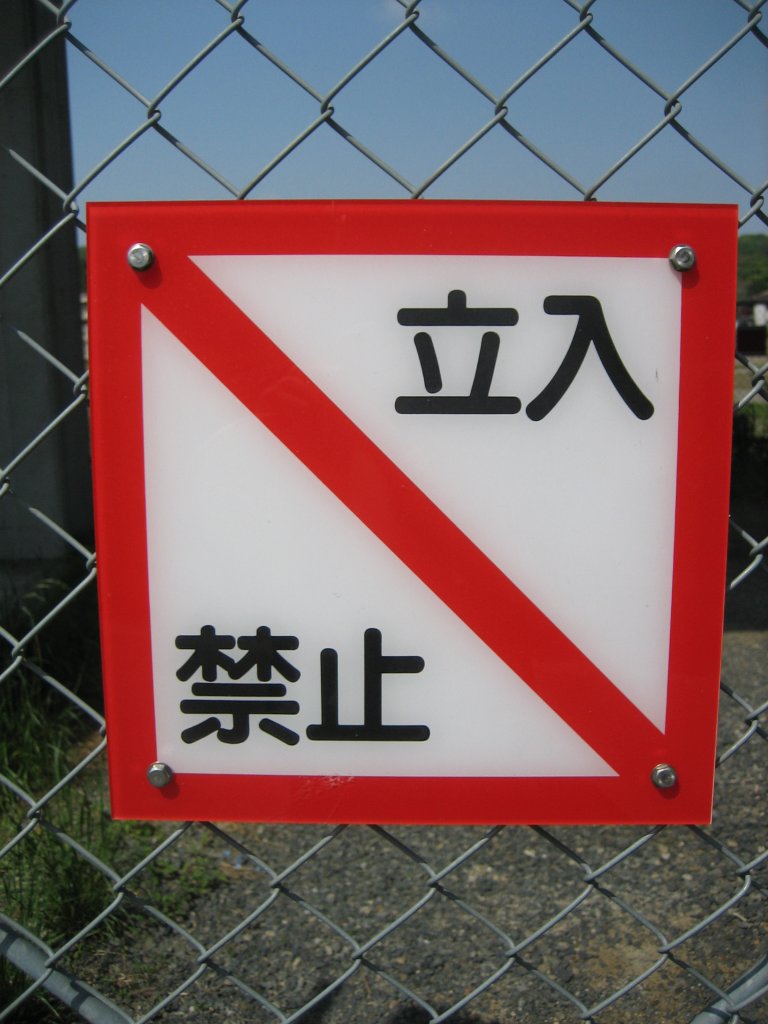
- Read the Kanji: Signs with the characters 立入禁止 (Tachi-iri Kinshi – Do Not Enter) or 禁足地 (Kinsokuchi) are explicit warnings. Unlike Western “No Trespassing” signs which are legal warnings, these are often spiritual warnings.
- Do Not Touch: If you see a small stone pile, a lone shrine in a thicket, or an ancient tree, admire it from a distance. Touching these objects can be seen as transferring impurity.
- Photography Etiquette: While taking photos of the perimeter is usually acceptable, avoid flash photography or loud behavior near these sites. If you feel an eerie atmosphere, many locals would advise you to put the camera away and move on.
Sources & Further Reading
To understand the deep spiritual context of Japan’s forbidden lands, the following historical texts and resources are recommended:
- The Kojiki (Records of Ancient Matters): Japan’s oldest chronicle (712 AD) details the origins of the Kami, the concepts of purity (Hare) and impurity (Kegare), and the separation of the land of the living from the land of the dead (Yomi).
- The Nihon Shoki (The Chronicles of Japan): Offers further historical context on the establishment of Imperial shrines and the rituals surrounding sacred grounds.
- Yanagita Kunio’s “The Legends of Tono”: A seminal collection of Japanese folklore that explores the relationship between rural Japanese communities and the mysterious supernatural world surrounding them.