
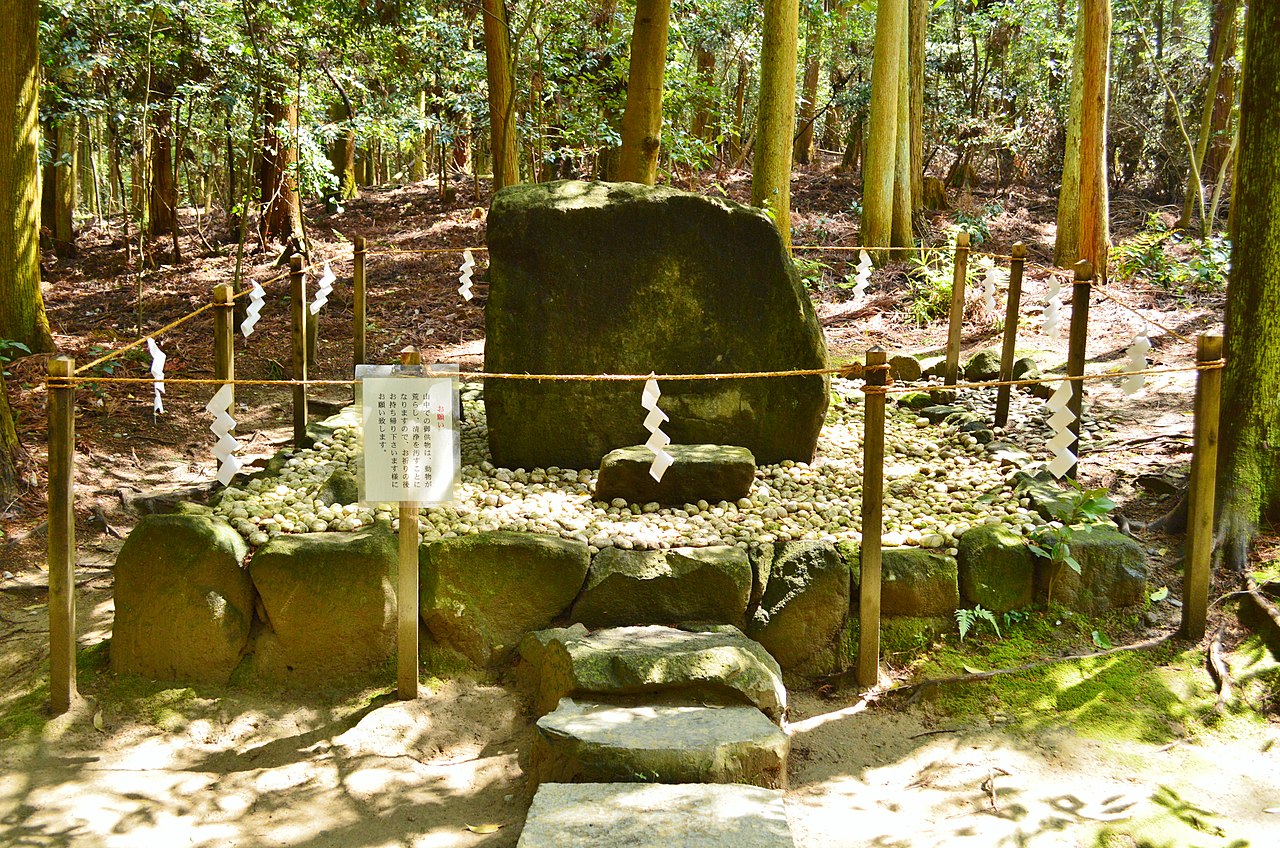
Iwakura: The Sacred Rock Thrones of Ancient Japan
When travelers envision Shinto, the indigenous spirituality of Japan, they often picture vermilion Torii gates and elegant wooden shrines. However, long before these structures were built, the divine was worshipped in a much more primal form. Deep in the ancient forests and atop misty mountains lie massive boulders wrapped in straw ropes. These are Iwakura (磐座), the “Rock Thrones” of the gods.
For the cultural traveler, understanding Iwakura offers a glimpse into Ko-Shinto (Old Shinto)—a time when nature itself was the temple, and the line between the physical and the spiritual was inextricably blurred.
Origins: The Antennae of the Gods
The term Iwakura literally translates to “rock seat” or “rock throne.” In the animistic worldview of ancient Japan, deities known as Kami were not distant figures living in a separate heaven; they were present in the wind, the rain, the mountains, and the trees.
However, Kami needed a physical vessel to occupy when they descended to the earthly realm to interact with humans. While trees (himorogi) served this purpose, massive rocks were considered particularly potent due to their permanence and imposing presence. An Iwakura is not the god itself, but rather the interface—or antenna—where the Kami resides during rituals.
Archaeological evidence suggests that Iwakura worship dates back to the Jomon period (14,000–300 BCE), long before Buddhism arrived in Japan. These sites were often chosen for their unique shapes, immense size, or precarious placement, which ancient people interpreted as signs of divine intervention.
Legend: When Gods Descend
The mythology of Iwakura is deeply woven into Japan’s creation myths. The most famous references to sacred rocks can be found in the foundational chronicles of Japanese history.
One of the most striking legends involves Kamikura Shrine in Wakayama Prefecture. According to tradition, this is where the deities of Kumano first descended to earth. They alighted upon a massive distinct rock known as Gotobiki-iwa. This colossal boulder, perched precariously on a cliffside, is considered the original Iwakura. The legend suggests that the rock was not merely found, but chosen by the gods as the specific point of contact between the celestial and terrestrial planes.
Furthermore, the concept of rocks growing or being alive is central to Japanese folklore. The lyrics of Japan’s national anthem, Kimigayo, derived from an ancient poem, speak of small pebbles growing into massive boulders covered in moss—a metaphor for longevity that aligns perfectly with the enduring nature of the Iwakura.
Modern Culture: Power Spots and Preservation
In modern Japan, the worship of Iwakura has experienced a resurgence under the guise of “Power Spots” (spiritual energy vortexes). While urban Japan is a hub of futuristic technology, many Japanese citizens still trek into the mountains to pray at these ancient stones for grounding and vitality.
You can identify an active Iwakura by the shimenawa—a sacred rice-straw rope with white zig-zag paper streamers (shide)—encircling the rock. This rope signifies a boundary between the profane world and the sacred space of the Kami.
Unlike standard shrines where you throw a coin and ring a bell, Iwakura worship is quieter and more meditative. It represents a counter-culture to the hustle of Tokyo, reminding modern people of their ancestral connection to the raw forces of geology and nature.
Traveler’s Tips: Visiting Iwakura
If you wish to experience the profound silence of an Iwakura, here are a few top recommendations and etiquette tips:
Where to Go
- Kamikura Shrine (Wakayama): As mentioned in the legends, the Gotobiki-iwa rock here is breathtaking. Be prepared for a steep climb up 538 jagged stone steps.
- Omiwa Shrine (Nara): This is one of Japan’s oldest shrines. Uniquely, it has no main hall because the entire mountain (Mt. Miwa) is the object of worship, dotted with various Iwakura.
- Rokko Hime Shrine (Hyogo): Located on Mt. Rokko, this site features massive boulders dedicated to a female deity, offering a mystical atmosphere deep in the woods.
Etiquette
- Do Not Climb: Unless explicitly stated otherwise (which is rare), never climb onto a sacred rock. It is considered highly disrespectful.
- Do Not Touch the Shimenawa: The straw rope is a sacred barrier. Admire it from a distance.
- Bow and Clap: Just as you would at a wooden shrine, bow twice, clap your hands twice, and bow once more to pay your respects to the Kami residing in the stone.
Sources & Further Reading
For those interested in the historical and mythological context of rock worship in Japan, the following texts are essential:
- The Kojiki (Records of Ancient Matters): Japan’s oldest historical record, detailing the age of the gods.
- The Nihon Shoki (The Chronicles of Japan): Provides alternative versions of creation myths involving geological formations.
- Studies in Shinto: Various academic works by folklorist Kunio Yanagita explore the transition from nature worship to organized shrine Shinto.