
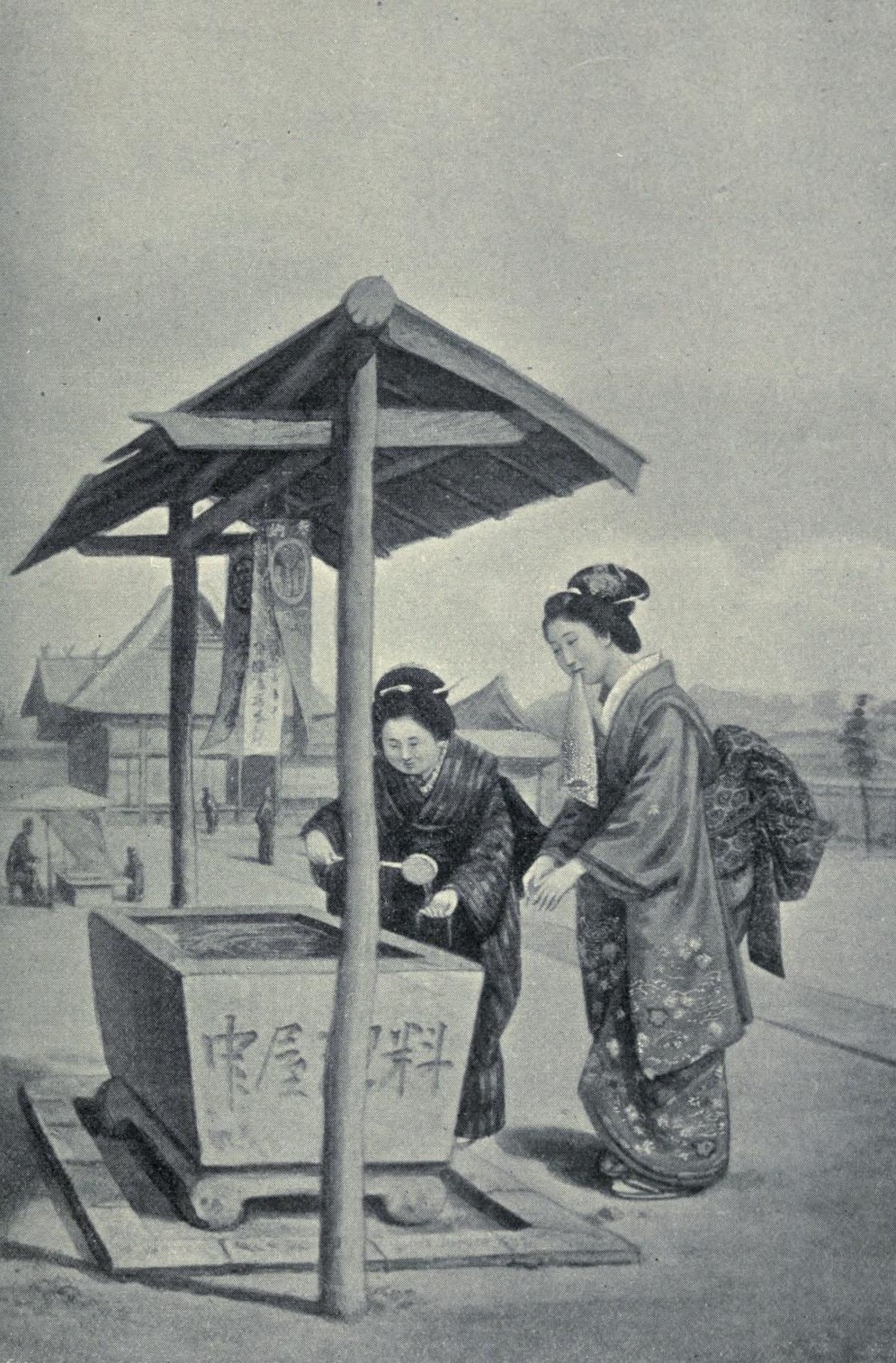
Mastering the Chozuya: A Guide to Japan’s Sacred Purification Ritual
When you step through a vermilion Torii gate in Japan, you are crossing a threshold from the mundane world into a sacred space. But before you approach the main hall to offer a prayer, there is an essential stop every visitor must make: the Chozuya (or Temizuya). This ornate water pavilion is more than just a place to wash your hands; it is the stage for a ritual that prepares your soul for communion with the divine.
The Origins of Purification
In the Shinto religion, purity is paramount. The concept of Kegare (withering of spirit or impurity) attaches itself to humans through daily life, illness, or contact with death. To interact with the Kami (gods), one must be cleansed.
Historically, this purification required full-body immersion in a river or the sea, a practice known as Misogi. Ancient pilgrims would bathe in natural bodies of water before entering holy precincts. Over the centuries, as shrines were built in cities far from running rivers, this practice evolved. The Chozuya serves as an abbreviated, symbolic version of Misogi. By washing the hands and rinsing the mouth, the worshiper symbolically cleanses the entire body and mind, washing away the dust of the secular world.
Legend and Mythology: The First Misogi
The roots of this ritual run deep into Japanese mythology, specifically recorded in the ancient chronicle, the Kojiki (Records of Ancient Matters), dating back to 712 AD.
The legend tells of Izanagi-no-Mikoto, one of the creator gods. After the tragic death of his wife, Izanami, he journeyed into Yomi (the Land of the Dead) to retrieve her. The attempt failed, and upon his return to the world of the living, Izanagi felt tainted by the impurities of the underworld.
To cleanse himself, he performed a purification ritual in a river in Wakamatsu. As he washed his left eye, the Sun Goddess Amaterasu was born; from his right eye came the Moon God Tsukuyomi; and from his nose came Susanoo, the Storm God. This mythical event established water as the ultimate purifier in Shinto belief, cementing the protocol that washing leads to spiritual renewal and the birth of divine power.
Modern Culture and the Rise of Hanachozu
While the Chozuya is an ancient fixture, it continues to evolve in modern Japan. Traditionally, these basins are adorned with statues of dragons (Ryu), as dragons are revered as water deities and guardians of rainfall. You will often see the water pouring from a dragon’s mouth, symbolizing the benevolence of the gods.
However, a colorful new trend has emerged in recent years: Hanachozu.
During the COVID-19 pandemic, many shrines removed the communal wooden ladles (hishaku) to prevent the spread of infection. To keep the basins beautiful and spiritually active despite the lack of use, priests began floating seasonal flowers—hydrangeas, chrysanthemums, and camellias—on the water’s surface. This transformed the austere purification fonts into stunning floral art installations. This practice became a viral sensation on Instagram, drawing a younger generation to shrines not just for prayer, but to appreciate the aesthetic harmony of nature and spirituality.
Traveler’s Tips: How to Use the Chozuya
For a visitor, performing the ritual correctly is a sign of respect. Do not worry about perfection; the gods appreciate the intent. However, following the steps shows you value the culture.
The Steps of Temizu:
- Right Hand First: Take the ladle (hishaku) in your right hand, scoop up water, and pour it over your left hand to cleanse it.
- Left Hand Second: Switch the ladle to your left hand and pour water over your right hand.
- The Mouth: Switch the ladle back to your right hand. Pour a small amount of water into your cupped left hand and rinse your mouth. Never touch the ladle directly to your lips.
- The Handle: Hold the ladle vertically with both hands so the remaining water runs down the handle, cleansing it for the next person.
- Return: Place the ladle back on the rack, face down.
Note: Attempt to perform all these steps with a single scoop of water.
If there are no ladles (common in modern or post-pandemic times), the shrine may have running water pipes. In this case, simply wash your hands and rinse your mouth using your cupped hands directly under the stream.
Sources & Further Reading
To deepen your understanding of the mythology behind the Chozuya, the following ancient texts and historical guides are recommended:
- The Kojiki (Records of Ancient Matters): Translated by Basil Hall Chamberlain or Donald L. Philippi. This text details the story of Izanagi and the first purification.
- The Nihon Shoki (The Chronicles of Japan): Offers parallel myths and historical context regarding early Shinto practices.
- Shinto: The Kami Way by Sokyo Ono: An excellent primer on Shinto philosophy, including the importance of Misogi and purification rituals.