
Shide Ritual Paper: The Sacred Lightning of Shinto Shrines
If you have ever visited a Shinto shrine in Japan, your eyes have likely been drawn to the striking, zig-zagging strips of white paper hanging from thick straw ropes or wooden wands. These iconic streamers are known as Shide (紙垂). While they may appear to be simple decorations to the untrained eye, they act as profound spiritual markers, delineating the boundary between the profane human world and the sacred realm of the Kami (gods).
In this guide, we will fold back the layers of history to understand the significance, mythology, and cultural endurance of Shide in Japan.
Origins: From Cloth to Paper
The word “Shide” is derived from the verb shideru, meaning “to hang down.” Historically, before paper became widely available or affordable, these streamers were made from coarse cloth, hemp, or fibers from the paper mulberry tree, collectively known as yu. It was only during the Heian period, as Japanese paper-making technology advanced, that washi (Japanese paper) became the standard material.
The most common interpretation of the Shide’s unique, lightning-bolt shape is exactly that: lightning. In an agricultural society like ancient Japan, lightning was closely associated with rain, and rain was essential for rice cultivation. Therefore, the lightning shape symbolizes a prayer for bountiful harvests and the life-giving power of nature.
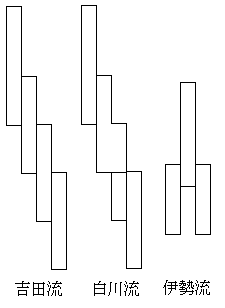
There are various styles of cutting and folding Shide, passed down through different priestly lineages. The most common styles are the Yoshida style, the Shirakawa style, and the Ise style. While they look similar from a distance, the intricacies of the folds often denote specific shrine traditions or historical eras.
Legend: The Cave of Heaven
To understand the spiritual weight of Shide, one must look to the Kojiki (Records of Ancient Matters), Japan’s oldest historical record. The mythological root of these paper streamers is found in the famous tale of Amaterasu Omikami, the Sun Goddess.
According to the legend, Amaterasu, angered by the violent antics of her brother Susanoo, retreated into the Amano-Iwato (Heavenly Rock Cave), plunging the world into darkness. To lure her out, the other gods gathered outside. As part of their ritual to restore light to the world, they uprooted a massive Sakaki tree from the Heavenly Mt. Kagu.
On the branches of this tree, they hung various offerings, including a mirror, jewels, and—crucially—cloth streamers made of white paper mulberry fibers (white nigite) and blue hemp (blue nigite). These offerings were the mythological ancestors of modern Shide. When Amaterasu peeked out, intrigued by the commotion and the offerings, light was restored to the universe. Thus, Shide represents not just a boundary, but a tool used to invoke the presence of the divine.
Modern Culture: Where to Spot Shide
In contemporary Japan, Shide remains ubiquitous in religious and traditional settings. It is rarely seen alone; instead, it is usually attached to ritual implements or boundaries.
The Shimenawa
One of the most common places to see Shide is hanging from a Shimenawa, the massive twisted straw rope that marks a sacred space. Whether draped across the Torii gate entrance or wrapped around a sacred tree (Shinboku), the Shide amplifies the purification power of the rope.
The Tamagushi
During formal worship inside a shrine, visitors or priests may offer a Tamagushi. This is a branch of the Sakaki evergreen tree with Shide attached to it. Offering a Tamagushi is a way of connecting one’s own soul with the Kami.
Sumo Wrestling
Sumo is deeply rooted in Shinto ritual. If you watch a Sumo tournament, observe the Yokozuna (grand champion). During his ring-entering ceremony, he wears a massive white rope around his waist, adorned with stiff, white Shide. This signifies that the wrestler himself is a sacred vessel, temporarily embodying a Kami.
Purification Wands (Haraegushi)
When a Shinto priest performs a purification ritual (O-harae) over a car, a building foundation, or a person, they wave a wooden wand called a Haraegushi or Gohei. This wand is essentially a cluster of many Shide streamers. The sound made by the paper as it is waved is believed to cleanse the air and sweep away impurity (kegare).
Traveler’s Tips
For travelers exploring the spiritual side of Japan, understanding Shide adds depth to the shrine experience. Here are a few tips:
- Do Not Touch: While Shide might look tactile, they are sacred objects. Touching them can be seen as transferring impurities onto a purified object. Admire them from a distance.
- Photography: It is generally acceptable to photograph Shide on ropes or gates. However, if a priest is waving a Haraegushi (wand) during a private ceremony, ask for permission before taking photos.
- Spot the Variations: Challenge yourself to look closely at the Shide in different cities. You may notice that the folding techniques in Kyoto (Kansai region) differ slightly from those in Tokyo (Kanto region).
Sources & Further Reading
- The Kojiki (Records of Ancient Matters): Translated by Basil Hall Chamberlain or Donald L. Philippi. This text provides the foundational myths regarding Amaterasu and the origins of ritual offerings.
- The Nihon Shoki (The Chronicles of Japan): Another classical history text that details early Shinto practices.
- Shinto: The Kami Way by Sokyo Ono. An excellent primer for understanding the context of ritual objects like Shide and Shimenawa.