
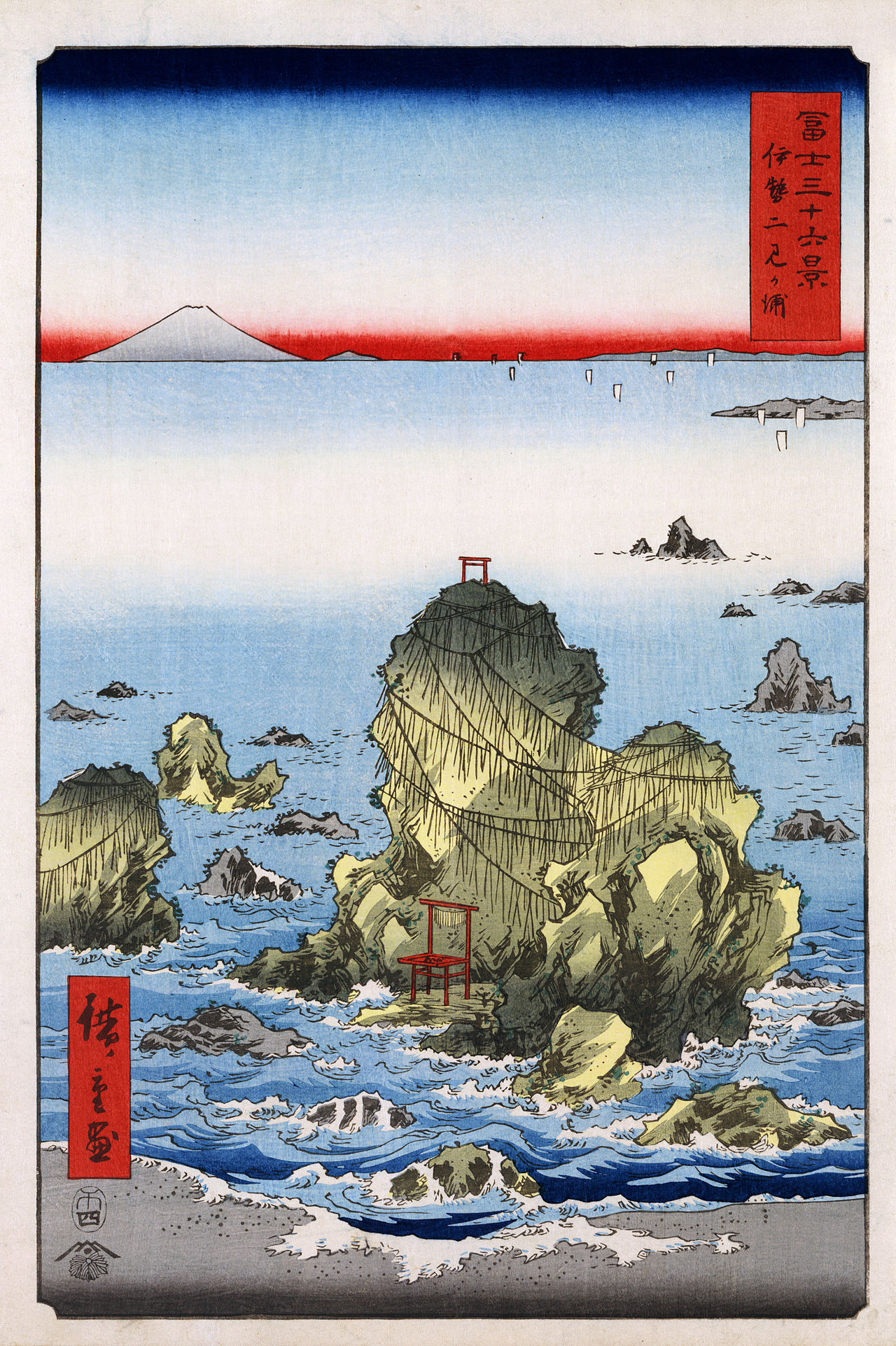
Meoto Iwa: The Eternal Bond of Japan’s Wedded Rocks
Japan is a land where the line between the physical landscape and the spiritual world often blurs. Nowhere is this more visually striking than at Meoto Iwa (The Wedded Rocks), located just off the coast of Futami in Mie Prefecture. These two sacred sea stacks, tied together by a massive straw rope, are not merely a geological curiosity; they are a profound symbol of shinto mythology, marital union, and the divine beauty of nature.
Whether you are a spiritual seeker, a photography enthusiast, or a traveler fascinated by Japanese folklore, a visit to Meoto Iwa offers a glimpse into the ancient heart of Japan.
The Origins of the Sacred Union
Meoto Iwa consists of two rocks jutting out of the Ise Sea. The larger rock, standing 9 meters tall, represents the husband (Izanagi), while the smaller rock, at 3.6 meters, represents the wife (Izanami). They are located within the precincts of the Futami Okitama Shrine.
Physically, the rocks are joined by a shimenawa—a sacred Shinto rope made of braided rice straw. This rope is immense, weighing over a ton, and acts as a spiritual division between the mundane world and the sacred realm of the kami (gods).
Historically, these rocks function as a natural torii (shinto gate). Worshippers do not bow to the rocks themselves, but rather to what lies beyond them: the rising sun and the Okitama Shinseki, a sacred rock submerged about 700 meters offshore where the deity Sarutahiko Okami is said to reside.
The Legend of Izanagi and Izanami
To understand the gravity of Meoto Iwa, one must look to the Kojiki, Japan’s oldest historical record. The rocks are the earthly embodiment of Izanagi no Mikoto and Izanami no Mikoto, the primal creator gods of Shinto mythology.
According to the creation myth, these two deities stood upon the floating bridge of heaven and stirred the primordial ocean with a jeweled spear. The brine that dripped from the spear formed the islands of Japan. They then descended to marry and procreate, birthing the islands and the myriad gods of nature.
The shimenawa rope connecting the rocks symbolizes the matrimonial bond between Izanagi and Izanami. It is a powerful representation of union, fertility, and the balance between masculine and feminine energies required to create life. Because of this association, the site is a major pilgrimage destination for couples seeking happy marriages and singles praying for en-musubi (matchmaking).
Modern Culture and Rituals
Today, Meoto Iwa is a vibrant part of local culture in Ise. The sacred rope is not permanent; the salt water and wind erode it over time. Consequently, a special ritual called the Oshimenawa Hari Shinji is held three times a year (May, September, and December) to replace the ropes. Local parishioners dress in traditional white garb and wade into the ocean to hoist the heavy ropes onto the rocks, a ceremony that attracts crowds of spectators.
The Frogs of Futami
As you walk through the Futami Okitama Shrine approaching the rocks, you will notice countless statues of frogs. In Japanese, the word for frog is kaeru, which is a homophone for “to return” or “to come home.”
The frogs are messengers of the deity Sarutahiko Okami. Travelers visit the shrine to pray that they (or their loved ones) will kaeru (return home) safely from their journeys. It is also a play on words for money or luck returning to the worshipper.
Traveler’s Tips: Visiting Futami
Visiting Meoto Iwa is often combined with a trip to the nearby Ise Jingu (Ise Grand Shrine), Japan’s holiest Shinto site. Traditionally, pilgrims would purify themselves at the shores of Futami before entering Ise Jingu.
- Best Time to Visit: The most iconic view occurs around the Summer Solstice (June). During this time, the sun rises exactly between the two rocks. On clear days, you can even see the silhouette of Mount Fuji in the distance, framed by the rocks and the rising sun—a view celebrated in countless ukiyo-e woodblock prints.
- Access: Takes a JR train to Futaminoura Station. From there, it is a pleasant 15-minute walk through the town to the shrine entrance.
- Tides: Check the tide tables. At low tide, the water recedes enough that you can walk almost up to the base of the rocks, though the view is generally considered most picturesque at high tide when they appear to be floating.
- Souvenirs: Look for omamori (charms) featuring the wedded rocks for relationship luck, or small frog figurines for safe travels.
Sources & Further Reading
For those interested in the deep mythology surrounding Izanagi and Izanami, the primary historical texts of Japan offer fascinating insights:
- The Kojiki (Records of Ancient Matters): Completed in 712 AD, this text details the creation myths and the lineage of the Imperial family.
- The Nihon Shoki (The Chronicles of Japan): Finished in 720 AD, this text provides a parallel, slightly more historical account of the same myths.
- Futami Okitama Shrine Official Records: Local shrine history regarding the rituals of the Okitama Shinseki.