
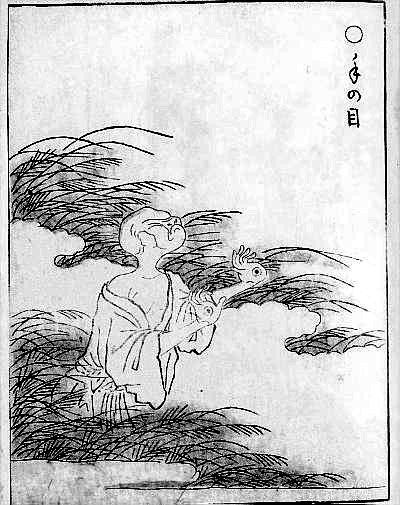
Tenome: The Terrifying Japanese Yokai With Eyes on His Hands
Japanese folklore is renowned for its vast pantheon of yokai—supernatural monsters, spirits, and phenomena that range from the mischievous to the malevolent. Among these curious creatures, few are as visually striking or as tragically terrifying as Tenome (手の目). Literally translating to “Hand Eyes,” this yokai appears as an elderly man, often blind, with eyes situated not on his face, but in the center of his palms.
For cultural travelers and folklore enthusiasts, understanding the story of Tenome offers a fascinating glimpse into the Japanese concept of onnen (grudge) and the Edo-period imagination. In this article, we delve into the origins, legends, and cultural footprint of this nightmarish wanderer.
The Origins of Tenome
The most famous depiction of Tenome comes from the legendary artist Toriyama Sekien. In his 1776 masterpiece, Gazu Hyakki Yagyō (The Illustrated Night Parade of a Hundred Demons), Sekien drew the creature wandering through a field of tall grass, sniffing out prey with its hands raised high.
Unlike the ancient gods found in Japan’s creation myths, Tenome is widely believed to be a manifestation of a human ghost born from a violent death. The creature is classified as a vengeful spirit. In Japanese theology, when a person dies with extreme rage, jealousy, or regret, they may transform into a yokai rather than passing on to the afterlife. Tenome is the embodiment of the desire to “see” vengeance.
The Legend: A Blind Man’s Curse
The most prevalent folklore surrounding Tenome tells the story of a blind man traveling alone on a dark road. According to the legend, the man was ambushed by a group of bandits. Helpless and unable to identify his attackers, he was beaten, robbed, and left to die in a field.
As he lay dying, he cried out in anguish, lamenting, “If only I could have seen their faces! If only I had eyes, I would not let them escape!”
His rage was so potent that it transcended death. He was reborn as a yokai, but because his physical eyes were blind in life, his new eyes manifested on the palms of his hands—the tools he used to grope and navigate the world. Now, Tenome roams open fields and graveyards at night, waving his hands in the air, hunting for the bandits who killed him. Tragically, he can no longer distinguish between his murderers and innocent travelers; he simply attacks and eats anyone he catches.
The Encounter in the Graveyard
There is a famous Edo-period ghost story involving a young man who dared to test his courage in a graveyard renowned for hauntings. While hiding, he saw an old man approaching, waving his hands erratically. Realizing it was Tenome, the youth fled to a nearby temple and begged the priest for help.
The priest hid the boy in a long wooden chest (nagamochi) and told him to remain silent. The monster entered the temple, sniffing the air and clapping its hands to see. The priest later heard a strange slurping sound. When morning came, he opened the chest to find only the young man’s flaccid skin and bones remaining; Tenome had sucked the bodily fluids out of his victim without even opening the lid.
Tenome in Modern Culture
While Tenome is a creature of old folklore, his terrifying design has influenced modern pop culture significantly.
Film and Anime
Perhaps the most famous visual parallel in Western media is the “Pale Man” from Guillermo del Toro’s Pan’s Labyrinth. While del Toro cited various influences, the imagery of a monster placing eyes into its palms mirrors Tenome perfectly.
In Japan, Tenome features in the beloved series GeGeGe no Kitaro by Shigeru Mizuki, which is responsible for popularizing many yokai in the modern era. Here, he is often depicted as a villainous character.
Video Games
Gamers may recognize the influence of Tenome in titles like Persona and Nioh, or even Cuphead (via the Blind Specter boss), where the concept of displaced eyes serves as a recurring motif for supernatural horror.
Traveler’s Tips: Where to Find Yokai Culture
If you are planning a trip to Japan and want to immerse yourself in the world of Tenome and other spirits, here are a few must-visit locations:
- Mizuki Shigeru Road (Sakaiminato, Tottori): This street is dedicated to the creator of GeGeGe no Kitaro. It features over 170 bronze statues of yokai, including Tenome. It is the ultimate pilgrimage for folklore fans.
- Yokai Street (Ichijo-dori, Kyoto): Known as the path where the “Night Parade of One Hundred Demons” traditionally took place. The local shops decorate their storefronts with handmade yokai monsters.
- The Miyoshi Mononoke Museum (Miyoshi, Hiroshima): This museum houses a massive collection of yokai-related artifacts, scrolls, and artwork, offering a deep dive into the history of these creatures.
Sources & Further Reading
To deepen your understanding of Tenome and Japanese folklore, consider consulting the following texts:
- Gazu Hyakki Yagyō (The Illustrated Night Parade of a Hundred Demons) by Toriyama Sekien (1776): The primary visual source for Tenome.
- Shokoku Hyaku Monogatari (100 Tales from Various Provinces): A collection of kaidan (ghost stories) from the Edo period that details encounters with strange spirits.
- Kwaidan by Lafcadio Hearn: While it focuses on various ghosts, it provides the essential atmospheric context for understanding Japanese horror.
Tenome serves as a grim reminder in Japanese folklore: a grudge left unresolved can blind a spirit to everything but revenge, turning victims into monsters. Keep your eyes open—and your hands to yourself—when walking Japan’s lonely roads at night.