
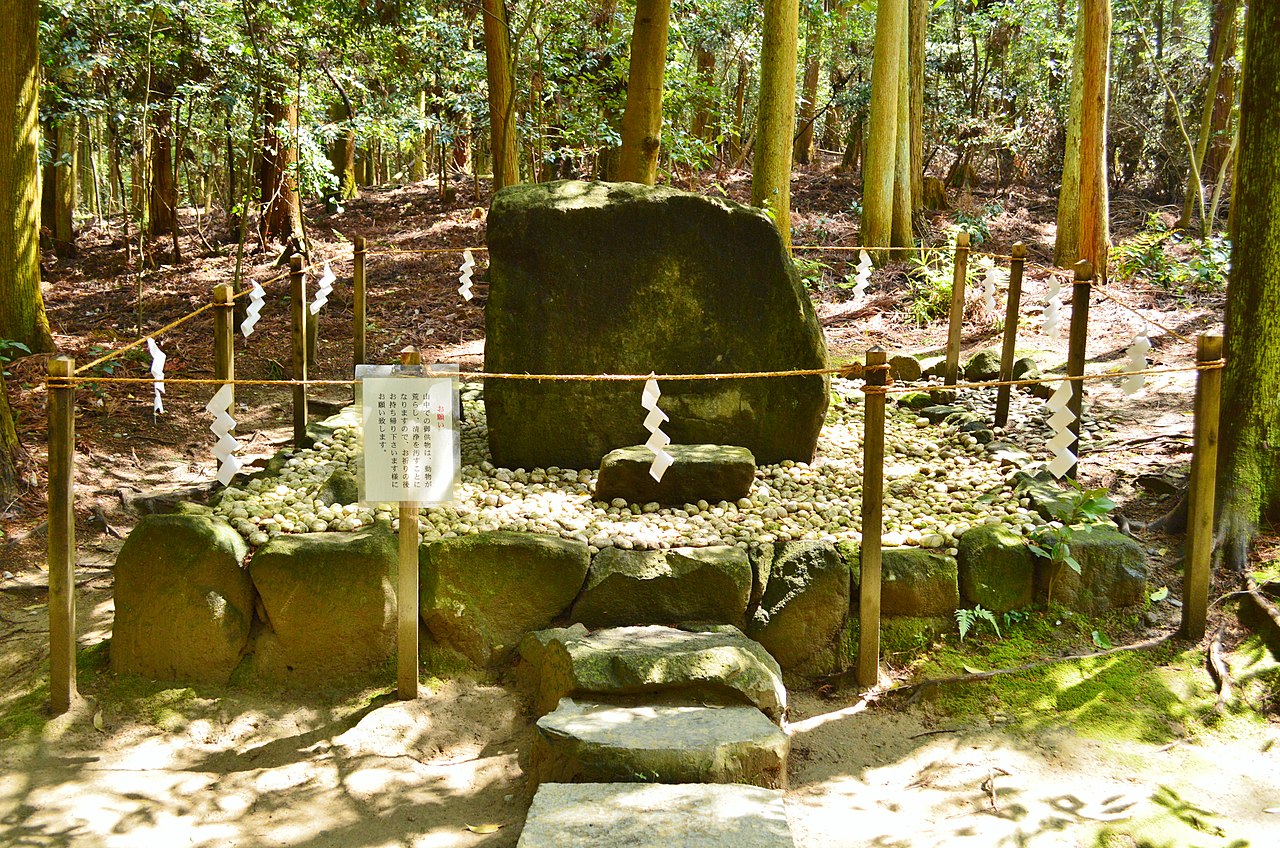
Iwakura Rituals: Exploring Japan’s Sacred Rock Worship
When travelers picture Japanese religion, the image that often comes to mind is the vermilion Torii gate standing in the water or the intricate wooden architecture of ancient shrines in Kyoto. However, long before majestic halls were constructed, the spiritual heart of Japan beat in the forests and mountains. This ancient form of worship, centered on massive, naturally occurring boulders known as Iwakura, offers a glimpse into the primordial roots of Shinto.
For the culture-seeking traveler, understanding Iwakura rituals unlocks a deeper layer of Japanese history, revealing a time when nature itself was the only temple needed.
Origins of Rock Worship
The term Iwakura (磐座) translates roughly to “rock seat” or “dwelling place of the kami (gods).” In the earliest forms of Shinto, known as Ko-Shinto (Ancient Shinto), there were no buildings designated for worship. Instead, the ancient Japanese believed that spirits and deities resided in or descended upon striking natural features—towering trees, majestic waterfalls, and, most notably, massive rock formations.
Unlike ordinary stones, an Iwakura is a specific rock chosen as a yorishiro—an antenna or vessel capable of attracting divine spirits. The rituals surrounding these rocks were not about worshipping the stone itself as a material object, but rather honoring the deity that occupied it. The rock served as a temporary or permanent seat where the physical and spiritual worlds intersected.
This practice predates the construction of shaden (shrine buildings) which became popular following the introduction of Buddhism in the 6th century. Consequently, sites that still practice Iwakura rituals preserve the rawest, most unadulterated form of Japanese spirituality.
Legend and Mythology
The significance of rock worship is deeply woven into Japan’s creation myths, recorded in the earliest historical chronicles. In both the Kojiki (Records of Ancient Matters, 712 CE) and the Nihon Shoki (Chronicles of Japan, 720 CE), rocks play pivotal roles in the descent of deities.
One of the most profound legends involves the Kumano region. It is said that the deities of Kumano first descended not into a temple, but onto a massive rock known as Gotobiki-iwa on Mount Kamikura. This monolithic slab, perched precariously on a cliffside, was the original focus of worship before the Grand Shrines of Kumano were built at the base of the mountains.
Furthermore, the mythology suggests that rocks were immutable and eternal, contrasting with the fleeting lives of humans. By anchoring rituals to these geological giants, ancient people sought to connect with the eternal nature of the universe. The Shimenawa (sacred straw rope) seen wrapped around these rocks today serves as a marker of this boundary between the profane human world and the sacred divine realm.
Modern Culture and Preservation
In modern Japan, while most Shinto shrines have moved worship into wooden halls, the tradition of Iwakura remains potent in specific locales. It has seen a resurgence in popularity due to the “Power Spot” boom—a trend where younger generations seek out locations radiating spiritual energy.
The most famous surviving example of this ancient style is Omiwa Shrine in Nara Prefecture. Omiwa is unique because it has no Honden (main hall) to house the deity. Instead, worshippers pray through a Haiden (worship hall) directly toward Mount Miwa itself and its sacred rocks, preserving the archaic form where the mountain is the body of the god.
These sites are no longer just for the pious; they are cultural touchstones that remind modern society of an era when humanity lived in awe of the natural environment. They represent a preservation of animistic philosophy in a high-tech society.
Traveler’s Tips
Visiting an Iwakura site is a distinct experience from visiting a standard tourist shrine. Here is how to approach these sacred grounds:
-
Where to Go:
- Kamikura Shrine (Wakayama): Be prepared for a steep climb up 538 jagged stone steps to reach Gotobiki-iwa. The view and the spiritual atmosphere are unmatched.
- Omiwa Shrine (Nara): Walk the tranquil grounds and observe the triple-torii gate. Visit the nearby Iwakura shrines scattered in the Yamanobe-no-michi trail area.
- Hanano Iwaya Shrine (Mie): Known as the oldest shrine in Japan, dedicated to the mother goddess Izanami, centered around a colossal 45-meter high rock.
-
Etiquette:
- Silence is Golden: These sites are often deep in nature. Maintain a respectful quietness.
- Do Not Touch: Unless explicitly permitted, do not touch the sacred rocks or the paper streamers (shide) attached to the straw ropes. They are sacred boundaries.
- Proper Footwear: Many Iwakura are located on mountainsides or uneven ground. Hiking boots or sturdy sneakers are essential.
-
Timing: Early morning is the best time to visit. The mist clinging to the rocks and the forest silence enhances the mystical atmosphere.
Sources & Further Reading
For those wishing to delve deeper into the historical context of rock worship and Japanese mythology, the following texts are essential:
- The Kojiki (Records of Ancient Matters): Translated by Basil Hall Chamberlain or Donald L. Philippi. Contains the foundational myths of Shinto.
- The Nihon Shoki (Chronicles of Japan): Translated by W.G. Aston. Provides historical accounts of imperial lineage and religious practices.
- Shinto: The Kami Way: By Sokyo Ono. A comprehensive guide to understanding the philosophy behind the rituals.
- Sacred Space in the Modern City: Academic papers discussing the evolution of Yorishiro and shrine architecture.