
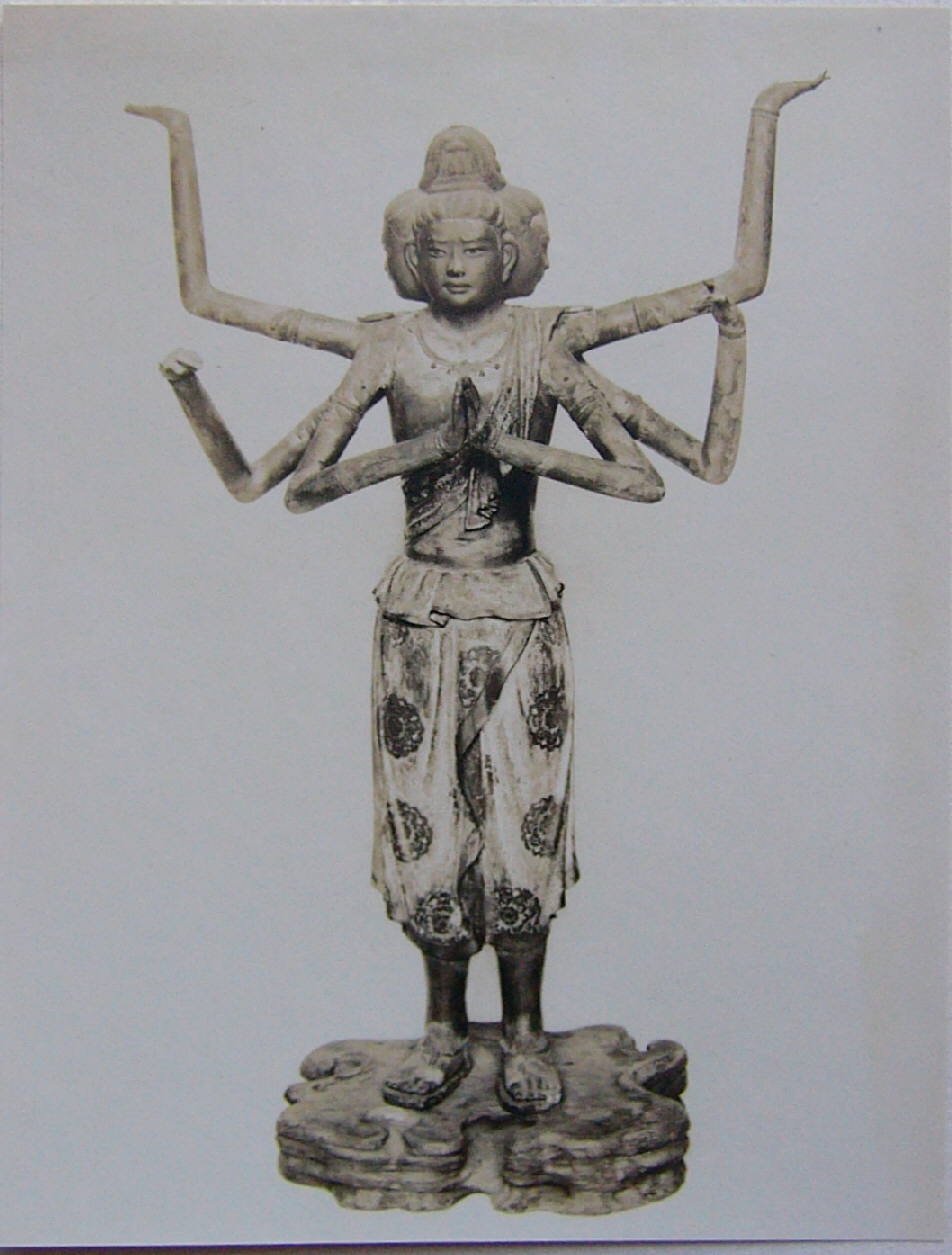
Ashura: The Beautiful Warrior of Japanese Buddhism
When one imagines a warrior deity, images of hulking muscles, fierce snarls, and terrifying weapons usually come to mind. Yet, in the ancient capital of Nara, Japan, stands a statue that defies this convention entirely. Ashura, a figure with three faces and six arms, looks out at the world not with rage, but with a furrowed brow of adolescent angst and repentant sorrow. For travelers and culture enthusiasts, understanding Ashura offers a profound glimpse into how Japan adapted ancient mythology into a unique spiritual identity.
Introduction
Ashura (阿修羅) is one of the most recognizable and beloved figures in Japanese Buddhist art. While he is historically a god of war, his depiction in Japan—particularly the famous National Treasure statue at Kofukuji Temple—has captured the hearts of millions. He represents a bridge between the violent impulses of the spirit and the awakening of Buddhist compassion. But who is this multi-armed youth, and how did a demon of war become a national icon of Japan?
Origins: From Demon to Defender
The story of Ashura begins long before Buddhism reached the shores of Japan. The name is derived from the Sanskrit term Asura. In early Vedic Hinduism, Asuras were a class of beings often in opposition to the Devas (gods). They were essentially anti-gods or titans, consumed by passions, pride, and bellicosity.
As Buddhism traveled along the Silk Road, it absorbed and repurposed many of these deities. By the time the religion reached China and subsequently Japan in the 6th and 7th centuries, Ashura had been integrated into the Buddhist pantheon as one of the Hachibushu (The Eight Legions). These are eight classes of non-human beings who protect the Dharma (Buddhist law). In this transition, Ashura evolved from a chaotic demon into a guardian deity who, despite his karmic burden of aggression, listens to the teachings of the Buddha.
The Legend of Endless War
To understand the sorrow on Ashura’s face, one must understand his legend. In mythology, Ashura was often locked in an eternal battle with Taishakuten (Indra), the Lord of the Devas.
The most popular version of the legend suggests that Ashura’s daughter was taken by Taishakuten. Enraged, Ashura launched a war against the gods. However, because Ashura was driven by wrath, pride, and jealousy, he was trapped in the “Realm of Ashura” (Ashura-do)—one of the Six Realms of Existence in Buddhist cosmology. This realm is characterized by constant fighting and an inability to find peace.
However, the Japanese interpretation, specifically the one immortalized by the sculptors of the Nara period (710–794 AD), focuses on the moment of realization. The Kofukuji statue depicts Ashura after the battle, realizing the futility of his rage and turning toward the Buddha for salvation. His three faces are often interpreted as representing different stages of this emotional journey: the suppressed anger, the dawn of realization, and the final look of repentance.
Ashura in Modern Culture
Ashura’s influence extends far beyond ancient temples. The concept of the “Ashura Realm”—a state of constant conflict—resonates deeply in Japanese storytelling.
In modern pop culture, “Ashura” often appears as a shorthand for characters possessing great power but struggling with inner demons or rage. Fans of anime and manga will recognize the name in series like Naruto (Asura Otsutsuki), Soul Eater (Asura the Kishin), and One Piece (Zoro’s Asura technique). The visual motif of three faces and six arms is frequently used to depict a character unleashing their ultimate power. Unlike the serene Buddhas, Ashura is relatable; he represents the human struggle to control one’s emotions, making him a timeless figure in Japanese media.
Traveler’s Tips: Seeing Ashura in Nara
For those visiting Japan, seeing the Ashura statue in person is a moving experience. Here is how to make the most of your pilgrimage:
- Location: The most famous statue resides in Kofukuji Temple in Nara Park, specifically within the National Treasure Museum (Kokuhokan).
- The Statue: Dating back to 734 AD, this hollow dry-lacquer statue is fragile and exquisite. Pay close attention to the three faces. The face on the left looks down with suppressed anger, the face on the right bites its lip in regret, and the central face looks forward with a mix of sorrow and hope.
- Best Time to Visit: Nara is incredibly popular. Visit early in the morning (around 9:00 AM) to avoid the biggest crowds. Autumn (late November) is spectacular due to the changing leaves in Nara Park.
- Etiquette: Photography is strictly prohibited inside the museum. Buy a postcard or a photo book at the gift shop instead. Stand silently and observe the statue; it is a religious icon, not just a museum exhibit.
Sources & Further Reading
To deepen your understanding of Ashura and the arrival of Buddhism in Japan, consider exploring the following texts:
- The Lotus Sutra: The primary text where the Eight Legions, including Ashura, appear as protectors of the Buddha.
- Nihon Shoki (The Chronicles of Japan): While primarily a Shinto and historical text, it documents the official introduction of Buddhism to the Japanese imperial court, setting the stage for temples like Kofukuji to be built.
- Kofukuji Temple Archives: Historical records regarding the creation of the dry-lacquer statues of the Nara period.