
Yanari: The Mystery of Japan’s Creaking House Spirits
Imagine you are staying in a centuries-old ryokan (traditional inn) deep in the mountains of Kyoto. The sliding paper doors have been shut, the lights dimmed, and the silence of the night settles in. Suddenly, a loud creak echoes from the ceiling beams. A few moments later, a sharp pop sounds from the hallway floorboards. Is it the wind? Is the house settling?
In the West, these sounds are often rationalized as the thermal expansion of wood or, in darker tales, the footsteps of a ghost. In Japanese folklore, however, these noises have a name and a face. They are the work of the Yanari (家鳴り), the mischievous spirits of creaking houses. For travelers and culture enthusiasts, understanding the Yanari offers a fascinating glimpse into how Japanese culture animates the inanimate, turning architectural quirks into living mythology.
The Origins of the Sound
The term Yanari literally translates to “house crying” or “house ringing.” Historically, the phenomenon has been documented for centuries, dating back to when traditional Japanese architecture relied exclusively on timber framing without nails.
The Science vs. The Supernatural
From a structural perspective, the Japanese climate—hot, humid summers and dry, cold winters—causes the heavy wooden beams and pillars of traditional minka (folk houses) to expand and contract. This physical stress releases sudden bursts of sound, often resembling a sharp crack or a low groan.
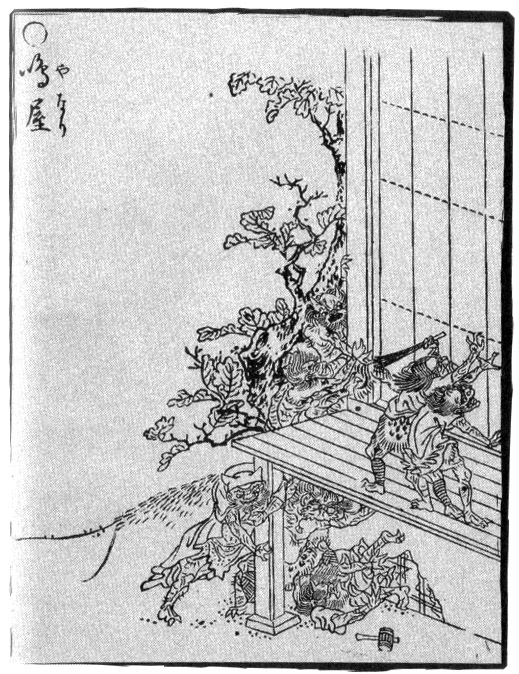
However, in the Edo period (1603–1867), a time when superstition and storytelling flourished, people sought supernatural explanations for these nightly disturbances. The famous ukiyo-e artist and folklorist Toriyama Sekien canonized the visual identity of the Yanari in his 1776 encyclopedia of yokai, Gazu Hyakki Yagyō (The Illustrated Night Parade of a Hundred Demons). He depicted them not as terrifying ghosts, but as small, ugly, goblin-like creatures armed with mallets, actively banging on the walls and floors to disturb the residents.
The Legend of the Little Oni
According to folklore, Yanari are a type of oni (demon or ogre), though significantly smaller and less malevolent than their larger cousins. They are pranksters rather than predators. The legends suggest that these spirits emerge only at night, swarming out of the woodwork to shake the house.
Poltergeists or Pranksters?
While the Yanari are generally considered harmless, their antics can be psychologically distressing. In some ancient tales, the shaking caused by Yanari was so violent that homeowners believed an earthquake was occurring, only to run outside and find the earth perfectly still.
There are stories of samurai who, upon hearing the incessant creaking, would slash their katanas into the air or strike the tatami mats in an attempt to drive the invisible spirits away. Unlike Western poltergeists, which are often associated with the spirits of the dead, Yanari are viewed more as manifestations of the house’s own spirit or small nature sprites inhabiting the timber. They remind the inhabitants that the house itself is alive.
Modern Culture and Wooden Architecture
In modern Japan, the belief in Yanari has faded, replaced by architectural physics. However, the cultural reverence for the “soul of objects” (animism) remains. The Yanari represents a nostalgia for a time when houses were organic entities made of earth, wood, and paper, rather than sterile concrete boxes.
Today, you can see echoes of the Yanari in pop culture, particularly in anime and manga that feature house spirits. While not explicitly Yanari, the Susuwatari (soot sprites) in Studio Ghibli’s My Neighbor Totoro and Spirited Away share the same DNA: they are small, numerous creatures that inhabit old, forgotten spaces in traditional homes.
Traveler’s Tips: Experiencing the Yanari
If you want to experience the atmosphere that gave birth to the Yanari legend, you must step away from modern hotels and immerse yourself in Japan’s architectural heritage.
Where to Stay
- Kominka Stays: Look for renovated kominka (old folk houses) in rural areas like the Iya Valley or Shirakawa-go. These heavy timber-framed houses are prime territory for night sounds.
- Kyoto Machiya: Renting a restored machiya (wooden townhouse) in Kyoto offers an authentic experience of domestic life in the Edo period.
- Historic Ryokans: Book a night at a ryokan registered as a Tangible Cultural Property. The age of the wood guarantees a symphony of creaks.
How to React
When you hear a sudden crack in the middle of the night, don’t be alarmed. Instead of fearing an intruder or a ghost, smile and remember the Yanari. It is a sign that the building you are sleeping in has survived generations of weather and history.
Sources & Further Reading
- Gazu Hyakki Yagyō (The Illustrated Night Parade of a Hundred Demons) by Toriyama Sekien (1776) – The primary visual source for the Yanari.
- Nihon Shoki (The Chronicles of Japan) – For context on early Japanese animism and the spiritual nature of natural materials.
- Yokai.com – An excellent online database for Japanese folklore enthusiasts.
- The Book of Yokai: Mysterious Creatures of Japanese Folklore by Michael Dylan Foster.