
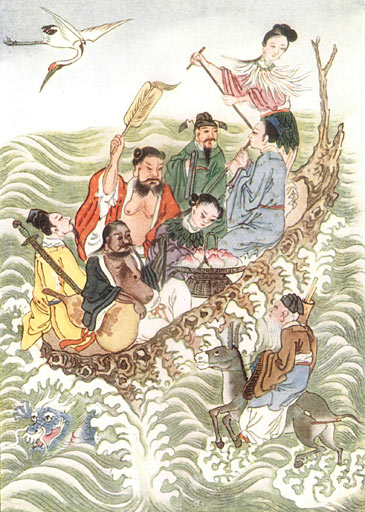
Unlocking Senjutsu: The Mystical Arts of the Immortals
When traveling through the mist-covered mountains of Japan, it is easy to imagine that you are not alone. Amidst the towering cedars and ancient moss, folklore whispers of the Sennin—hermits who mastered the secrets of nature to achieve longevity and supernatural power. These secrets are known as Senjutsu (仙術), or the “Immortal Arts.”
While modern audiences might recognize the term from popular anime, the roots of Senjutsu run deep into the bedrock of East Asian philosophy, religion, and mythology. For the cultural traveler, understanding Senjutsu offers a fascinating lens through which to view Japan’s relationship with nature, spirituality, and the supernatural.
The Origins: Where Taoism Meets Shinto
The concept of Senjutsu did not originate in Japan. It arrived from mainland China, born from Taoism and the pursuit of Xian (immortality). In Chinese tradition, practitioners sought to balance their internal energy (Qi) through alchemy, meditation, and diet to transcend the mortal coil.
When these ideas crossed the sea to Japan, they underwent a unique transformation. During the Asuka and Nara periods, the desire for physical immortality blended with Japan’s indigenous nature worship (Shinto) and the imported teachings of Buddhism.
The Birth of Mountain Asceticism
This fusion gave rise to Shugendo, a syncretic religion where practitioners, known as Yamabushi, retreat to the mountains to perform rigorous feats of endurance. While Shugendo focuses on enlightenment, the folklore surrounding these ascetics often overlaps with Senjutsu. The lines blurred between the holy monk and the magical wizard, creating the archetype of the Sennin—a being who could fly on clouds, manipulate the elements, and live for centuries.
Legends of the Sennin
Japanese folklore is replete with tales of these mystical figures. Unlike the distant gods of the Kojiki, Sennin were often depicted as humans who had ascended through training, making them a bridge between the mundane and the divine.
The Flying Hermit: Kume no Sennin
One of the most famous legends is that of Kume no Sennin. According to the Konjaku Monogatarishu, Kume gained the power of flight through rigorous ascetic practice. However, his story serves as a humorous cautionary tale. While flying over a river one day, he spotted a young woman washing clothes. distracted by her pale legs, he lost his concentration—and his magical powers—plummeting from the sky. This humanizing story illustrates that even masters of the Immortal Arts were not immune to worldly desires.
En no Gyoja
On the more serious side is En no Gyoja, the legendary founder of Shugendo. He is often depicted in art accompanied by two demons he tamed to be his servants. Folklore attributes vast Senjutsu powers to him, including the ability to control weather and traverse great distances instantly. He represents the pinnacle of the “mountain wizard” archetype.
Senjutsu in Modern Culture
Today, the term Senjutsu has been revitalized and repurposed by Japan’s massive pop culture industry. It has shifted from a religious pursuit of longevity to a system of magical combat abilities.
The Naruto Phenomenon
Perhaps the most globally recognized iteration of this concept is found in the anime and manga series Naruto. Here, “Senjutsu” refers to Sage Mode, where characters draw natural energy from the world to augment their power. While fantastical, the series pays homage to the source material: the characters train with toad or snake sages in hidden mountain regions, mirroring the isolation required by historical ascetics.
This modern retelling keeps the core philosophy alive for a new generation: true power comes from harmonizing one’s internal self with the external energy of nature.
Traveler’s Tips: Experiencing the Mystical
You cannot officially sign up for “wizard school” in Japan, but you can visit the “power spots” (spiritual sites) associated with these legends to soak in the atmosphere.
- Mount Kurama (Kyoto): Known as the home of the Tengu (mythical creatures often associated with martial arts and mountain magic), this mountain offers a mystical hike. It is said that the legendary warrior Minamoto no Yoshitsune learned the arts of war from the Tengu here.
- Akame 48 Waterfalls (Mie Prefecture): historically a training ground for ninjas and ascetics. The misty trails and thundering waterfalls evoke the exact environment where one might imagine practicing Senjutsu.
- Mount Yoshino (Nara Prefecture): The spiritual heart of Shugendo. Walking these paths, you may still encounter Yamabushi blowing conch shells, keeping the ancient traditions of mountain worship alive.
Sources & Further Reading
For those wishing to delve deeper into the mythology and history behind Senjutsu and the Japanese pantheon, the following texts are essential:
- The Kojiki (Records of Ancient Matters): While focused on Kami, it establishes the supernatural worldview of ancient Japan.
- The Nihon Shoki (The Chronicles of Japan): Provides historical context for the introduction of Taoist and Buddhist concepts to the Imperial court.
- Konjaku Monogatarishu: An anthology of tales from the past that contains many specific stories about Sennin and their exploits.
- Japanese Mandalas: Representations of Sacred Geography by Elizabeth ten Grotenhuis.
Whether you are a fan of anime seeking the origins of your favorite jutsu, or a traveler looking for spiritual solace, the legacy of the Immortal Arts adds a layer of magic to the Japanese landscape that is waiting to be explored.