
Unveiling Polaris Worship: Japan’s Mystical Hokushin Faith
For centuries, travelers and navigators have looked to the night sky for guidance, fixing their gaze upon the unmoving North Star. In Japan, this celestial fascination evolved into a profound and syncretic spiritual practice known as Hokushin Shinko (北辰信仰), or Polaris Worship. While Shinto shrines dedicated to nature spirits and Buddhist temples honoring enlightened beings are common sights for tourists, the shrines dedicated to the North Star offer a glimpse into a mystical, esoteric layer of Japanese culture that blends Taoism, Buddhism, and Shinto into a powerful faith of destiny and protection.
The Celestial Roots: Origins of Hokushin Shinko
The worship of the North Star originated in ancient China, deeply rooted in Taoist cosmology. The North Star (Polaris) was viewed as the Emperor of the Heavens, the immovable center around which all other stars revolved. This fixed point represented the ultimate authority and the source of the universe’s energy.
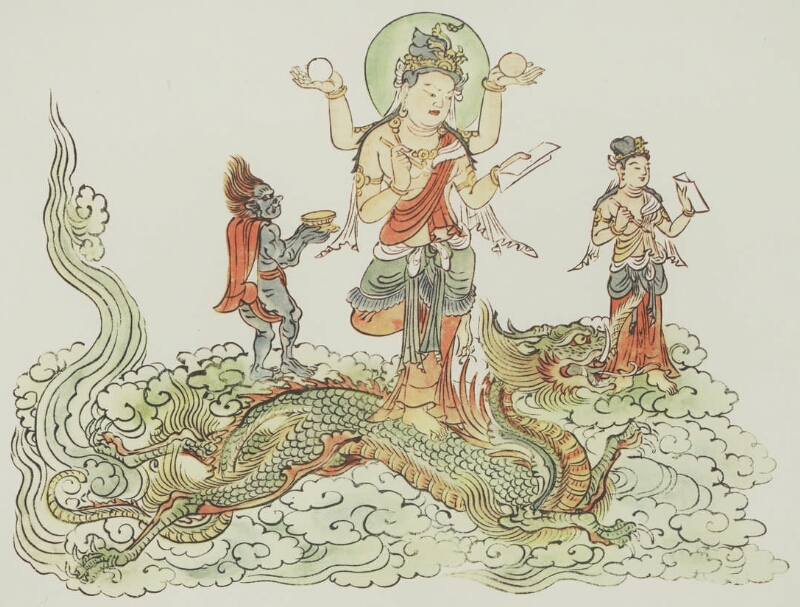
When these beliefs crossed the sea to Japan during the Asuka and Nara periods (6th–8th centuries), they merged with existing indigenous beliefs. In the Japanese context, this celestial deity became personified primarily as Myoken Bosatsu (Myoken Bodhisattva). Unlike the serene, meditative statues often found in Buddhism, Myoken is frequently depicted in a more martial or commanding form, sometimes standing atop a tortoise and a snake—symbols associated with the north in Chinese mythology (the Black Tortoise, or Genbu).
Following the Meiji Restoration’s separation of Shinto and Buddhism in the late 19th century, many venues of Polaris worship were converted to Shinto shrines. In this transition, the deity was re-identified as Ame-no-Minakanushi, the primordial god of the center of the universe mentioned in Japan’s oldest chronicles.
Legend: The Samurai and the Guiding Star
One cannot discuss Polaris Worship without mentioning the samurai class. During the Heian and Kamakura periods, Hokushin Shinko became the patron faith of many warrior clans, most notably the Chiba clan of the Kanto region.
According to legend, Taira no Tadatsune, the ancestor of the Chiba clan, witnessed a miraculous manifestation of the North Star deity. He saw the star not just as a guide for navigation, but as a divine strategist influencing the tides of war and the destiny of men. The deity was believed to possess the power to ward off misfortune and grant longevity and military success.
Because of this, the Chiba clan adopted the “Tsuki-ni-Hoshi” (Moon and Star) crest. It is said that when the clan faced insurmountable odds in battle, they would pray to Myoken Bosatsu. The legends claim that the star would shine brilliantly even during the day or that a divine arrow would descend to protect the clan’s lineage. This association cemented the North Star as a symbol of unyielding strength and protection against disaster.
Modern Culture: Destiny and Direction
In modern Japan, Hokushin Shinko has shed its strictly military associations but retains its focus on direction and destiny. Today, people visit Myoken shrines and temples to pray for distinct types of guidance:
- Ward against Bad Direction (Hogiyoke): In Japanese geomancy, certain years or directions are considered unlucky for individuals. The North Star, being the center of the heavens, is believed to have the power to neutralize these negative directional forces.
- Academic Success: Just as the star guides sailors, it is believed to guide students through the confusion of examinations.
- Transportation Safety: A modern evolution of the navigational aspect, many taxi drivers and pilots carry amulets from these shrines.
One of the most vibrant displays of this culture is the Chiba Myoken Taisai (grand festival) held in Chiba City. During this festival, a portable shrine is carried with great energy, celebrating the deity’s power to bridge heaven and earth.
Traveler’s Tips: Chasing the Star
If you want to experience the mystique of Polaris Worship, here are the essential stops for your itinerary:
1. Chiba Shrine (Chiba City)
This is the head shrine for the Chiba clan’s patron deity. The architecture is stunning, featuring a distinct vermilion two-story main gate. Look for the moon-and-star crests prevalent throughout the complex. It is a prime example of the syncretism between Ame-no-Minakanushi and Myoken.
2. Nose Myokenzan (Osaka/Hyogo Border)
Located atop a mountain, this temple offers a breathtaking view and a deep connection to the ascetic practices of mountain Buddhism. It is a “Myoken-gu” where the syncretic atmosphere remains palpable. The mountain setting emphasizes the connection to the sky.
3. Chichibu Shrine (Saitama)
While famous for its Night Festival, Chichibu Shrine is historically linked to the worship of the North Star through the deity Ame-no-Minakanushi. The detailed carvings on the shrine buildings are a must-see.
Pro Tip: When visiting these sites, look for the statue or imagery of a tortoise entwined with a snake. This is the Genbu, the guardian of the North, and the primary animal avatar of the faith.
Sources & Further Reading
- Kojiki (Records of Ancient Matters): For the mythology surrounding Ame-no-Minakanushi, the first deity to come into existence.
- Nihon Shoki (The Chronicles of Japan): Provides historical context on the introduction of continental beliefs to Japan.
- Research on Myoken Worship: For detailed academic insight, look for works discussing the Shinbutsu-shugo (syncretism of Kami and Buddhas) period.
- Chiba Clan History: Local museum records in Chiba Prefecture detail the samurai connection to the North Star.