
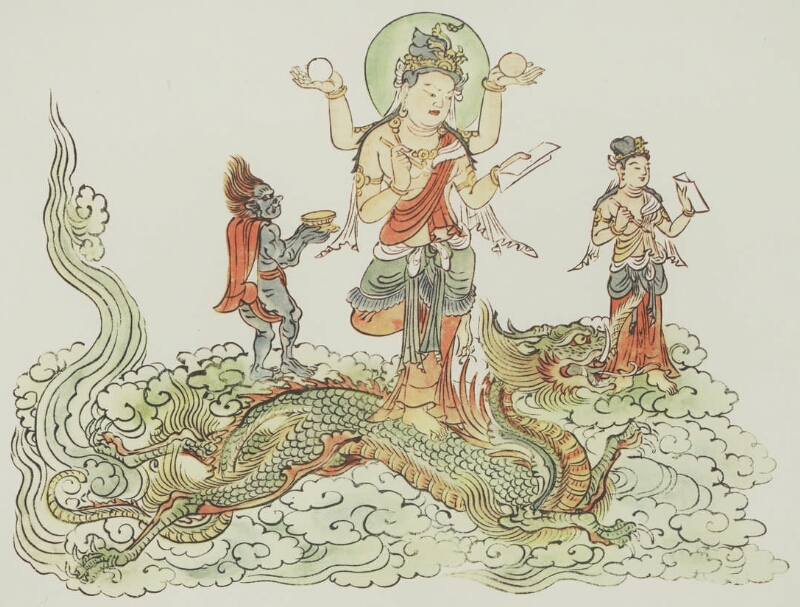
Myoken Belief: Unveiling Japan’s North Star Mystery
When travelers look at the spiritual landscape of Japan, they often see the distinct divide between Shinto shrines and Buddhist temples. However, lurking within the history of Japanese faith is a fascinating, celestial intersection known as Myoken Belief (Myoken Shinko). This is the worship of the North Star and the Big Dipper, a faith that guided samurai, protected clans, and continues to offer a unique spiritual experience for visitors today.
Introduction: The Guiding Light of the North
In the vast pantheon of Japanese deities, Myoken stands apart. Unlike nature spirits tied to waterfalls or mountains, Myoken is celestial. The term Myoken roughly translates to “Wondrous Seeing” or “Exquisite Vision.”
Myoken is the deification of the North Star (Polaris). Because the North Star remains stationary while the heavens rotate around it, it was viewed anciently as the Emperor of the Stars, the center of the universe, and the governor of human destiny. For the modern traveler, exploring Myoken belief offers a glimpse into a time when astronomy, magic, and religion were inseparable.
Origins: A Syncretic Tapestry
The origins of Myoken are a complex weave of Taoism, Buddhism, and Shinto.
Originally stemming from ancient Chinese Taoist star worship, the concept arrived in Japan and merged with Buddhism. Myoken was identified as Myoken Bosatsu (a Bodhisattva), believed to be a manifestation of the Buddhist figure Sudrsti.
However, history is rarely simple in Japan. For centuries, Myoken was worshipped in a syncretic form—part Buddha, part Kami. This changed during the Meiji Restoration in the late 19th century. The government enforced the separation of Shinto and Buddhism (Shinbutsu bunri). Consequently, many Myoken temples were forced to convert into Shinto shrines. To legitimize this, Myoken was conflated with Ame-no-Minakanushi, the primordial god of the center of the universe mentioned in Japan’s oldest chronicles.
Legend and the Samurai Connection
Myoken belief is intimately tied to the warrior class, specifically the Chiba clan and the Soma clan.
The Chiba Clan and the Star Crest
According to legend, a progenitor of the powerful Chiba clan had a miraculous encounter with the Myoken deity, who promised military success and protection. The clan subsequently adopted the Tsuki-ni-Hoshi (Moon and Star) family crest. If you visit shrines in Chiba Prefecture today, you will see this crest everywhere—a large circle (the moon) surmounted by a smaller circle (the star).
Imagery of the Tortoise and Snake
In art and statuary, Myoken is often depicted standing atop a tortoise intertwined with a snake. This creature, known as the Genbu (Black Tortoise), is the guardian of the North in Chinese cosmology. It symbolizes longevity, resilience, and water—crucial elements for an agricultural society and the safety of wooden structures against fire.
Modern Culture and Festivals
Today, Myoken belief is less about navigating the stars and more about navigating life. Myoken is revered as a deity of:
- Safe Travels: Just as the North Star guides sailors, Myoken guides travelers.
- Eye Health: Playing on the name “Wondrous Seeing,” many pray here for the healing of eye diseases.
- Destiny and Success: As the center of the cosmos, Myoken is believed to have the power to alter one’s fate.
One of the most vibrant displays of this faith is the Chiba Myoken Grand Festival, held annually in August at Chiba Shrine. A massive portable shrine is carried through the streets, celebrating the deity’s descent to earth. The energy is electric, blending solemn ritual with the raucous joy of a Japanese summer festival.
Traveler’s Tips: Where to Experience Myoken
If you want to step off the beaten path of Kyoto and Tokyo, seek out these centers of Star Worship:
1. Chiba Shrine (Chiba City)
This is the head shrine for the Chiba clan’s Myoken faith. The architecture is stunning, featuring a unique two-story main hall painted in vermilion. It is a prime example of the architectural crossover between temple and shrine styles.
2. Nose Myoken-san (Osaka/Hyogo Border)
Located on the summit of Mount Myoken, this site is a holy ground for Nichiren Buddhism. It offers hiking trails, a funicular view, and a glass-and-wood worship hall known as the “Seirei” (Star Hill), which looks like a modern art piece dedicated to the cosmos.
3. Look for the Crests
When visiting shrines, look for the Moon and Star crest. It indicates that even if the shrine is now dedicated to a Shinto god, its roots likely lie in the ancient worship of the North Star.
Sources & Further Reading
For those interested in the deep history of Japanese mythology and the deities mentioned above, the following ancient texts provide the foundation for the Shinto side of the syncretism:
- The Kojiki (Records of Ancient Matters): Contains the mythology of Ame-no-Minakanushi, the deity Myoken was identified with during the Meiji era.
- The Nihon Shoki (The Chronicles of Japan): Offers further context on the creation myths and the primordial gods.
- The Seven Stars of the Northern Dipper: Various Buddhist sutras translate the specific rituals associated with star worship that entered Japan via the Silk Road.
Exploring Myoken belief reminds us that in Japan, the spiritual world is as vast as the night sky. The next time you see the North Star, remember that for centuries, samurai and monks alike looked up at that same light and saw a god looking back.