
The Oto Matsuri: A River of Fire in the Sacred Kii Mountains
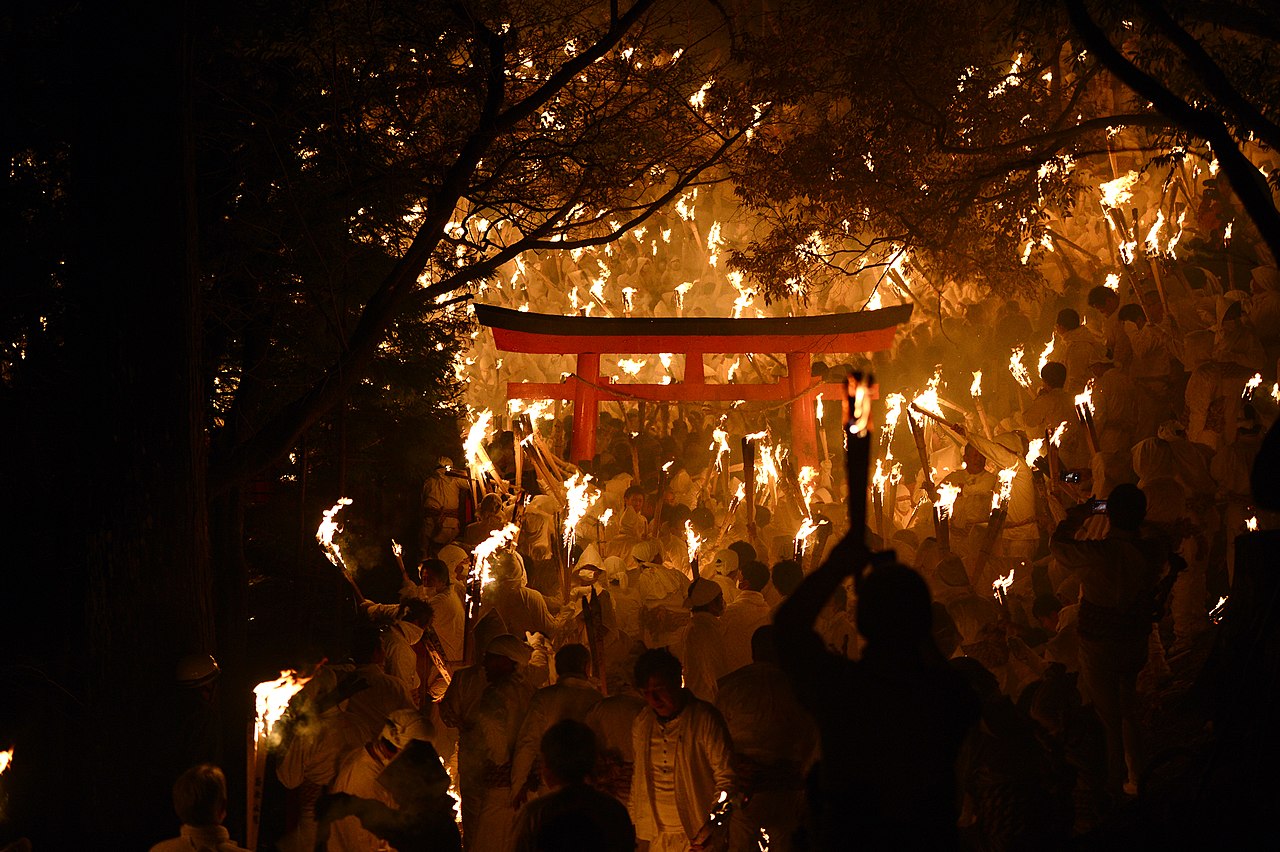
Deep in the spiritual heartland of the Kii Peninsula in Wakayama Prefecture, one of Japan’s most visceral and dangerous festivals takes place every winter. The Oto Matsuri (御燈祭) is not a polished parade or a quiet ceremony; it is a raw explosion of faith, fire, and adrenaline. Held annually on February 6th in Shingu City, this ancient rite transforms the steep, stone steps of Kamikura Shrine into a cascading waterfall of flames.
For the uninitiated traveler, the sight of two thousand men dressed in white, bearing heavy pine torches and racing down a mountainside in the dark, is a scene straight out of mythology. It is widely considered one of the most spirited fire festivals in Japan and offers a rare glimpse into the intense ascetic traditions of the Kumano region.
The Origins of the Fire
The Oto Matsuri boasts a history spanning over 1,400 years. It is deeply rooted in the worship of the Kumano Sanzan (the Three Grand Shrines of Kumano), a UNESCO World Heritage pilgrimage route. However, the festival takes place at Kamikura Shrine (Kamikura-jinja), which is considered the original site where the Kumano deities first descended before being enshrined at the main Hayatama Taisha.
The participants, known as Noboriko (climbers), are strictly men. They don pure white coarse clothing bound with rough straw ropes, symbolizing shroud-like purity and readiness for spiritual rebirth. The central act of the festival involves these men climbing 538 steep, uneven stone steps to the sacred rock at the summit, receiving sacred fire, and racing back down into the town.
Legend and Spiritual Significance
The spiritual focal point of the festival is the Gotobiki-iwa, a massive megalith perched precariously on the cliffside of Mount Kamikura. According to local legend and Shinto belief, this rock served as the landing pad for the Kumano gods when they descended from the heavens.
The fire used in the festival is not ordinary flame. A special ceremony is held to strike a “new fire” using flint at the summit. This sacred flame is believed to purify the community and promise a good harvest. By carrying the flame from the dwelling place of the gods down to the human realm, the Noboriko act as conduits for divine power. The steep descent represents a perilous birth canal; emerging at the bottom with the torch signifies a spiritual rebirth and the renewal of life for the coming spring.
Modern Culture: The Sea of Torches
On the day of the festival, the atmosphere in Shingu is electric. The Noboriko spend the day in purification. Traditionally, they consume only white foods (tofu, white rice, daikon radish) and abstain from alcohol and women to maintain a state of ritual purity.
As dusk falls, the men ascend the mountain chanting a rhythmic prayer: “Tano-moshina, Tano-moshina” (meaning “I rely on you” or “We pray to you”). They pack into the small precinct at the top of the mountain, pressed shoulder to shoulder, waiting for the heavy wooden gate to open.
The climax occurs when the gate is finally unbarred. The men, their torches now ablaze with the sacred fire, surge forward. From the base of the mountain, the view is terrifyingly beautiful. It looks less like a procession and more like a dragon of fire uncoiling down the mountain. The jagged path of torches illuminates the night, accompanied by the roar of the crowd and the crackling of pine wood. It is a chaotic, masculine, and primal release of energy that stands in stark contrast to the quiet, meditative image often associated with Japanese Zen.
Traveler’s Tips for Oto Matsuri
Witnessing the Oto Matsuri requires planning, as it draws significant crowds to the small city of Shingu.
- Location: Kamikura Shrine, Shingu City, Wakayama Prefecture.
- Date: February 6th (Fixed date every year).
- Access: The nearest transit hub is JR Shingu Station. It is a walkable distance to the festival area, but accommodation in Shingu books up months in advance. Consider staying in nearby Katsuura or rushing to catch the last train.
- Viewing Spots: The best vantage point is near the base of the stone steps, but this area is extremely crowded. Arrive hours early if you want a front-row view of the runners emerging from the dark.
- Safety: Sparks fly everywhere. Do not wear synthetic clothing (like nylon down jackets) that melts easily. Cotton or wool is safer. Wear comfortable shoes, as you will be standing for a long time.
- Gender Restrictions: Strictly speaking, the mountain climb is forbidden to women on the day of the festival due to ancient Shinto taboos regarding purity rituals, though women are welcome to watch the spectacle from the town below.
Sources & Further Reading
To understand the depth of the Kumano faith that powers this festival, one should look to Japan’s classical historical texts. The Kojiki (Records of Ancient Matters) and the Nihon Shoki (Chronicles of Japan) detail the mythology of the Kumano region and the lineage of the gods worshipped here.
- Shingu City Tourist Association Official Guide
- Sacred Kumano: The Pilgrimage Routes (UNESCO Archives)
- Kojiki (Chamberlain Translation for English readers)