
Saigoku Pilgrimage: A Journey Through Japan’s Spiritual Heart
Japan is often defined by its seamless blend of the ancient and the hyper-modern, but nowhere is the country’s spiritual pulse felt more profoundly than on its pilgrimage routes. While the Shikoku 88 Temple Pilgrimage often garners international fame, the Saigoku Sanjusansho (Saigoku 33 Kannon Pilgrimage) holds the prestigious title of being the oldest pilgrimage route in Japan. Spanning the historic Kansai region, this journey takes travelers through diverse landscapes, from the urban bustle of Kyoto to the mist-covered mountains of Wakayama, offering a window into a millennium of devotion.
Introduction to the 33 Holy Sites
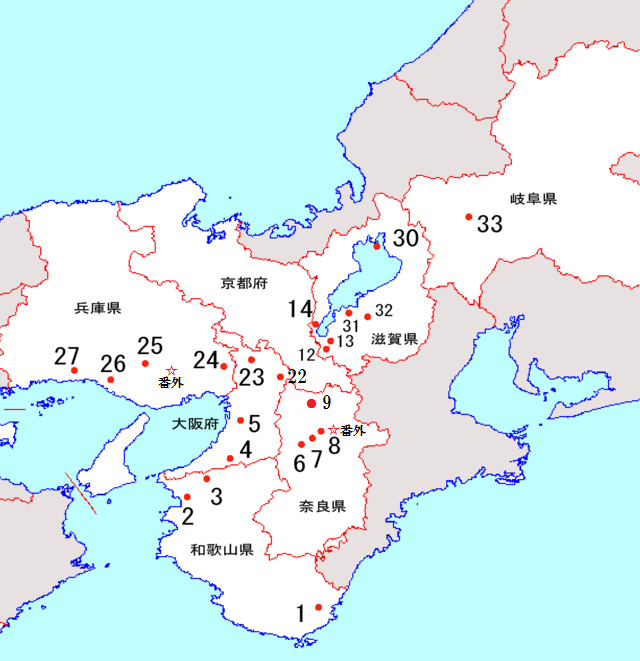
The Saigoku Pilgrimage is dedicated to Kannon, the Bodhisattva of Compassion. The number 33 is significant in Buddhism, as it represents the 33 different forms Kannon can assume to save sentient beings from suffering. The route spans over 1,000 kilometers across seven prefectures, including Wakayama, Osaka, Nara, Kyoto, Shiga, Hyogo, and Gifu.
Unlike a linear hike, the Saigoku route is a collection of sacred points that can be visited in any order. However, traditionally, pilgrims start at Seiganto-ji in Wakayama near the sacred Nachi Falls and end at Kegon-ji in Gifu Prefecture. Completing this journey is said to grant the pilgrim a peaceful life and a place in paradise.
Origins of the Route
Historical records suggest that the pilgrimage was established during the Heian period (794–1185), a time when Buddhism began to deeply permeate Japanese aristocracy and culture. While the exact founding date is debated, it is widely accepted that the route was popularized by Emperor Kazan in the late 10th century after he abdicated the throne to become a monk.
By the Muromachi and Edo periods, the pilgrimage had evolved from an ascetic practice for monks and nobles into a popular journey for commoners. It became a way for ordinary people to travel, see the world, and accrue spiritual merit. The infrastructure developed during these eras paved the way for the modern tourism industry in the Kansai region.
The Legend of Tokudo Shonin
While historians look to Emperor Kazan, folklore attributes the creation of the Saigoku Pilgrimage to a monk named Tokudo Shonin in the 8th century. According to the legend, Tokudo died suddenly in 718 AD and was brought before Enma-O, the Great King of Hell and judge of the dead.
Enma-O was distressed because too many souls were falling into hell. He handed Tokudo 33 jeweled seals and commanded him to return to the living world to establish 33 sacred grounds dedicated to Kannon. Those who visited these sites would be absolved of their sins and spared from hell.
Tokudo returned to life and distributed the seals to 33 temples. However, the people of that era were not ready to accept the pilgrimage, and the tradition fell into obscurity. Tokudo is said to have hidden the seals in a stone box at Nakayama-dera (Temple 24). Centuries later, Emperor Kazan rediscovered these seals, officially inaugurating the route that millions traverse today.
Modern Culture and the “Goshuin”
Today, the Saigoku Pilgrimage is a vibrant part of Japanese culture. While some devout pilgrims still walk the entire route (a trek taking over a month), most modern visitors use trains, buses, and cars, completing the circuit over weekends or years.
Central to the experience is the collection of Goshuin (red vermillion stamps). Pilgrims carry a Nokyo-cho (stamp book) and present it at each temple’s office. A monk will hand-calligraphy the temple’s name and stamp it with red ink over the text. This book serves as a spiritual passport and is often considered a family heirloom. Many pilgrims also wear a white vest, known as an oizuru, which can be stamped as well.
This tradition has fueled a “Goshuin boom” among young Japanese travelers and international tourists alike, blending the hobby of collecting with spiritual mindfulness.
Traveler’s Tips for the Saigoku Route
- Plan Your Transport: The temples range from easily accessible city sites like Kiyomizu-dera in Kyoto to remote mountain temples like Matsu-no-odera. The JR West Kansai Pass is invaluable for hitting the major hubs.
- Respect the Etiquette: When entering a temple, bow at the gate, wash your hands at the purification fountain, and offer a prayer before taking photos or asking for a stamp.
- Timing Matters: The best times to visit are during the cherry blossom season (early April) or the autumn foliage season (November). The scenery at temples like Ishiyama-dera is breathtaking during these windows.
- Prepare for Stairs: Temples like Hase-dera and Kimiimidera are famous for their steep staircases. Comfortable walking shoes are mandatory.
Sources & Further Reading
For those interested in the deep historical context of Japanese spirituality, the Kojiki and Nihon Shoki provide the foundational myths of the Shinto gods that coexist with the Buddhist deities in Japan’s syncretic tradition. For specific history regarding the pilgrimage, the Saigoku Sanju-san-sho Engi Emaki (picture scrolls) offers a visual history of the route’s legends. Additionally, literary classics like The Tale of Genji feature scenes at Ishiyama-dera, highlighting the route’s cultural significance in the Heian court.