
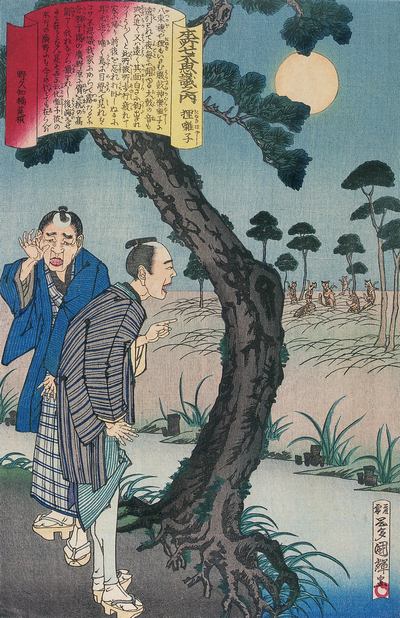
The Mystery of Tanuki-bayashi: Japan’s Phantom Drumming
Imagine walking through a bamboo grove in rural Japan under the light of a pale moon. Suddenly, the festive rhythm of drums and flutes breaks the silence. The music sounds like a lively village festival, yet as you move toward the sound, it recedes, always staying just out of reach. There is no festival, no humans, and no lights—only the shadows of the forest. According to Japanese folklore, you have just encountered Tanuki-bayashi (狸囃子), the musical mischief of the Japanese raccoon dog.
For centuries, travelers and locals alike have been beguiled by these phantom sounds. In this deep dive into Japanese culture, we explore the origins of this auditory phenomenon, the charming legends behind it, and where you can experience the legacy of the drumming Tanuki today.
Origins of the Phenomenon
The term Tanuki-bayashi combines two words: Tanuki (the Japanese raccoon dog) and Bayashi (musical accompaniment, typically drums and flutes used in festivals/Noh theater). In the pantheon of Japanese yokai (supernatural entities), the Tanuki is a master shapeshifter, second only to the Kitsune (fox) in magical prowess. However, unlike the often malevolent fox, the Tanuki is viewed as jovial, absent-minded, and gullible.
The legend of the phantom music gained significant traction during the Edo period (1603–1867). It is famously listed as one of the “Seven Mysteries of Honjo” (Honjo Nanafushigi) in Tokyo. In these urban legends, samurais and farmers reported hearing an orchestra of drums in the fields at night. Whenever they tried to locate the musicians, the sound would vanish or shift direction. The culprit was universally decided to be the Tanuki, drumming on its large, round belly to trick humans into wandering off the path.
The Legend of Shojoji Temple
While there are many tales of phantom music across Japan, the most famous specific narrative comes from Shojoji Temple in Kisarazu, Chiba Prefecture. This story is so beloved it was immortalized in a nursery rhyme known by almost every Japanese child.
According to the legend, Shojoji was an old, run-down temple inhabited by a solitary, music-loving priest. One night, while the priest was playing his shamisen (a three-stringed instrument), he heard a rhythmic accompaniment coming from the garden. Looking outside, he saw a troop of Tanuki dancing in the moonlight. The leader, a particularly large Tanuki, was beating his belly like a drum—Pon-poko-pon!—in perfect time with the priest’s music.
Delighted rather than frightened, the priest began playing every night, entering into a friendly musical battle with the creatures. The Tanuki leader, determined not to be outdone by the human, drummed his belly harder and harder each night. Tragically, on the final night of the competition, the Tanuki drummed with such intensity that his belly burst, and he died. The sorrowful priest buried the creature with honors, creating a mound that still exists on the temple grounds today.
Tanuki in Modern Culture
The image of the belly-drumming Tanuki has transitioned from a spooky mystery to a symbol of whimsical charm in modern Japan. You cannot walk through a traditional Japanese street without seeing ceramic statues of Tanuki wearing straw hats and holding sake flasks, inviting prosperity to businesses.
Studio Ghibli’s Influence
The concept of Tanuki-bayashi received global attention through Isao Takahata’s Studio Ghibli film, Pom Poko (1994). The movie depicts a community of Tanuki fighting to save their forest from urban development. The film heavily features the “Shojoji” song and depicts the creatures using their belly-drumming not just for music, but as a form of magic and communication.
Video Games
In pop culture, the Tanuki’s shapeshifting and commercial association appear in games like Animal Crossing (Tom Nook) and Super Mario Bros 3 (the Tanooki Suit), cementing the creature’s status as a cultural ambassador, even if the specific “drumming” aspect is sometimes subtle.
Traveler’s Tips: Chasing the Legend
If you want to step into the world of folklore, a trip to Kisarazu City in Chiba Prefecture is essential.
- Visit Shojoji Temple: The temple from the legend is real and accessible. It is a peaceful spot located near Kisarazu Station. Within the grounds, you will find the “Tanuki Mound” where the legendary raccoon dog is said to be buried.
- The Tanuki Festival: Every October, the temple hosts the Tanuki Festival. Children dress up as raccoon dogs and perform the famous belly-drumming dance. It is a heartwarming cultural experience perfect for families.
- Souvenirs: Look for shigaraki-yaki pottery. While originally from Shiga Prefecture, Tanuki statues are sold extensively in Kisarazu. They make for excellent, albeit heavy, keepsakes.
Pro-Tip: While visiting rural areas in Japan at night, keep an ear out. If you hear drums where there are no lights, don’t follow the sound too deep into the woods—unless you want to join the orchestra.
Sources & Further Reading
To deepen your understanding of Japanese mythology and the roots of animal spirits, consider exploring the following:
- The Nihon Shoki (Chronicles of Japan): While the specific Tanuki-bayashi stories are largely Edo-period inventions, this ancient text (dating back to 720 AD) lays the foundation for the belief in the supernatural abilities of animals and nature spirits.
- Kwaidan: Stories and Studies of Strange Things by Lafcadio Hearn: A classic collection that introduces the Western world to the eerie atmosphere of Japanese ghost stories.
- Japanese Demon Lore: Oni from Ancient Times to the Present by Noriko T. Reider: For an academic look at how yokai like the Tanuki evolved from terrifying spirits to benevolent icons.