
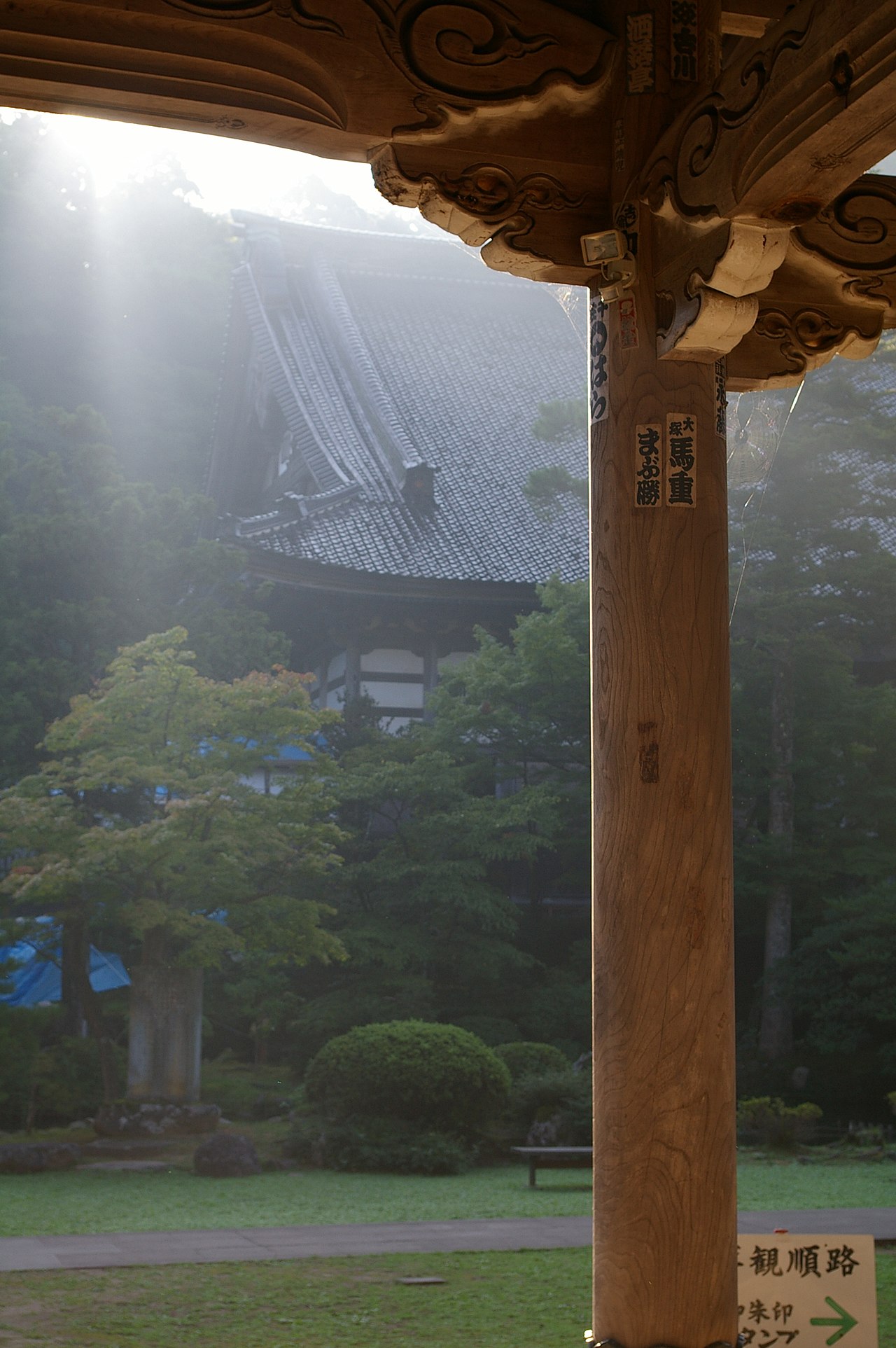
The Height of Yugen: Unlocking Japan’s Hidden Beauty
Have you ever stood in an ancient forest, watched the mist swallow a mountain peak, and felt a profound sense of awe that words could not capture? Or perhaps you have listened to the fading resonance of a temple bell, feeling the vibration in the air long after the sound has ceased. In Japan, this emotion has a name: Yugen (幽玄).
Often translated as “subtle grace,” “mysterious profundity,” or “hidden beauty,” Yugen is one of the pillars of Japanese aesthetics. Unlike the stark reality of Western realism, Yugen celebrates the unseen, the suggested, and the shadows that hold more meaning than the light. For the culturally curious traveler, understanding the “Height of Yugen”—the pinnacle of this aesthetic experience—is the key to unlocking the deeper spiritual landscape of Japan.
The Origins of the Unseen
The term Yugen originated in Chinese philosophy, where it described something “dim,” “deep,” or “mysterious.” It was initially used in Buddhism to refer to the profound truths that lay beyond intellectual understanding. However, when the concept crossed the sea to Japan, it evolved into a defining artistic principle.
By the late Heian and Kamakura periods (roughly the 12th to 14th centuries), Japanese poets began using Yugen to critique Waka poetry. It wasn’t enough to simply describe a scene; a poem had to evoke a feeling that lingered beyond the text. Fujiwara no Shunzei, a renowned poet of the era, described Yugen as the feeling of “watching a flock of wild geese disappear into the clouds” or “wandering through a forest without a path.”
It was later codified into theater by Zeami Motokiyo, the father of Noh theater. For Zeami, Yugen was the highest ideal of performance—an elegance that was felt rather than seen, a beauty that existed in the stillness between movements.
The Legend of the Hidden Moon
While Yugen is a philosophical concept rather than a mythological character, it is deeply entwined with the legends of the Noh theater. One such story that exemplifies the “Height of Yugen” is the play Izutsu (The Well Cradle).
In this haunting tale, a traveling monk meets a village woman who reveals herself to be the ghost of a poet’s daughter, waiting for her childhood love who has long since passed. The climax of the play is not a dramatic battle or a tearful reunion in the flesh, but a slow, stylized dance where the ghost wears her lover’s robe.
Legend says that when performed perfectly, the actor achieves a state where they are neither male nor female, neither living nor dead—they become the embodiment of pure emotion. This is the legend of the “Hidden Moon.” In traditional aesthetics, the moon obscured by thin clouds is considered more beautiful than the full, bright moon. The clouds represent the veil of Yugen; they force the viewer to imagine the brilliance behind them, engaging the soul in the creation of beauty. The legend teaches that true power lies not in full exposure, but in the mystery of what remains hidden.
Modern Culture: Yugen in the 21st Century
You might think such an ancient concept is lost in the neon lights of Tokyo, but Yugen is very much alive in modern Japan. It has simply changed forms.
Anime and Cinema
The films of Studio Ghibli, particularly works like Spirited Away or Princess Mononoke, are drenched in Yugen. The lingering shots of rain falling on a path or the silent spirits drifting through the woods evoke that same sense of mysterious depth.
Architecture and Design
Modern architects like Tadao Ando utilize concrete and light to create spaces of profound silence. By controlling where light enters a room, they create shadows that feel heavy and significant. This is a direct descendant of the traditional Japanese room described by Jun’ichiro Tanizaki in In Praise of Shadows, where the alcove’s darkness provides a sanctuary for the imagination.
Traveler’s Tips: Where to Find Yugen
If you want to experience the “Height of Yugen” on your next trip, you must look away from the bright lights and tourist crowds. Here is how to find it:
1. Attend a Noh Performance
Visit the National Noh Theatre in Tokyo. Noh is the birthplace of Yugen. Do not worry about understanding the dialogue; focus on the masks, the slow movements, and the atmosphere. The beauty lies in the tension of the silence.
2. Stay at Mount Koya (Koyasan)
Stay in a shukubo (temple lodging) on Mount Koya. Walking through the Okunoin Cemetery at dusk, surrounded by towering cedar trees and moss-covered lanterns, offers a visceral experience of Yugen. The mist, the incense, and the ancient spirits create a beauty that feels otherworldly.
3. Visit the Moss Gardens of Kyoto
While the Golden Pavilion (Kinkaku-ji) is flashy, the Saiho-ji (Kokedera) moss garden offers deep, green silence. The interplay of shadow and texture here captures the essence of subtle grace. Note: You usually need a reservation weeks in advance via postcard.
4. The Way of Tea
Participate in a formal tea ceremony, preferably in a small, rustic tea house. The dim lighting and the sound of the water boiling (likened to wind in the pines) are designed to induce a meditative state of Yugen.
Sources & Further Reading
To deepen your understanding of the historical and spiritual roots of these aesthetics, consider exploring the following texts:
- Fushikaden (The Transmission of the Flower Through (a Form of) Effects) by Zeami Motokiyo: The seminal treatise on Noh theater and the concept of the “Flower” of performance.
- The Manyoshu: Japan’s oldest anthology of poetry, which contains the seeds of nature worship that evolved into Yugen.
- In Praise of Shadows by Jun’ichiro Tanizaki: A modern classic on Japanese aesthetics.
- Nihon Shoki (The Chronicles of Japan): For background on the Shinto animism that underpins the mystery of nature found in Yugen.