
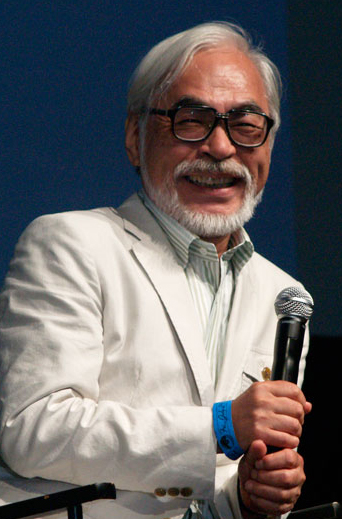
The Magic of Hayao Miyazaki: A Journey Through Ghibli
In the realm of global animation, few names command as much reverence as Hayao Miyazaki. Often called the “Walt Disney of Japan”—a title he notably shuns—Miyazaki is the co-founder of Studio Ghibli and the mastermind behind some of the most beloved animated films in history. From the floating islands of Castle in the Sky to the bathhouse spirits of Spirited Away, his works are not just cartoons; they are intricate tapestries of Japanese culture, environmentalism, and pacifism.
For travelers visiting Japan, understanding Miyazaki is key to unlocking a deeper appreciation of the country’s modern artistic identity and its ancient spiritual roots. This guide explores the man, the myths he reawakened, and the places where his worlds come to life.
Origins: The Boy Who Dreamed of Flying
Hayao Miyazaki was born on January 5, 1941, in Tokyo. His early life was defined by the turbulence of World War II, a theme that would later permeate his filmography. His father was the director of Miyazaki Airplane, a company that manufactured rudders for fighter planes like the A6M Zero. This upbringing instilled in Miyazaki a conflicting fascination: a deep love for the mechanics of flight and aviation, juxtaposed with a hatred for war and destruction.
His artistic journey began not in film, but in manga. However, upon joining Toei Animation in 1963, his talent for capturing movement became undeniable. It was here he met his lifelong mentor and rival, Isao Takahata. Together, they eventually founded Studio Ghibli in 1985, creating a sanctuary for high-quality, hand-drawn animation in an era increasingly dominating by computer graphics.
Legend: Animism and the Spirit World
While Miyazaki is a modern creator, the “legend” of his work is inextricably linked to the ancient spiritual fabric of Japan. His films rarely rely on Western notions of good versus evil. Instead, they focus on balance, purification, and the relationship between humanity and nature.
Shinto Roots
The core of Miyazaki’s storytelling often reflects Shinto animism—the belief that spirits (kami) reside in all things, from rivers and trees to radishes and soot. In Princess Mononoke, the Great Forest Spirit represents the impartial power of nature, both life-giving and life-taking. In Spirited Away, the bathhouse is a gathering place for the Yaoyorozu no Kami (Eight Million Gods), a concept dating back to Japan’s earliest history.
By weaving these ancient beliefs into modern narratives, Miyazaki has become a legendary storyteller who keeps the old folklore alive for a new generation. He transforms local superstition into universal mythology, teaching viewers that the environment is alive and watching.
Modern Culture: The Ghibli Phenomenon
Today, Hayao Miyazaki is a cultural icon. His influence extends far beyond the box office. He fundamentally changed how the West views anime, proving that the medium could tackle complex themes like eco-terrorism, feminism, and spiritual existentialism.
Spirited Away remains the only hand-drawn, non-English-language film to win the Academy Award for Best Animated Feature. In Japan, Ghibli characters are as ubiquitous as Mickey Mouse. The lovable forest spirit Totoro serves as the studio’s mascot and is a recognized symbol of childhood innocence across the nation.
Furthermore, Miyazaki’s stubborn dedication to traditional animation techniques preserves a dying art form. In a digital age, his insistence on the “human touch”—where the wobbles and imperfections of a line denote life—stands as a philosophical bulwark against automation in art.
Traveler’s Tips: Finding Ghibli in Japan
For fans wishing to step into Miyazaki’s world, Japan offers several pilgrimage sites.
The Ghibli Museum (Mitaka, Tokyo)
Located in Inokashira Park, this whimsically designed museum is a must-visit. It features exclusive short films, sketches, and a life-sized Catbus.
- Tip: Tickets go on sale on the 10th of every month for the following month and sell out within hours. Plan ahead.
Ghibli Park (Aichi Prefecture)
Opened in 2022 near Nagoya, this is not a theme park with rides, but a collection of immersive areas like “Ghibli’s Grand Warehouse” and the house from My Neighbor Totoro. It encourages walking and discovery, much like the films themselves.
Real-Life Inspirations
- Yakushima: The ancient cedar forests of this island inspired the setting of Princess Mononoke.
- Tomonoura: A scenic port town in Hiroshima Prefecture that served as the inspiration for Ponyo.
- Dogo Onsen (Matsuyama): One of the oldest hot springs in Japan, often cited as a visual reference for the bathhouse in Spirited Away.
Sources & Further Reading
To fully understand the depth of the spirits portrayed in Miyazaki’s films, one must look to the foundations of Japanese mythology. The Kojiki (Records of Ancient Matters) and the Nihon Shoki (The Chronicles of Japan) detail the origins of the kami that Miyazaki frequently references metaphorically.
For a direct look at the director’s mind, the following are essential:
- Starting Point: 1979–1996 by Hayao Miyazaki (Memoirs and essays)
- Turning Point: 1997–2008 by Hayao Miyazaki
- The Kingdom of Dreams and Madness (Documentary)