
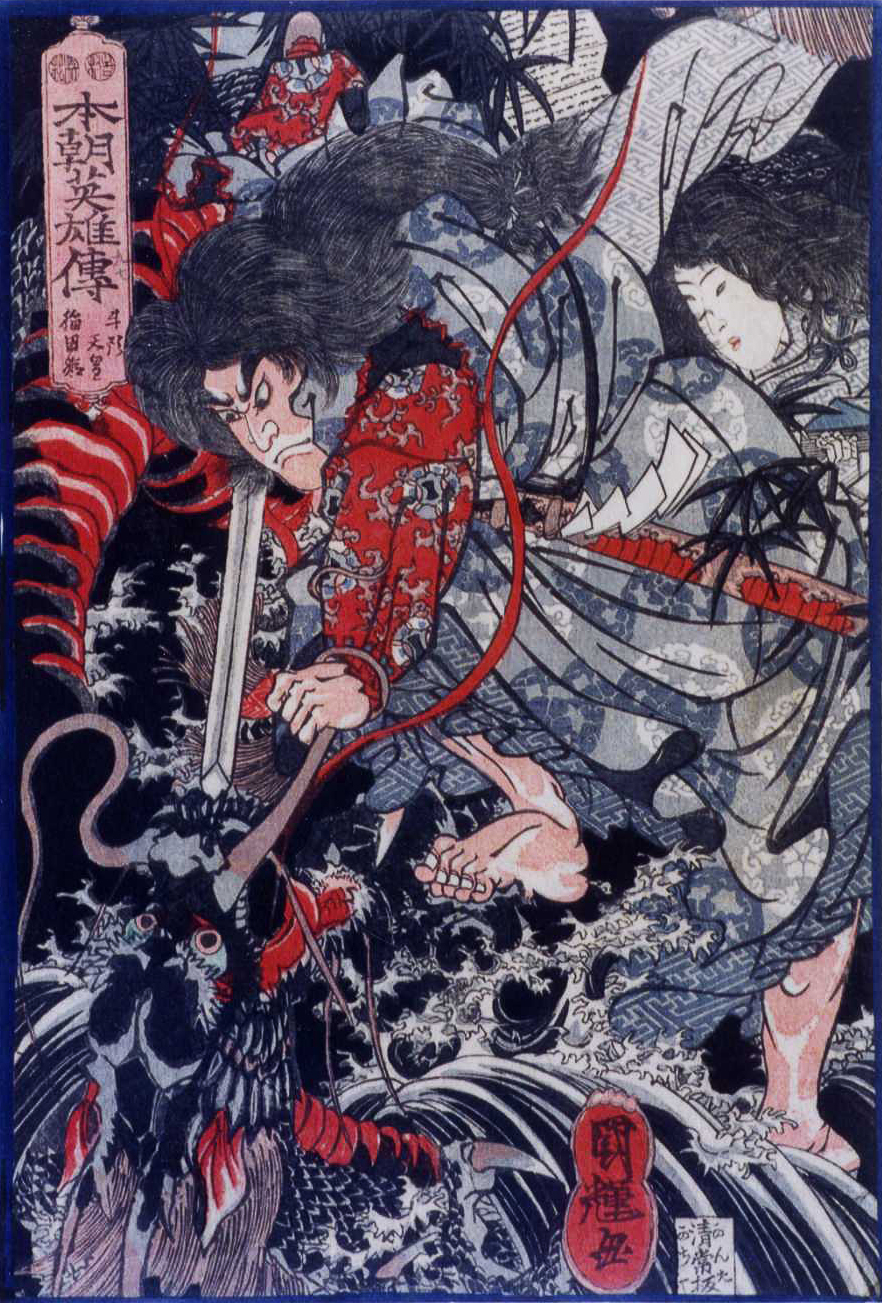
Susanoo no Mikoto: Unveiling Japan’s Storm God
In the pantheon of Japanese Shinto deities (Kami), few figures are as complex, volatile, and ultimately redemptive as Susanoo no Mikoto. Known primarily as the god of storms and the sea, Susanoo embodies the raw, untamed forces of nature. For travelers and culture enthusiasts exploring Japan, understanding Susanoo offers a fascinating glimpse into the country’s ancient soul, bridging the gap between divine chaos and heroic salvation.
Origins: The Birth of a Tempest
According to Japan’s oldest historical records, Susanoo was born from the creator god Izanagi. Legend holds that after Izanagi returned from the underworld (Yomi), he performed a purification ritual to cleanse himself of the impurities of the dead. As he washed his face, three precious children were born: Amaterasu (the Sun Goddess) from his left eye, Tsukuyomi (the Moon God) from his right eye, and Susanoo from his nose.
While Amaterasu was given the High Plain of Heaven to rule, Susanoo was granted dominion over the oceans and storms. However, his temperament was as turbulent as the seas he commanded. Prone to weeping and destructive outbursts, his jealousy toward his radiant sister led to a violent feud, eventually resulting in his banishment from the heavenly realm. This expulsion set the stage for one of Japan’s most enduring myths—a journey from disgraced exile to celebrated hero.
The Legend: Slaying the Eight-Headed Dragon
Susanoo’s redemption arc begins with his descent to the earthly province of Izumo (modern-day Shimane Prefecture). While wandering by the Hi River, he encountered an elderly couple weeping over their beautiful daughter, Kushinada-hime. Upon inquiring about their grief, the couple revealed that the terrifying Yamata no Orochi—a gigantic serpent with eight heads and eight tails—had devoured seven of their daughters. Tonight, the beast was coming for the eighth.
Moved by their plight (and taken by Kushinada-hime’s beauty), Susanoo proposed a deal: he would slay the monster in exchange for the girl’s hand in marriage.
The Cunning Trap
Unlike many mythological heroes who rely solely on brute strength, Susanoo used wit. He transformed Kushinada-hime into a comb, which he placed in his hair for safekeeping. He then instructed the couple to build a fence with eight gates and place a vat of strong sake (rice wine) at each one.
When Yamata no Orochi arrived, attracted by the scent of the alcohol, each of its eight heads drank greedily from the vats. As the beast fell into a drunken stupor, Susanoo drew his sword and hacked the serpent to pieces. As he cut through the dragon’s tail, his blade struck something hard. Inside, he discovered the legendary sword Kusanagi no Tsurugi (Grass-Cutting Sword). Instead of keeping it, he presented this blade to his sister Amaterasu as a peace offering. Today, it remains one of the three Imperial Regalia of Japan.
Susanoo in Modern Culture
The archetype of the hot-headed but powerful anti-hero is deeply ingrained in Japanese storytelling, and Susanoo is often the blueprint. His influence pervades modern pop culture:
- Anime and Manga: Fans of Naruto will recognize “Susanoo” as a powerful spectral avatar used by the Uchiha clan. In other series, his character often appears as a warrior fighting against demonic forces.
- Video Games: In the critically acclaimed game Okami, Susanoo appears as a bumbling descendant of the hero, struggling to find his courage. The Persona series and Final Fantasy also frequently reference him as a summon or persona representing storm attributes.
These modern iterations keep the deity alive in the collective consciousness, representing the balance between destructive rage and protective strength.
Traveler’s Tips: Visiting the Legend
For those wishing to walk in the footsteps of the Storm God, a trip to the Shimane and Kyoto regions is essential.
1. Susa Shrine (Shimane)
Located in Izumo, this shrine is dedicated specifically to Susanoo. It is said to be the place where his spirit settled after his heroic deeds. The atmosphere is ancient and mystical, surrounded by deep forests.
2. Yaegaki Shrine (Shimane)
This shrine is arguably the most romantic spot in the legend. It marks the location where Susanoo hid Kushinada-hime during the battle. Today, it is a popular “power spot” for those seeking luck in love and marriage. Don’t miss the Mirror Pond, used for paper fortune divination.
3. Yasaka Shrine (Kyoto)
While Izumo is his mythological home, Kyoto’s famous Yasaka Shrine is the center of his worship in the ancient capital. Susanoo is the primary deity here (syncretized with Gozu Tenno). The massive Gion Matsuri, Japan’s most famous festival, is held by this shrine to appease the god and prevent plagues and natural disasters.
Sources & Further Reading
To deepen your understanding of Susanoo no Mikoto and early Japanese mythology, the following classical texts are indispensable:
- The Kojiki (Records of Ancient Matters): The oldest extant chronicle in Japan (712 AD), detailing the age of the gods.
- The Nihon Shoki (The Chronicles of Japan): Completed in 720 AD, this text offers slightly different variations of the Susanoo myths compared to the Kojiki.
- Izumo no Kuni Fudoki: An ancient report on the culture and geography of Izumo province, providing local context to the legends.