
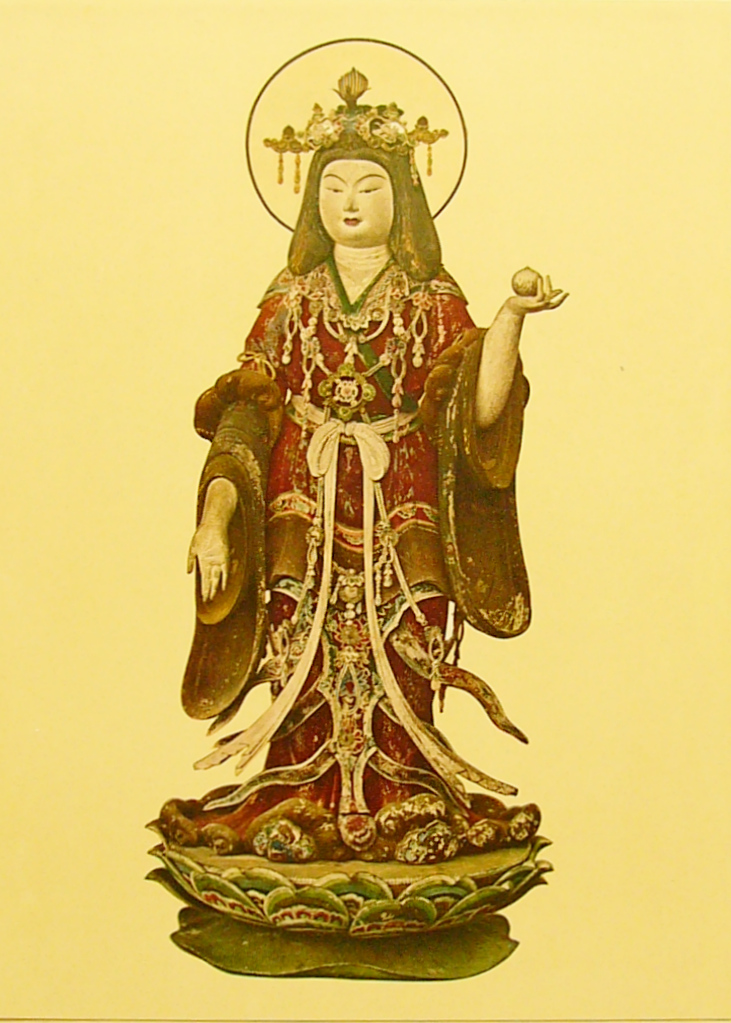
Kichijoten: Unveiling Japan’s Divine Goddess of Beauty
When travelers think of Japanese deities associated with luck and beauty, the lute-playing Benzaiten often comes to mind first. However, long before Benzaiten became the primary muse of the arts, there was Kichijoten (吉祥天). Known as the Goddess of Beauty, Fertility, and Prosperity, Kichijoten represents a sublime, aristocratic elegance that defined the aesthetics of Japan’s classical era. For culture seekers and spiritual travelers, understanding Kichijoten offers a window into the opulent history of Nara-period Buddhism.
The Origins of the Beauty Goddess
Kichijoten’s lineage traces back to India, where she is known as Lakshmi, the Hindu goddess of wealth and the consort of Vishnu. As Buddhism traveled along the Silk Road through China and into Japan, Lakshmi was absorbed into the Buddhist pantheon as a Ten-bu (deva or celestial being). She was introduced to Japan primarily during the Nara period (710–794 AD).
Unlike the more folk-oriented Seven Lucky Gods that became popular centuries later, Kichijoten was a central figure in state Buddhism. She was revered not just for physical beauty, but for her power to ward off calamities and ensure rich harvests. In iconography, she is often depicted holding a nyoiju (wish-fulfilling jewel) in her left hand, while her right hand forms the mudra (hand gesture) of granting protection.
Her appearance in Japanese art is distinctively influenced by the Tang Dynasty of China. She is traditionally portrayed as a courtly lady with full cheeks, arched eyebrows, and flowing, multi-layered robes, representing the ideal of feminine beauty during the 8th century.
Legends and Divine duality
One of the most fascinating aspects of Kichijoten is her mythology, which embodies the balance of the universe. In Buddhist lore, she is often described as the wife of Bishamonten (Vaisravana), the guardian warrior of the North. Together, they represent a power couple of protection and prosperity.
However, a more philosophical legend highlights her duality. It is said that Kichijoten has a sister named Kokuanten (the Goddess of Darkness or Misfortune). Wherever Kichijoten goes to bring wealth and beauty, her sister follows to bring poverty and ugliness. This story serves as a Buddhist teaching on non-attachment: one cannot cling to fortune without accepting the existence of misfortune. They are two sides of the same coin.
Historically, the Kichijoten-e ritual was a significant repentance service performed in temples. During the 8th century, particularly when the nation faced droughts or epidemics, the Imperial court would order these rituals, invoking Kichijoten through the recitation of the Suvarnaprabhasa Sutra (Sutra of Golden Light) to restore peace and abundance to the land.
Modern Culture and Artistic Legacy
In modern Japan, Kichijoten’s popularity has been somewhat eclipsed by Benzaiten, who took over the role of the primary goddess of fortune in the popular imagination around the 15th and 16th centuries. However, Kichijoten remains a vital figure in high culture, art history, and specific religious sects.
She appears frequently in pop culture media, including anime and manga, often characterized by her distinct celestial robes (hagoromo) and the floating jewel. For art lovers, she is the subject of one of Japan’s most famous paintings: the National Treasure Kichijoten at Yakushiji Temple. This painting is considered the Mona Lisa of the Nara period, showcasing the sophisticated makeup and fashion of ancient Japanese nobility.
Traveler’s Tips: Where to Find Kichijoten
If you want to experience the “Beauty of Kichijoten,” you must head to the Kansai region, specifically Nara and Kyoto. Here are the best locations to pay your respects:
1. Yakushiji Temple (Nara)
This is the most significant site for Kichijoten worship. The temple houses the famous National Treasure painting of the goddess.
- Travel Tip: The original painting is fragile and only displayed to the public for brief periods, usually during the New Year (January 1–15). However, a high-quality replica is often viewable, and the temple conducts the Kichijoten-e ceremony annually.
2. Joruriji Temple (Kyoto)
Located on the border of Nara and Kyoto, this temple is famous for its Nine Amida Buddhas and its stunning statue of Kichijoten.
- Travel Tip: The wooden statue here is colorful and exquisitely preserved. It is typically unveiled to the public in spring and autumn. Check the temple schedule before visiting.
3. Todaiji Temple (Nara)
Within the Hokkedo (Sangatsudo) hall of the massive Todaiji complex, you can find ancient statues depicting the synergy of the Nara pantheon, including representations associated with Kichijoten’s lore.
Sources & Further Reading
For those interested in diving deeper into the history and theology surrounding Kichijoten, the following texts and resources are recommended:
- The Sutra of Golden Light (Konkomyo-kyo): One of the most influential Mahayana sutras in Japan, detailing the merits of worshipping Kichijoten.
- Nihon Shoki (The Chronicles of Japan): Provides context on the introduction of Buddhism and court rituals during the Nara period.
- Japanese Buddhist Statuary: Various academic resources by the Nara National Museum provide detailed iconographic studies of Kichijoten statues.