
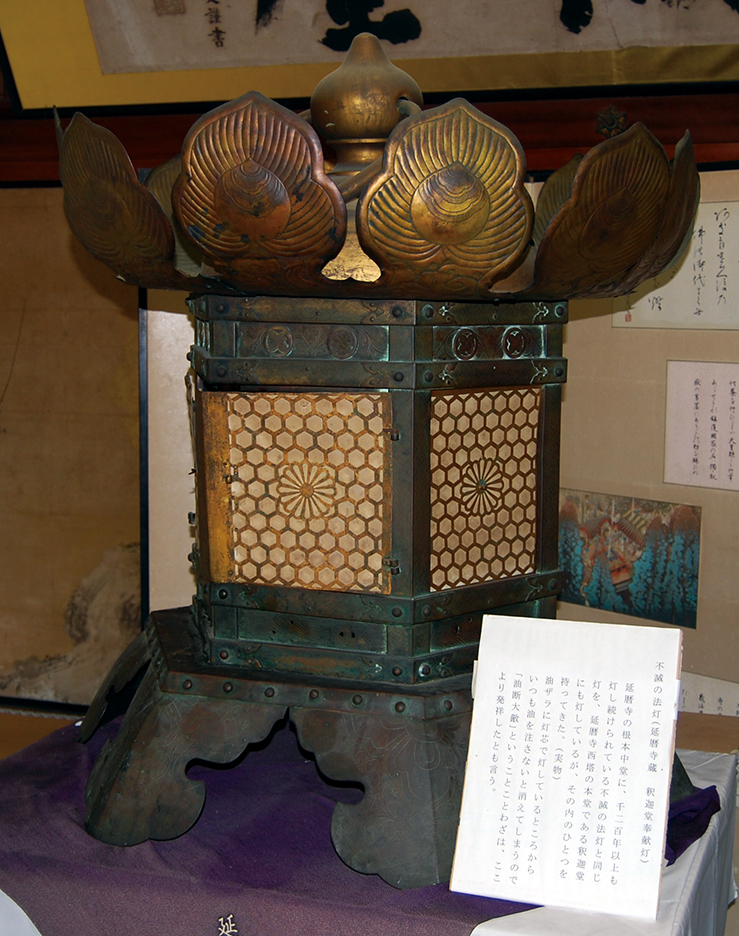
The 1200-Year-Old Eternal Dharma Flame of Mt. Hiei
Deep within the misty cedar forests of Mount Hiei, overlooking the ancient capital of Kyoto, lies one of the most profound symbols of Japanese Buddhism. Enryaku-ji, the headquarters of the Tendai sect, houses a relic not made of gold or stone, but of light. Known as the Fumetsu no Hōtō, or the Eternal Dharma Flame, this sacred fire has reportedly burned continuously for over 1,200 years. For travelers seeking a connection to Japan’s spiritual heart, standing before this flickering amber glow is a transformative experience that bridges the gap between the ancient world and the present day.
Origins of the Sacred Fire
The story of the Eternal Dharma Flame begins in the year 788 AD with Saichō (posthumously known as Dengyō Daishi), the founder of the Tendai sect of Buddhism in Japan. When Saichō established Enryaku-ji to protect the capital from evil spirits, he carved a statue of Yakushi Nyorai (the Medicine Buddha) and lit a lantern as an offering.
In his dedication, Saichō wrote a poem expressing his fervent wish: “May this lamp, shining for the Dharma, never be extinguished until the exhaustion of the future.” This was not merely a physical light source but a metaphor for the light of Buddha’s wisdom illuminating the darkness of ignorance. The flame is housed in the Konpon Chūdō (the Fundamental Central Hall), the most important building in the vast temple complex. Designated a National Treasure, the hall is unique because the altar where the flame burns is located in a sunken area, placing the Buddha and the flame at the same eye level as the worshipers, symbolizing the Tendai belief that all beings possess the potential for enlightenment.
Legend and the Price of Negligence
The maintenance of the Eternal Dharma Flame has given rise to one of Japan’s most famous idioms: Yudan Taiteki (油断大敵), which translates to “Negligence is a formidable enemy.”
In the literal context of the temple, yudan means “cutting off the oil.” For over a millennium, monks have been tasked with the solemn duty of refilling the rapeseed oil that fuels the lanterns. The lanterns are not self-sustaining; they require constant vigilance. If a monk were to become lazy, distracted, or negligent, the oil would run out, and the holy flame—the physical manifestation of Saichō’s vow—would be extinguished forever.
However, history tested this resolve violently. In 1571, the warlord Oda Nobunaga, in his quest to unify Japan, burned Mount Hiei to the ground, slaughtering thousands of monks. It is widely believed that the original flame at Enryaku-ji was extinguished during this inferno. Yet, the flame survives today. How? Decades prior to the attack, the flame had been divided and shared with Risshaku-ji Temple (famously known as Yamadera) in Yamagata Prefecture. After Enryaku-ji was rebuilt, the flame was brought back from Yamadera, ensuring the spiritual lineage remained unbroken. This survival story adds a layer of resilience to the legend, proving that the “light” can survive even the darkest times.
Modern Culture and Significance
Today, the Eternal Dharma Flame is more than a historical artifact; it is a living entity of worship. In modern Japanese culture, it represents continuity, resilience, and the importance of mindfulness. The concept of yudan has transcended the temple walls to become a common warning in daily life, sports, and business against letting one’s guard down.
For the Tendai sect, the flame remains the spiritual anchor of Mount Hiei. Every day, monks conduct services in the semi-darkness of the Konpon Chūdō, chanting sutras in a rhythmic drone that resonates against the wooden pillars. The atmosphere inside the hall is heavy with the scent of incense and history. The dim lighting is intentional, forcing the eyes to adjust and focus on the three lanterns glowing softly in front of the hidden statue of Yakushi Nyorai. It is a rare sanctuary of silence in a fast-paced world.
Traveler’s Tips for Visiting Enryaku-ji
Visiting the Eternal Dharma Flame requires a journey up Mount Hiei, which straddles the border between Kyoto and Shiga prefectures. Here is how to make the most of your pilgrimage:
- Access: The most scenic route is via the Eizan Cable Car and Ropeway from the Kyoto side, offering panoramic views of the city. Alternatively, you can take the Sakamoto Cable from the Shiga side, which offers views of Lake Biwa.
- The Konpon Chūdō: As of writing, the main hall is undergoing a major renovation (scheduled to last until around 2026). However, the temple remains open, and a special observation deck allows visitors to see the restoration work and the Eternal Dharma Flame. It is a rare opportunity to see the structure’s bones.
- Etiquette: Inside the hall, photography is strictly prohibited. This is a place of active worship. Remove your hat and shoes if required, and maintain a respectful silence.
- Timing: The mountain is significantly cooler than the city below. Visit in autumn for spectacular foliage or in summer to escape Kyoto’s humidity. Morning visits are recommended to experience the mist rising through the cedar trees.
Sources & Further Reading
For those interested in the historical and theological foundations of the Eternal Dharma Flame and Mount Hiei, the following texts and records provide essential context:
- The Writings of Saichō: Specifically the Kenkairon, which outlines the regulations for Tendai monks and the significance of the precepts.
- Nihon Shoki (The Chronicles of Japan): While predating the temple, this text provides the cultural foundation of the religious landscape in the region.
- The Tale of Heike: This classic epic contains references to the warrior monks of Mount Hiei and the temple’s political power during the medieval period.
Standing before the Eternal Dharma Flame, you are witnessing a fire that was burning when samurai rose to power, when emperors ruled from Kyoto, and when Japan opened to the West. It is a humbling reminder that while generations pass, the intention to keep the light burning remains.