
Aso Shrine Hiburi Shinji: Japan’s Sacred Fire Ritual
Deep within the volcanic caldera of Mount Aso in Kumamoto Prefecture, a spectacular and fiery tradition illuminates the early spring night. The Hiburi Shinji (Fire Swinging Ritual) at Aso Shrine is not just a festival; it is a mesmerizing dance of light and shadow, deeply rooted in Japanese mythology and agricultural prayer. For travelers seeking an authentic glimpse into Shinto spirituality and rural Japanese culture, witnessing the rings of fire at Aso Shrine is an unforgettable experience.
Introduction
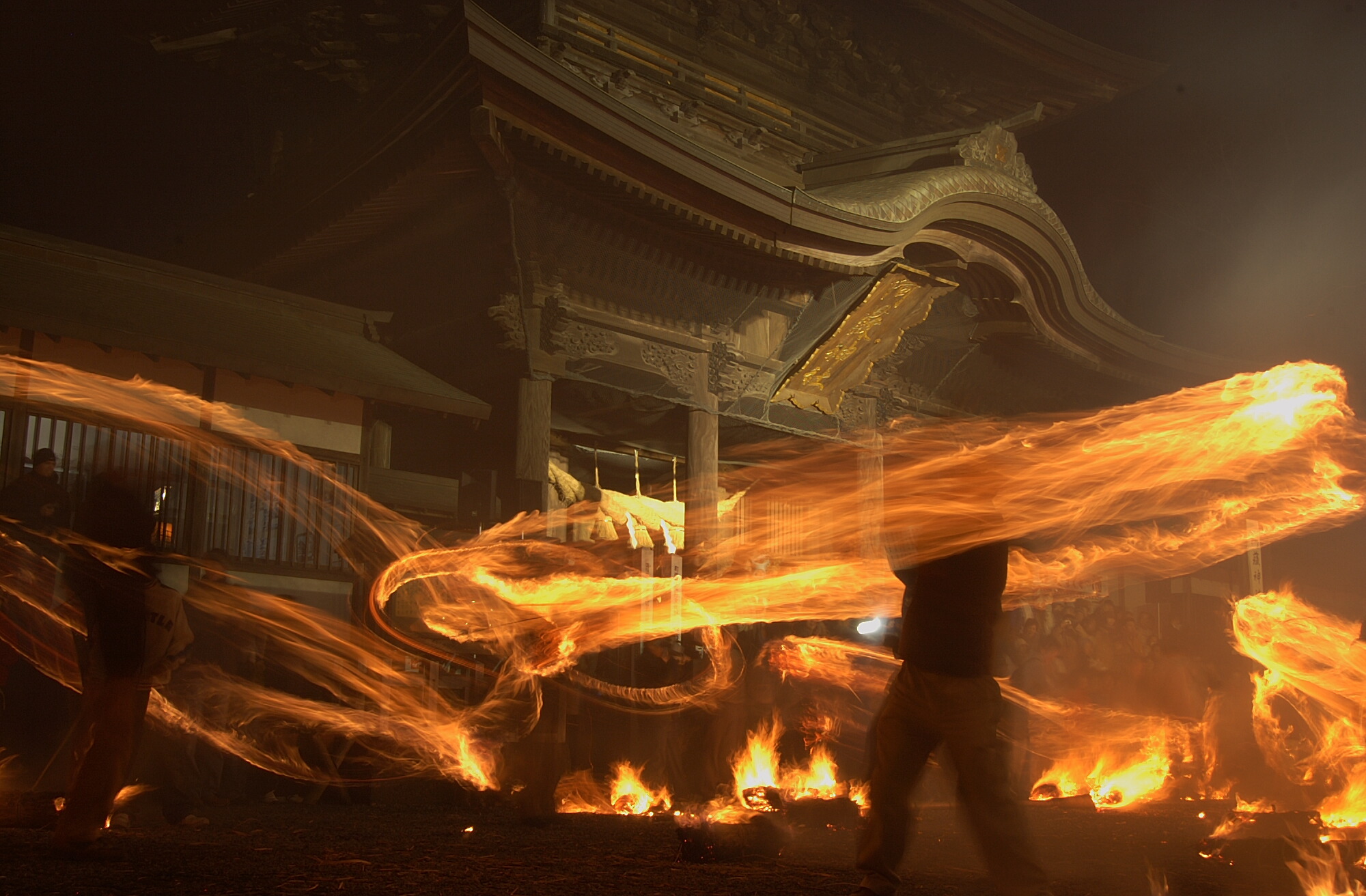
Every year in mid-March, the usually tranquil grounds of Aso Shrine are transformed into a stage for one of Japan’s most visually stunning fire festivals. As darkness falls, locals ignite bundles of straw attached to long ropes and swing them in large circles around their bodies. The result is a sea of spinning fire rings that light up the sacred approach to the shrine.
Known locally as Hiburi Shinji (and sometimes referred to as the Hifuri Festival), this event is actually a Shinto marriage ceremony for the gods. It marks the arrival of spring and prays for a bountiful harvest in the coming agricultural season. The sight of hundreds of fiery halos spinning against the backdrop of the imposing shrine gate is a photographer’s dream and a spiritual encounter unlike any other.
Origins of the Ritual
The Hiburi Shinji is a designated Important Intangible Folk Cultural Property of Japan. It serves as the highlight of the larger Ta-tsukuri (field preparation) festivals held in the Aso region. Historically, these rituals were essential for securing the favor of the deities before rice planting began.
The ritual specifically celebrates the divine marriage between the shrine’s main deity, Takeiwatatsu-no-Mikoto, and his bride, Hime-gami (also known as Kuniryu-Daimyojin). While many Japanese festivals involve portable shrines (mikoshi) crashing together or parades, the Hiburi Shinji focuses on the warmth and guidance of fire to welcome a divine bride.
The Legend: A Wedding in the Dark
The specific practice of swinging fire stems from a charming local legend found in the folklore of the Kumamoto region. According to tradition, the deity Takeiwatatsu-no-Mikoto was preparing to welcome his bride, Hime-gami, to the shrine as his wife.
However, the divine princess arrived later than expected. By the time her procession approached the shrine, the sun had set, and the area was plunged into pitch darkness. To ensure the bride did not lose her way, the villagers of Aso rushed out with pine torches. Overjoyed and eager to guide her safely, they waved the torches enthusiastically, creating arcs of light to signal the path to the shrine.
This act of hospitality and devotion is reenacted today during the festival. When participants swing the flaming straw bundles, they are symbolically lighting the path for the goddess to enter the shrine and reunite with her husband, ensuring the fertility of the land for the year ahead.
Modern Culture and Celebration
In modern times, the Hiburi Shinji has evolved into a communal celebration that invites participation. While the core ritual involves Shinto priests and local parishioners dressed in traditional white garb, the atmosphere is festive and inclusive.
The Ceremony
The event typically begins with the arrival of the deity’s spirit, carried in a portable shrine. Once the solemn rites are concluded, the fire swinging begins. The “torches” are actually bundles of茅 (kaya or miscanthus reed) wrapped tightly and attached to a rope.
The Visual Spectacle
As the fire is lit, the participants begin to spin the ropes. The centrifugal force extends the flame into a perfect circle. When dozens of people do this simultaneously, the shrine grounds appear to be filled with hovering rings of fire. The sound of the burning straw, the chanting of the participants, and the rhythmic woosh of the swinging ropes create a trance-like atmosphere.
Tourists are often allowed to participate in the swinging of the fire bundles (under supervision), making it a rare hands-on cultural experience. It is a moment where the boundary between spectator and participant blurs, united by the warmth of the sacred fire.
Traveler’s Tips
If you plan to attend the Hiburi Shinji, preparation is key to enjoying the event safely and comfortably.
- Dates: The festival usually takes place around mid-March. Check the official Aso Shrine schedule as dates can vary slightly according to the lunar calendar or weekend alignment.
- Attire: Wear clothing made of natural fibers like cotton or wool. Synthetic materials (like nylon or polyester) melt easily if a stray spark lands on you. Avoid wearing your best clothes, as they will smell of smoke.
- Photography: This is a low-light, high-motion event. A tripod is essential for capturing the light trails of the fire rings. Use a slow shutter speed to achieve the “ring” effect.
- Location: Aso Shrine is located in Aso City, Kumamoto Prefecture. It is accessible via JR Kyushu trains to Miyaji Station, followed by a short walk or taxi ride.
- Etiquette: While participation is often welcomed, always wait for instructions from the shrine officials. This is a religious rite, so maintain a respectful demeanor.
Sources & Further Reading
For those interested in the deep history of the deities mentioned:
- The Kojiki (Records of Ancient Matters): Provides the foundational genealogy of Japan’s deities, including the lineage of the imperial family to which Takeiwatatsu-no-Mikoto is connected (often cited as a grandson of Emperor Jimmu).
- The Nihon Shoki (The Chronicles of Japan): Offers further context on the mythology of Kyushu and the establishment of early shrines.
- Aso Shrine Official Records: Local archives detailing the specific agricultural rites of the Aso region.