
The Japanese Book of the Dead: Unearthing Shisha no Sho
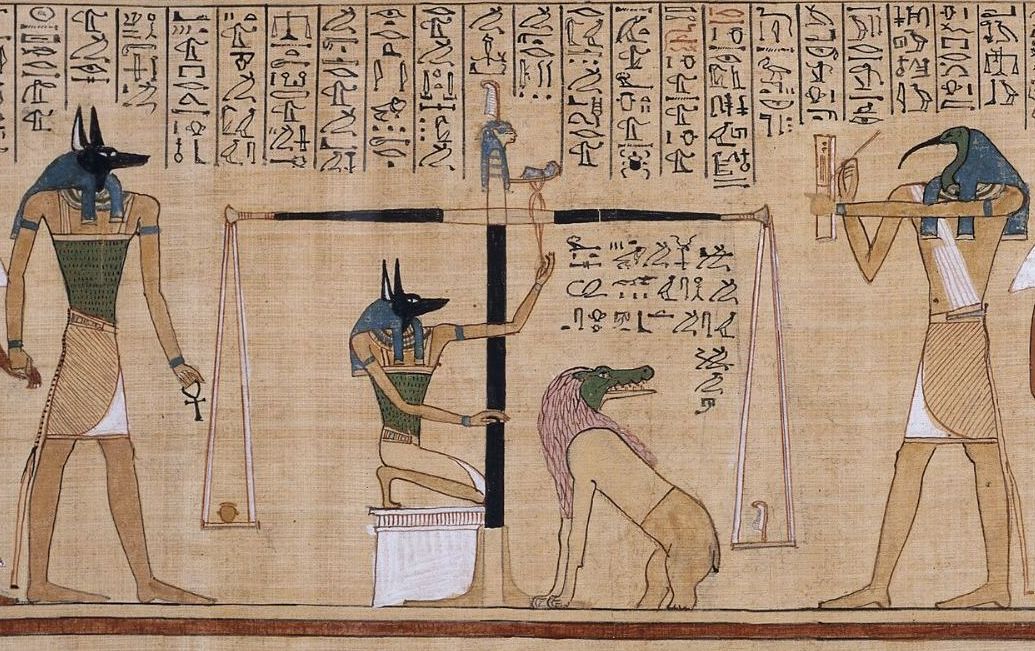
When most travelers hear the phrase “Book of the Dead,” their minds immediately wander to the arid sands of Egypt or the high plateaus of Tibet. However, Japan possesses its own haunting literary masterpiece bearing the same name: Shisha no Sho (The Book of the Dead). Written by the ethnologist and poet Orikuchi Shinobu, this work is not a manual for the deceased, but a modern mythological novel that serves as a bridge between the ancient world of the living and the shadows of the afterlife.
For the culture-seeking traveler, understanding Shisha no Sho unlocks a deeper appreciation of Nara—Japan’s ancient capital—and the spiritual syncretism that defines the nation’s history.
Origins: A Modern Classic Rooted in Antiquity
Published in 1939, Shisha no Sho is considered Orikuchi Shinobu’s magnum opus. Orikuchi was not merely a novelist; he was a scholar of Kokugaku (National Learning) and folklore. He was fascinated by the collision of indigenous Japanese beliefs (Shinto) and the imported, sophisticated religion of Buddhism during the Nara period (710–794 AD).
The book is notoriously dense and poetic, written in a style that mimics ancient chronicles. It draws heavily on the concept of marebito—spiritual beings or gods who visit from the “other world.” In this narrative, the “other world” is not just a metaphysical space but is anchored geographically to the mountains surrounding the Yamato basin.
The Legend: The Noblewoman and the Ghost
The narrative weaves a complex tale centered on a historical figure, Iratsume (modeled after the legendary Chujo-hime), a noblewoman of the Fujiwara clan. Living in the quiet shadows of a temple, she spends her nights copying Buddhist sutras.
However, her spiritual solitude is interrupted by a mysterious vision. She is drawn toward Mount Futakami, a twin-peaked mountain on the border of Nara and Osaka. In the folklore of the region, this mountain was often associated with the setting sun and the entrance to the afterlife.
There, she encounters the spirit of Prince Otsu. Historically, Prince Otsu was a tragic figure described in the Nihon Shoki (The Chronicles of Japan). He was a brilliant son of Emperor Tenmu who was falsely accused of treason and forced to commit suicide in 686 AD. In the novel, his restless spirit haunts the mountain, waiting for a savior. Iratsume engages in a spiritual union with the ghost, eventually weaving a magnificent mandala (a lotus thread tapestry) to pacify his soul and guide him to the Pure Land. This act transforms the terrifying ghost into a radiant Buddha figure.
Modern Culture: From Text to Screen
While the book remains a staple of Japanese modern literature, it gained international recognition through the visual arts. In 2005, the legendary animator Kihachirō Kawamoto adapted Shisha no Sho into a feature-length puppet animation film.
Unlike standard anime, this film utilizes traditional Bunraku puppetry aesthetics, creating an atmosphere that is both eerie and sublimely beautiful. The film captures the silence of ancient Nara and the terrifying awe of encountering the divine. For pop-culture enthusiasts, watching this film offers a rare glimpse into a darker, more traditional form of Japanese storytelling that predates the flashy tropes of modern manga.
Traveler’s Tips: Walking the Path of the Dead
If you are visiting the Kansai region, you can trace the physical locations of this spectral romance. The atmosphere in these areas is far removed from the bustling crowds of Kyoto or Tokyo.
Taima-dera Temple
Located in Katsuragi City, Nara, this is the primary setting of the legend. Taima-dera is unique because it is the only temple in Japan where the original twin pagodas from the Nara period remain standing. The main attraction is the Taima Mandala, the intricate tapestry said to have been woven by Chujo-hime in a single night with the help of a nun (who was actually a manifestation of Kannon Bodhisattva). The temple gardens are exquisite, particularly during the peony season in late spring.
Mount Futakami
The twin peaks of Mt. Futakami (Nijo-zan) are distinct landmarks visible from much of the Nara basin. It is a popular hiking destination today. The male peak (Odake) and female peak (Medake) offer sweeping views. At the summit of the male peak lies the grave of Prince Otsu, a somber reminder of the imperial tragedy recorded in the ancient chronicles.
Sources & Further Reading
To fully grasp the depth of Shisha no Sho, one must look at the historical texts that inspired it. The tragic history of Prince Otsu is detailed in the Nihon Shoki (The Chronicles of Japan), one of the oldest books of classical Japanese history. Furthermore, the concepts of the afterlife (Yomi) that Orikuchi explores are deeply rooted in the mythology found in the Kojiki (Records of Ancient Matters).
- Read: The Book of the Dead by Orikuchi Shinobu (English translation available by Jeffrey Angles).
- Watch: The Book of the Dead (2005) directed by Kihachirō Kawamoto.
- Reference: Nihon Shoki for the historical account of the late 7th-century imperial court.