
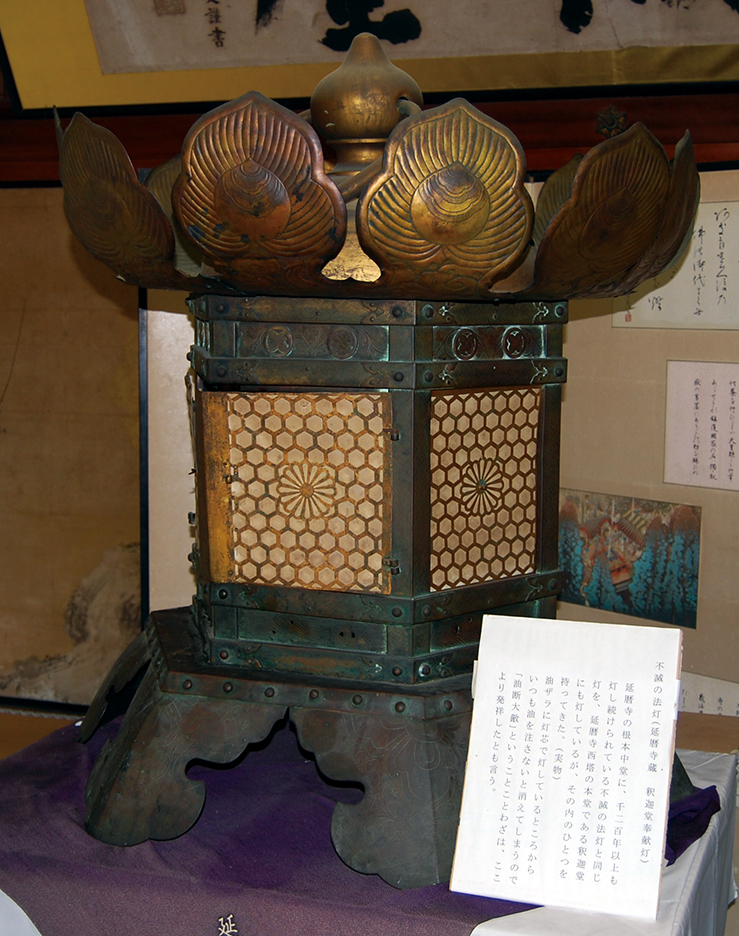
The Eternal Dharma Flame of Enryakuji: A Beacon of 1,200 Years
High above the ancient capital of Kyoto, where the dense cedar forests of Mount Hiei catch the morning mist, lies Enryakuji. As the headquarters of the Tendai sect of Japanese Buddhism, this temple complex is a UNESCO World Heritage site and a powerhouse of Japanese history. Yet, within its dark, incense-filled main hall, visitors flock to see something far more subtle than grand architecture: the Fumetsu no Hoto, or the Eternal Dharma Flame.
Said to have been burning continuously for over 1,200 years, this flame is not just a source of light; it is a profound symbol of spiritual discipline, history, and the resilience of the human spirit.
Origins of the Sacred Fire
The story of the Eternal Dharma Flame begins in the late Nara period, around 788 AD. The temple was founded by Saicho (also known as Dengyo Daishi), a monk who sought to establish a Mahayana Buddhist center that would protect the nation and nurture enlightenment.
When Saicho built the Konpon Chudo, the main hall of Enryakuji, he carved a statue of Yakushi Nyorai (the Medicine Buddha) and lit an oil lamp in front of it. It is recorded that Saicho prayed that this light of the Dharma (Buddhist teachings) would never be extinguished until the Maitreya Buddha appears in the distant future. He composed a famous poem regarding this aspiration:
“May this light, intended for the majestic and dark struggle against ignorance, shine eternally to illuminate the darkness of the world.”
For twelve centuries, monks have maintained this flame, adding rapeseed oil daily to ensure Saicho’s prayer remains unbroken.
The Legend of “Yudan” and Survival
The maintenance of the flame is not merely a chore; it is a rigorous ascetic practice. The oil lamp is not a large bonfire but a modest vessel. If the monks become negligent, the fuel runs out, and the flame dies. This vigilance gave birth to a common Japanese idiom used even today: “Yudan Taiteki” (oil discontinuation is a great enemy), which translates to “negligence is the greatest enemy” or simply “don’t be careless.”
However, history is turbulent, and the flame faced its greatest threat during the Sengoku (Warring States) period. In 1571, the warlord Oda Nobunaga, seeing the warrior monks of Mt. Hiei as a political threat, launched a brutal siege. He burned Enryakuji to the ground, killing thousands.
Did the flame go out? Physically, yes. The original fire at Enryakuji was extinguished during the inferno. However, the spiritual lineage survived. Decades earlier, the flame had been divided and transferred to Risshakuji Temple (Yamadera) in Yamagata Prefecture. After Enryakuji was rebuilt by Toyotomi Hideyoshi and the Tokugawa shoguns, the flame was brought back from Yamadera. Thus, the fire burning today is still considered the direct continuation of Saicho’s original spark.
Modern Culture and Significance
Today, the Eternal Dharma Flame is more than a religious artifact; it is a National Treasure that speaks to the Japanese cultural value of continuity. In a modern world defined by rapid change and disposability, the concept of a flame nurtured by human hands for over a millennium resonates deeply with visitors.
The flame sits within the Konpon Chudo, which is currently undergoing a massive renovation (scheduled to last until roughly 2027). Despite the construction scaffolding, the hall remains open to worshippers, allowing the public to gaze into the semi-darkness where the lanterns glow. It serves as a silent reminder of the Tendai motto: “Illuminate one corner of the world.” If everyone shines a light in their own small corner, the whole world becomes bright.
Traveler’s Tips for Mt. Hiei
Visiting the Eternal Flame is a journey into the spiritual heart of Japan. Here is how to make the most of your pilgrimage:
- Access: The most scenic route is taking the Eizan Cable Car and Ropeway from the Kyoto side, or the Sakamoto Cable from the Shiga side (which offers beautiful views of Lake Biwa).
- Etiquette: The Konpon Chudo is a sacred space. Photography is strictly prohibited inside the hall. Observe silence, remove your hat, and respect the worshippers.
- Best Time to Visit: Autumn (November) offers spectacular foliage, while summer provides a cool retreat from Kyoto’s humidity. Winter can be harsh, with snow often closing roads, so check transit schedules.
- Stay Overnight: For a full immersion, book a stay at the Enryakuji Kaikan, the temple’s lodging facility (shukubo), where you can participate in morning meditation and copy sutras.
Sources & Further Reading
To understand the depth of Japanese religious history, one must look beyond the surface. While the ancient chronicles like the Kojiki and Nihon Shoki cover the Shinto origins and early imperial lineage of Japan, the history of Enryakuji is best understood through the Eizan Daishi Den (The Biography of the Great Master of Mt. Hiei).
- The Vows of Saicho: Translated texts of Saicho’s original prayers for the protection of the nation.
- History of Japan (George Sansom): For context on Oda Nobunaga’s siege of Mt. Hiei.
- Official Enryakuji Archives: For details on the lineage of the flame and the connection to Risshakuji.