
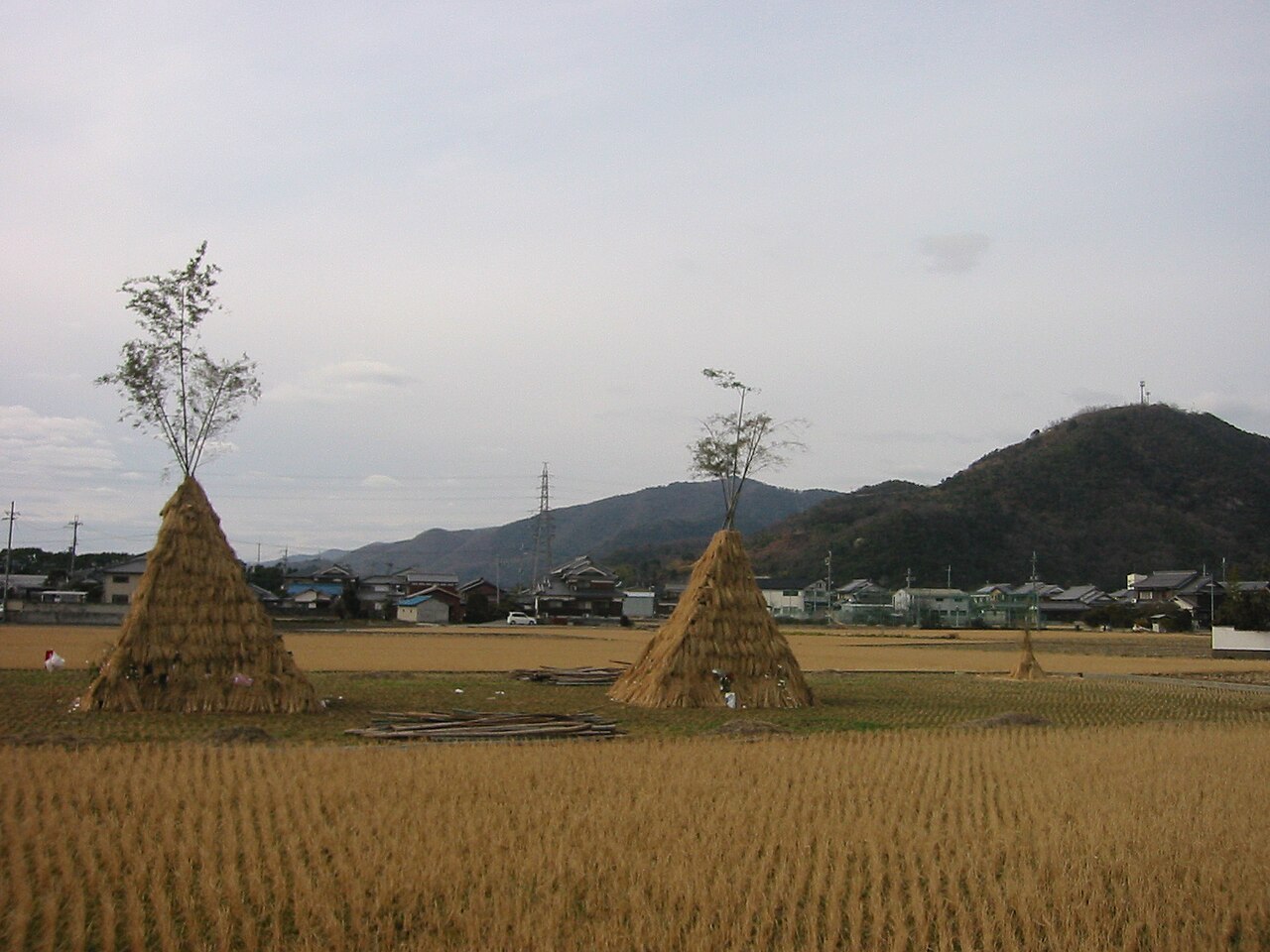
Dondo-yaki: Purifying Flames of the Japanese New Year
In the crisp, biting air of mid-January, communities across Japan gather around towering structures of bamboo, straw, and cypress. As the sun sets or rises, depending on the region, a torch is set to the pile, erupting into a massive bonfire that crackles against the winter sky. This is Dondo-yaki, a spectacular fire festival that marks the spiritual conclusion of the New Year celebrations.
Far more than a simple bonfire, Dondo-yaki is a ritual of purification, gratitude, and community bonding. For travelers seeking the authentic soul of rural and traditional Japan, witnessing this fiery spectacle offers a rare glimpse into the animistic roots of the culture, where smoke serves as a bridge between the human realm and the divine.
Origins of the Fire Festival
Dondo-yaki takes place during Koshogatsu (Little New Year), typically around January 15th. While the main New Year (Oshogatsu) focuses on welcoming the Toshigami (New Year deity), Koshogatsu focuses on agricultural prayers and the household.
The primary function of the festival is to send the Toshigami back to the spirit world. During the New Year, Japanese households decorate their entrances with kadomatsu (pine decorations) and shimekazari (sacred ropes) to act as temporary vessels for the gods. Once the festive period ends, these objects cannot simply be thrown away; they must be ritually burned. The rising smoke is believed to carry the deity back to the mountains or the heavens, riding the thermal pillar into the sky.
The name “Dondo” is widely believed to be onomatopoeic, mimicking the booming sound of the bamboo cracking in the fire, or derived from the phrase tōtomi (dignity/reverence).
Legend and Folklore
While Dondo-yaki is a folk tradition, its roots intertwine with ancient court rituals and mythology. Historical records suggest the festival evolved from a Heian period (794–1185) court ritual called Sagicho.
According to folklore, the fire possesses magical properties. One prevailing legend dictates that eating mochi (rice cakes) or dango (dumplings) roasted over the Dondo-yaki fire protects one from illness and ensures longevity for the coming year. This belief transforms the fire from a mere disposal method into a source of vitality.
Another charming legend involves Kakizome, the first calligraphy written at the start of the year. It is customary to throw these calligraphy papers into the bonfire. Folklore says that if the burning paper rises high into the sky on the updraft, the writer’s penmanship will improve significantly in the year ahead. Conversely, if it falls quickly, one must practice harder.
Modern Culture and Community
In contemporary Japan, Dondo-yaki remains a vital community glue, particularly in rural areas and suburbs. It is one of the few times in the year when neighbors gather outside of formal obligations to share warmth and food.
The structure of the bonfire is often built by local children or the fire brigade. They construct a tall cone using green bamboo stalks, cedar branches, and straw. Residents bring their old Daruma dolls, lucky charms (omamori), and New Year decorations to pile onto the pyre.
The atmosphere is festive yet respectful. Once the fire settles into glowing embers, the mood shifts from solemn observation to a barbecue-style gathering. People attach mochi to the ends of long willow branches or bamboo poles and roast them over the coals. The resulting Miyu-dango (cocoon dumplings) are shared among family members to pray for a state of perfect health (mubyo-sokusai).
Traveler’s Tips
If you are visiting Japan in mid-January, attending a Dondo-yaki provides a stark contrast to the quiet temple visits of January 1st. Here is how to navigate the event:
- Timing is Key: Most festivals occur on or near January 15th, but dates vary by region and municipality. Check local city hall websites or shrine schedules under the keywords “Dondo-yaki” or “Sagicho.”
- Dress for Sparks: You will be standing near a massive open fire. Wear clothes made of natural fibers (cotton or wool) rather than synthetics like nylon, which can melt if hit by a stray spark. It is also incredibly cold away from the fire, so dress in layers.
- Respect the Fire: Do not throw plastic, vinyl, or metal into the fire. Only paper, wood, and straw decorations are permitted. If you buy a souvenir decoration to burn, ensure you remove any plastic packaging first.
- Locations: While famous shrines like Tsurugaoka Hachimangu in Kamakura hold large ceremonies, the most atmospheric experiences are often found on riverbanks (like the Tama River in Tokyo) or local schoolyards in the countryside.
Sources & Further Reading
- Nihon Shoki (The Chronicles of Japan): For context on ancient purification rituals (harae) and fire worship.
- The Tale of Genji: Contains references to the courtly precursor ritual, Sagicho.
- Yanagita Kunio: Works by the father of Japanese folklore studies offer deep insights into the distinction between Oshogatsu and Koshogatsu.