
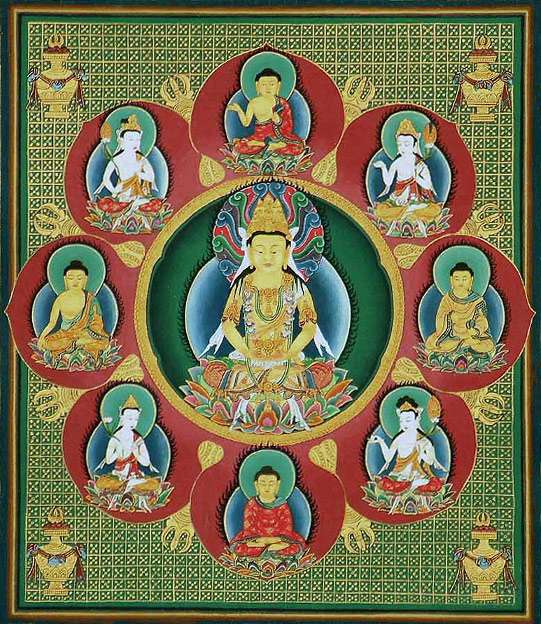
The Mandala in Japan: Mapping the Sacred Cosmos
When exploring the dimly lit halls of ancient Japanese temples, travelers often encounter intricate, geometric paintings teeming with hundreds of deities. These are Mandalas (known as Mandara in Japanese). Far more than just religious decoration, these diagrams are sophisticated maps of the universe and the human mind. For the culture-seeking traveler, understanding the Mandala unlocks a deeper appreciation of Japanese Esoteric Buddhism and the country’s rich artistic heritage.
Introduction to the Cosmic Circle
The word “Mandala” stems from Sanskrit, loosely translating to “circle” or “discoid object.” In the context of Japanese culture, specifically within the Shingon and Tendai sects of Buddhism, it represents the entire universe—a microcosm of the cosmos where the enlightened Buddha resides at the center.
Unlike Western religious art, which often depicts linear narratives, the Mandala is a spatial representation of reality. It is a visual aid used for meditation; by focusing on the complex interplay of deities, shapes, and colors, a monk or practitioner aims to transcend the mundane world and realize their oneness with the Buddha.
The Origins: From India to Mount Koya
The Mandala arrived in Japan during the Heian period (794–1185), primarily through the efforts of the legendary monk Kukai (also known as Kobo Daishi). In 804, Kukai traveled to Tang Dynasty China to study Esoteric Buddhism. When he returned to Japan, he brought back the two most critical diagrams that would define Japanese Esoteric art:
- The Diamond Realm Mandala (Kongokai): Represents the unyielding, indestructible wisdom of the Buddha. It is usually composed of nine squares.
- The Womb Realm Mandala (Taizokai): Represents the infinite compassion of the Buddha and the physical world. It depicts the deities branching out from the center like a lotus flower.
Together, these two represent the non-duality of the universe—wisdom and compassion, spirit and matter—working in harmony. They are often displayed facing each other in the main halls of Shingon temples.
Legend: The Miracle of the Taima Mandala
While the geometric Mandalas of Esoteric Buddhism are profound, Japan also hosts the famous Taima Mandala, associated with Pure Land Buddhism. This artifact carries one of Japan’s most beloved legends: the story of Chujo-hime.
According to folklore, Chujo-hime was a noblewoman of the Nara period who fled her cruel stepmother to become a nun at Taimadera Temple. She prayed fervently to see the Pure Land (Buddhist paradise) in this lifetime. One day, a mysterious old nun appeared and instructed Chujo-hime to gather lotus stems. With the help of the stranger, they processed the lotus fibers into thread.
Miraculously, the mysterious nun began to weave. As night fell, the weaving room glowed with a golden light. By morning, a massive, intricate tapestry depicting the Pure Land in breathtaking detail was complete. The stranger revealed herself to be an incarnation of Amida Buddha, having come to answer Chujo-hime’s prayers. This legend transformed the Mandala from a mere diagram into a miraculous artifact of divine intervention, bridging the gap between human suffering and celestial salvation.
Mandalas in Modern Culture
Today, the concept of the Mandala has transcended temple walls and permeated modern Japanese and global culture.
Psychological Healing
The Swiss psychiatrist Carl Jung introduced the Mandala to Western psychology as a tool for exploring the unconscious. In modern Japan, “Mandala Art Therapy” is a popular method for stress relief and self-discovery, used in clinical settings and workshops.
Art and Design
You will find Mandala-inspired patterns in everything from kimono textiles to contemporary graphic design. The mesmerizing symmetry appeals to the modern aesthetic of balance. Furthermore, digital art collectives like teamLab often utilize Mandala-like projections in their immersive exhibits, creating moving universes that react to the presence of visitors.
The Business Mandala
Interestingly, the “Mandala Chart” has become a productivity tool in Japan. Famous baseball player Shohei Ohtani famously used a 9×9 grid (inspired by the Diamond Realm structure) to map out his goals and achieve success, proving the ancient structure’s versatility.
Traveler’s Tips: Where to Experience Mandalas
If you are planning a trip to Japan, here are the best places to view these sacred maps:
- Toji Temple (Kyoto): Home to the famous 3D Mandala—a lecture hall filled with 21 statues arranged in a Mandala formation. It allows you to physically walk inside the cosmic map.
- Mount Koya (Wakayama): The headquarters of Shingon Buddhism. Visit the Reihokan Museum to see ancient, hand-painted Mandalas on silk that are designated National Treasures.
- Taimadera Temple (Nara): Visit the birthplace of the Chujo-hime legend to see the historic Taima Mandala.
Etiquette Note: When viewing a Mandala, silence is golden. These are active religious objects. Avoid pointing directly at specific deities with your finger; instead, gesture with an open hand.
Sources & Further Reading
For those wishing to dive deeper into the historical and spiritual context of Japanese spirituality, the following texts are recommended:
- The Nihon Shoki (The Chronicles of Japan): While primarily a history of Shinto and the Imperial line, it documents the official introduction of Buddhism to Japan in the 6th century, setting the stage for the later arrival of Esoteric practices.
- The Mahavairocana Tantra (Dainichi-kyo): The primary text forming the basis of the Womb Realm Mandala.
- Kukai: Major Works: Translated studies on the writings of Kobo Daishi provide the theological reasoning behind the visual art of the Mandala.
By understanding the Mandala, you do not just see a painting; you view the universe through the eyes of ancient Japan.